A Fleet Built for Growth
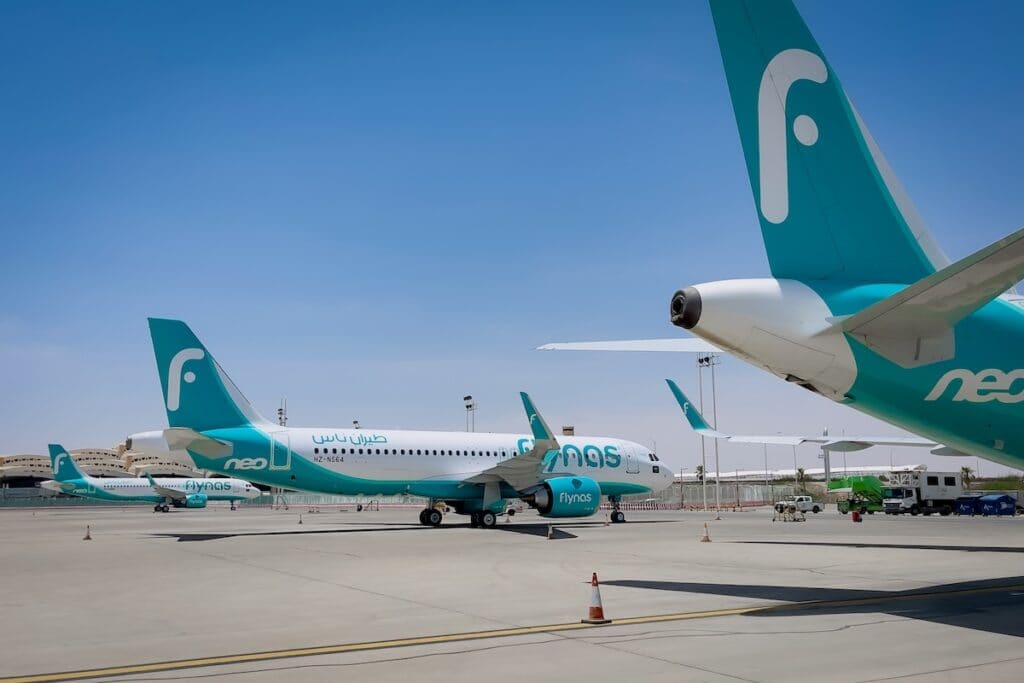
Saudi Arabia's largest budget airline is betting big on widebody jets. flynas confirmed an order for five A330-900 aircraft and 20 A321neo narrowbodies at the Farnborough Airshow in late July, pushing its total Airbus commitments to 235 planes out of a broader orderbook of 280. The carrier now has 20 A330neos on order alongside 56 A321neos, a mix designed to serve everything from short regional hops to intercontinental routes.
The airline currently flies 67 Airbus aircraft from six bases across the Kingdom. The new jets will support operations at flynas Syria, open new domestic corridors, and extend the carrier's long-haul network. For a low-cost operator, the move into widebodies signals ambition beyond the typical budget-airline playbook.
Connecting Pilgrims and Hosting the World
Bander Almohanna, flynas' chief executive, framed the purchase as infrastructure for Saudi Arabia's broader transformation. The additional capacity will serve the Pilgrim Experience Program, which channels millions of visitors each year to Mecca and Medina, and aligns with the country's calendar of mega-events: Expo 2030 and the FIFA World Cup four years later.
Those commitments demand not just more seats but the right kind of aircraft. The A321neo, the largest variant in Airbus' narrowbody family, burns at least 20 percent less fuel per seat than earlier models and can stretch across regional markets or reach into Europe. The A330-900, powered by Rolls-Royce Trent 7000 engines, can fly up to 8,100 nautical miles nonstop while cutting fuel consumption and CO₂ emissions by around 25 percent compared to older widebodies.
For a carrier built on low fares, those efficiency gains translate directly into lower ticket prices and healthier margins. The aircraft also share cockpit commonality within their respective families, simplifying pilot training and maintenance schedules as the fleet scales.
All-Airbus, All In
flynas has chosen to standardize entirely on Airbus. Its current fleet includes two A330-300s, four A320ceos, and 61 A320neos. That uniformity reduces complexity as the airline adds routes and frequencies, a crucial advantage in a market where demand is climbing fast but operational expertise remains stretched.
Benoît de Saint-Exupéry, Airbus' executive vice president for commercial aircraft sales, noted the appeal of the latest-generation models in a statement released alongside the order. The efficiency and passenger comfort of the A321neo and A330neo, he said, make them natural choices for carriers supporting Saudi Arabia's aviation expansion.
The Kingdom's airlines have been among the most aggressive buyers in the global market over the past two years, driven by Vision 2030 targets that call for 330 million passengers annually and a hub role connecting Asia, Europe, and Africa. flynas, as the leading budget option, plays a distinct part in that strategy by making travel affordable for domestic and regional passengers who might not otherwise fly.
What It Means for Travelers
More widebodies on a low-cost carrier usually mean more competition on long-haul routes, which can pressure legacy airlines to lower fares or improve service. The A330-900's range opens possibilities for flynas to serve destinations in Asia, East Africa, and deeper into Europe without relying on connecting flights through Dubai or Doha.
For Saudi travelers, the added A321neo capacity should ease seasonal bottlenecks during Hajj and Ramadan, when demand for domestic and regional flights spikes. The aircraft's extra seats and range also make it viable for routes to Cairo, Amman, and Istanbul, markets where budget competition has historically been thin.
The order reflects confidence not just in the hardware but in the trajectory of Saudi aviation. With tourism numbers climbing and the government investing heavily in infrastructure, carriers like flynas are positioning themselves to capture both pilgrim traffic and a new generation of leisure travelers drawn by relaxed visa rules and expanded entertainment options.
The next few years will test whether the Kingdom's airlines can absorb the flood of new capacity without diluting yields or sparking fare wars. For now, flynas is placing its chips on efficiency, scale, and a calendar packed with reasons for people to fly.