A Famous Drive, Reimagined
The North Coast 500 has spent a decade as one of Europe's signature road trips, a 516-mile loop through the Scottish Highlands that winds past mountains, moorland and coastline. But the route has also spent much of that time grappling with the consequences of its own popularity: congested single-track roads, strained infrastructure, and communities wrestling with the effects of mass tourism.
Now a fare cap introduced by the Scottish Government in 2026 has opened a different way to see the route. Under the scheme, most bus journeys across Scotland cost £2 each, which means the entire North Coast 500 can be travelled by public transport for around £18, a fraction of the cost of petrol and a lighter footprint on roads that were never designed for heavy traffic.
The policy, which Westminster plans to replicate in 2027, has made bus travel a viable option for a route that was marketed almost exclusively to drivers. It also arrives at a moment when the organisation behind the NC500 is trying to reset its relationship with the communities along the way.
Reckoning with a Decade of Growth
The North Coast 500 marked its tenth anniversary this year with little fanfare. An independent environmental, social and governance review released in June 2026 found that while the route had delivered economic benefits, 90 per cent of local residents had observed environmental damage, and 60 per cent believed NC500 Ltd, the organisation that promotes the route, did not always act in their best interests.
Clare Winskill, the organisation's new executive chair, acknowledged the findings and outlined a shift in approach. Initiatives now include a visitor pledge encouraging responsible behaviour and a move away from marketing the route as a quick circuit. Instead, the emphasis is on slower travel and deeper engagement with the landscapes and communities along the way.
Anita Wilson, an artist who runs a studio at Balnakeil Craft Village on the route, noted the change. Early promotion, she said, had encouraged people to drive the route quickly. Now the messaging is different, urging visitors to spend more time in each place rather than ticking off the circuit as fast as possible.
What the Bus Option Offers
Travelling the North Coast 500 by bus is not as straightforward as driving. Services are infrequent in places, and one 20-mile section between Scourie and Drumbeg has no direct connection, requiring either a long detour via multiple buses, a two-day walk, or a taxi. But for those willing to work around the gaps, the bus network covers the rest of the route and does so at a cost that undercuts driving by more than £200 in fuel alone.
The buses themselves serve as lifelines for local residents, and capacity can be limited, particularly on routes through sparsely populated areas. Increased demand may eventually lead to improved services; in autumn 2026, electric bus operator Ember announced enhanced services on the east coast section of the route.
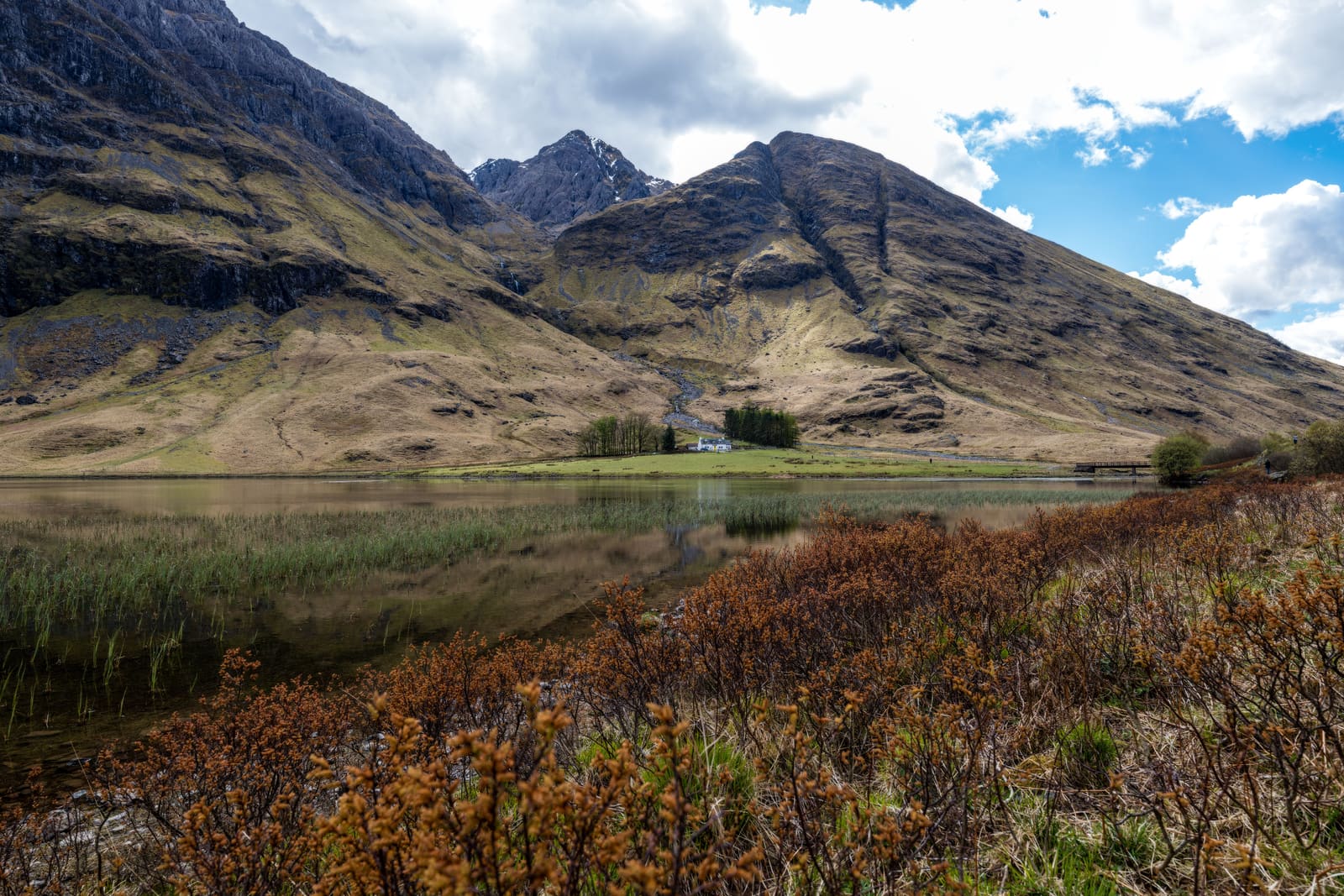
The slower pace also changes the experience. Windows frame the scenery rather than a windscreen, and the rhythm of the journey is dictated by timetables rather than the accelerator. The route passes through Caithness and Sutherland, across the Flow Country, a vast moorland recognised by UNESCO and one of the world's most significant carbon stores, and along the coast of Wester Ross, where mountains crowd the road and islands scatter across the Atlantic.
The Route in Sections
The journey begins and ends in Inverness, the only city in the Highlands. From there, an Ember bus crosses the Kessock Bridge and follows the North Sea coast to Dornoch, a waterfront town with a long beach and views across the firth.
A Stagecoach service continues north to Thurso, skirting cliffs and passing Dunrobin Castle, a grand estate open to visitors. Far North Buses then take over for the wildest stretch, running west across the top of the mainland through Caithness and into Sutherland. The landscape here is sparse and dramatic, with moorland broken only by isolated mountains and the occasional settlement. The route peaks around Durness, where the coast turns south.
Another Far North service continues to Scourie, where the Atlantic and Scotland's western islands begin to dominate the view. The 20-mile gap to Drumbeg is the only section without a direct bus; those who prefer not to arrange alternative transport can take a long detour back through Inverness.
From Drumbeg, a Rapsons bus heads south into Wester Ross, passing Ardvreck Castle and arriving in Ullapool, a larger town where travellers can restock and regroup. Westerbus services then push further south to Gairloch and Shieldaig, threading through the Torridon Mountains and along the shores of Loch Maree. Red deer and golden eagles are common sightings; sea eagles patrol the coast.
Lochcarron Garage operates the final legs, including a stop in Applecross, a whitewashed village with views across the water to the jagged Cuillin mountains on the Isle of Skye. The last stretch returns east across the Highlands to Inverness, a journey that covers a lot of ground and can be broken into shorter segments for those with time to explore.
Practical Considerations
Each journey requires a new £2 fare, so breaking up the route to explore points along the way will add to the total cost. Booking ahead is recommended where possible, and checking the current status of all services before departure is essential. Sitting on the right side of the bus and travelling anti-clockwise, as outlined above, offers the best views.
The route passes through areas still shaped by the Highland Clearances, and many communities along the way rely on income from visitors. Spending in locally run cafes and shops ensures that money stays within those communities. The Scottish Outdoor Access Code provides guidelines for minimising impact on the landscape.
Accommodation options range from self-catering cabins near Oldshoremore, where a private beach is part of the package, to the Marine & Lawn in Dornoch, a recently refurbished hotel set back from the beach. In Ullapool, the Caledonian Hotel offers simple rooms and hearty breakfasts, while the Applecross Inn provides basic accommodation alongside seafood and views of Skye.
Dining options include Crofter's Kitchen in Scourie, a street-food operation run by a couple who source ingredients from within 20 miles, and Kylesku Hotel, which serves seafood overlooking Loch Glendhu. In Ullapool, the Seafood Shack operates a daily-changing menu based on the day's catch. Back in Inverness, Torrish at Ness Walk offers modern Scottish cooking.
A Different Kind of Journey
The bus option will not appeal to everyone. It requires patience, flexibility and a willingness to work around timetables that were not designed with tourists in mind. But it offers something the driving experience cannot: a way to see the North Coast 500 that does not add to the congestion on single-track roads, that costs a fraction of the price, and that forces a slower pace through landscapes that reward attention rather than speed.
For a route that has spent a decade trying to manage its own success, the £2 fare cap may prove to be one of the more effective interventions. It will not solve all the challenges the NC500 faces, but it provides an alternative that aligns with the kind of travel the route now says it wants to encourage.