The Legal Retreat
American Airlines has withdrawn its lawsuit contesting Chicago's decision to redistribute gate space at O'Hare International Airport, ending a legal battle that began after the city shifted prime terminal real estate from American to United Airlines last year.
The carrier dropped the case days after losing an appeal. The reallocation, which took effect on 1 October 2025, stripped American of more than 500 feet of gate space - roughly equivalent to four narrow-body aircraft gates. American said at the time it would operate out of seven fewer gates overall, whilst United gained approximately four and a half.
A spokesperson for American said the airline would continue investing in its Chicago operation and stood by its decision to challenge what it viewed as an unfair process. However, the carrier concluded that dropping the lawsuit was "the best way to continue delivering on that commitment," though the statement provided by the source appears incomplete.
Clawing Back Ground
Despite the setback, American has already recovered a portion of the lost capacity. The carrier has added three gates at O'Hare since the reallocation: two acquired from Spirit Airlines and one earned through capacity growth at the airport.
The addition of a gate through increased operations is notable. At congested airports like O'Hare, gate assignments are often tied to usage and demonstrated demand. By expanding its schedule, American effectively made a case for additional infrastructure access - a quieter form of competition than courtroom arguments.
The recovery leaves American down a net four gates from its position before the city's intervention, though the airline has signalled it intends to keep building its presence in Chicago.
What the Fight Was About
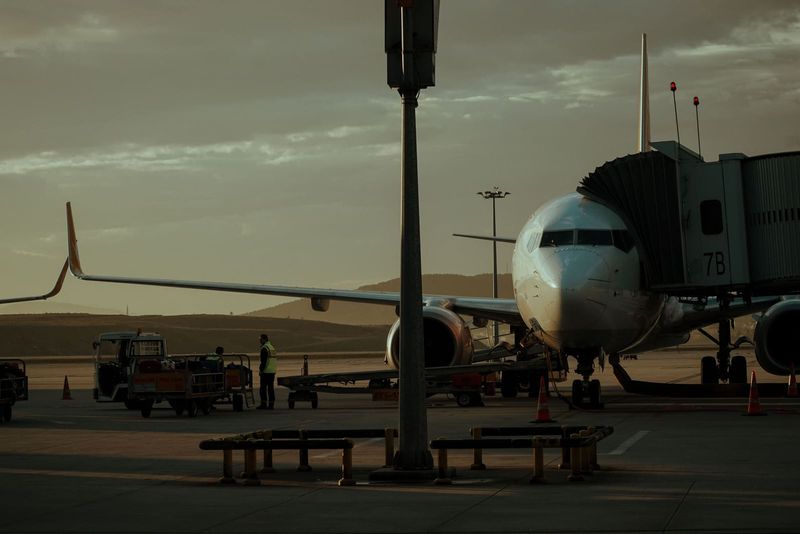
Gate disputes at major hubs are rarely just about physical space. They reflect deeper battles over market position, passenger convenience, and operational efficiency. Gates clustered together allow airlines to move aircraft, crew, and passengers more smoothly. Scattered gates increase taxi times, complicate connections, and raise costs.
Chicago represents a strategic prize. It is the third-busiest airport in the United States and a critical connecting point for both carriers. United has long dominated O'Hare, but American has been rebuilding its footprint there after years of focusing resources elsewhere.
The city's decision to reallocate space suggests officials saw an imbalance - or responded to pressure from United, which has deep roots in Chicago. American's legal challenge argued the process lacked transparency, though the specifics of that claim were not detailed in the filings available.
The Bigger Picture
American's willingness to walk away from the lawsuit, even after losing an appeal, suggests a pragmatic shift. Prolonged legal battles consume resources and risk souring relationships with airport authorities - relationships that matter when future gate assignments, terminal expansions, or fee negotiations arise.
The airline's recovery of three gates through acquisition and growth also points to a more sustainable strategy. Rather than fighting over a fixed pie, American is demonstrating it can justify more space by actually using it.
Still, the episode underscores the intensity of competition at constrained airports. Gate space is finite, demand is not, and every square metre of terminal real estate translates into revenue opportunity. American may have dropped the lawsuit, but the underlying contest for dominance at O'Hare continues.