A Pattern That Has Worn Thin
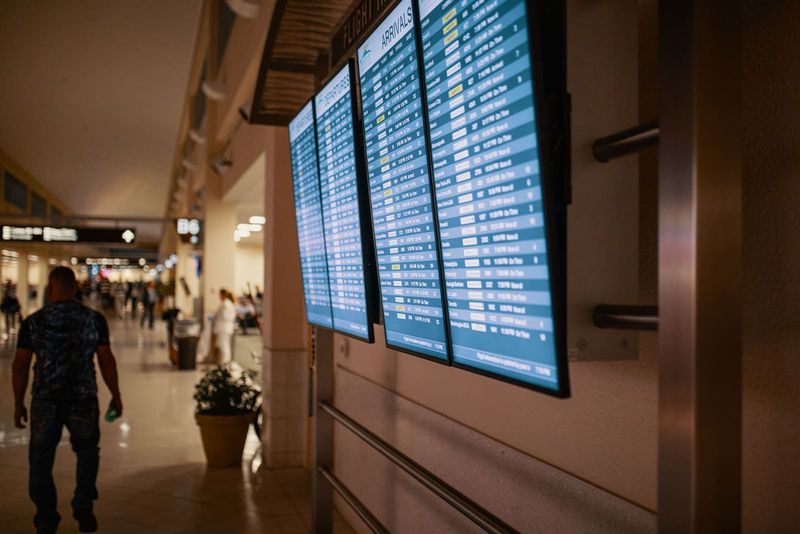
Belgium's aviation network shut down for most of Monday after air traffic controllers joined a broader public-sector protest against government spending cuts. The stoppage forced Brussels Airport to cancel all scheduled arrivals and departures between 7 a.m. and 9 p.m., while Charleroi Airport warned passengers that its entire Monday timetable would be disrupted. Only emergency and safety-critical flights were permitted during the 14-hour window.
For airlines and travel businesses operating in the country, the frustration is no longer about a single day of lost revenue. It is about frequency. The Board of Airline Representatives in Belgium said Monday's action was the 11th strike to affect Belgian airspace in 11 months, a rate of disruption that industry groups say is undermining the country's role as a European travel hub.
Skeyes, Belgium's air navigation service provider, said it could not maintain safe air traffic control operations after some staff walked off the job to join demonstrations in Brussels. The protests targeted austerity measures proposed by the federal government, part of a broader debate over public spending that has drawn workers from health, education, and transport sectors into the streets.
What the Numbers Show
Brussels Airport typically handles around 430 flights on a Monday in late November, a mix of short-haul European connections and long-haul services to Africa, Asia, and North America. On this particular Monday, just 25 flights operated, most of them diverted or rescheduled from the previous evening. Charleroi, the country's second-busiest airport and a key base for low-cost carriers, saw similar cancellations across its schedule.
The immediate cost to airlines includes not only lost ticket revenue but also crew repositioning, passenger compensation under European Union rules, and the logistical work of rebooking thousands of travellers. For passengers, the disruption means missed meetings, rearranged holiday plans, and hours spent navigating customer service queues.
Belgium's position in the European air network makes the impact wider than its borders. Brussels sits at the crossroads of major north-south and east-west flight paths, and its airspace is used by carriers transiting between the United Kingdom, Germany, France, and the Netherlands. When Belgian air traffic control cannot operate, airlines flying over the country must reroute, adding time and fuel costs to journeys that never intended to land there in the first place.
Calls for Legal Limits
Airline representatives are now pressing for formal mechanisms to limit how often and how long such strikes can ground the network. The Board of Airline Representatives in Belgium has argued that repeated stoppages by public-sector workers are eroding international confidence in the country's airports, making it harder to attract new routes and investment.
Similar debates have played out in France, where air traffic control strikes have historically caused widespread disruption across Europe. In response, French authorities introduced minimum service requirements for certain categories of staff, though enforcement has been uneven and strikes still occur. Belgium does not currently have equivalent rules for its air navigation providers.
Trade unions representing Skeyes staff say the strikes are a last resort after months of negotiations over pay, working conditions, and staffing levels. They argue that the air navigation service has been chronically underfunded, leaving controllers overworked and safety margins tighter than they should be. From their perspective, the strikes are not about inconveniencing travellers but about drawing attention to systemic problems that successive governments have failed to address.
A Sector Under Strain
The aviation industry across Europe is still recovering from the pandemic, during which passenger numbers collapsed and airlines mothballed fleets. Traffic has returned to near pre-2020 levels in most markets, but the recovery has brought new pressures: labour shortages, higher fuel costs, and a patchwork of strike actions in multiple countries.
Belgium's airports are particularly exposed. Brussels Airport, the country's main international gateway, has struggled to regain its pre-pandemic passenger volumes, in part because the national carrier Brussels Airlines reduced its network during the crisis and has been slow to rebuild. Charleroi, which depends heavily on leisure traffic operated by budget airlines, is more resilient but still vulnerable to sudden cancellations that erode customer trust.
For travellers, the lesson from Monday's stoppage is a familiar one: flexibility is now a baseline requirement. Travel insurance that covers strike-related cancellations has become more common, and many frequent flyers now build buffer days into their itineraries when flying through hubs with a history of labour unrest.
What Comes Next
Monday's strike was tied to a specific political moment, a national protest against proposed budget cuts. Whether the pattern of monthly disruptions continues depends partly on how those negotiations unfold between unions and the government. If no agreement is reached, further action is likely.
Airlines, meanwhile, are exploring whether they can shift more capacity to neighbouring hubs in Amsterdam, Frankfurt, or Paris, where strike frequency has been lower in recent months. That would mean fewer flights to and from Belgium, a outcome that would hurt both the airports and the broader travel economy that depends on international connectivity.
The Belgian government has not yet announced any plans to introduce minimum service rules for air traffic control, though industry groups say the conversation is now unavoidable. For a country that has long positioned itself as a gateway to Europe, 11 strikes in 11 months is a record that few in the travel sector want to see extended into a 12th.