A Rare Celestial Event Returns
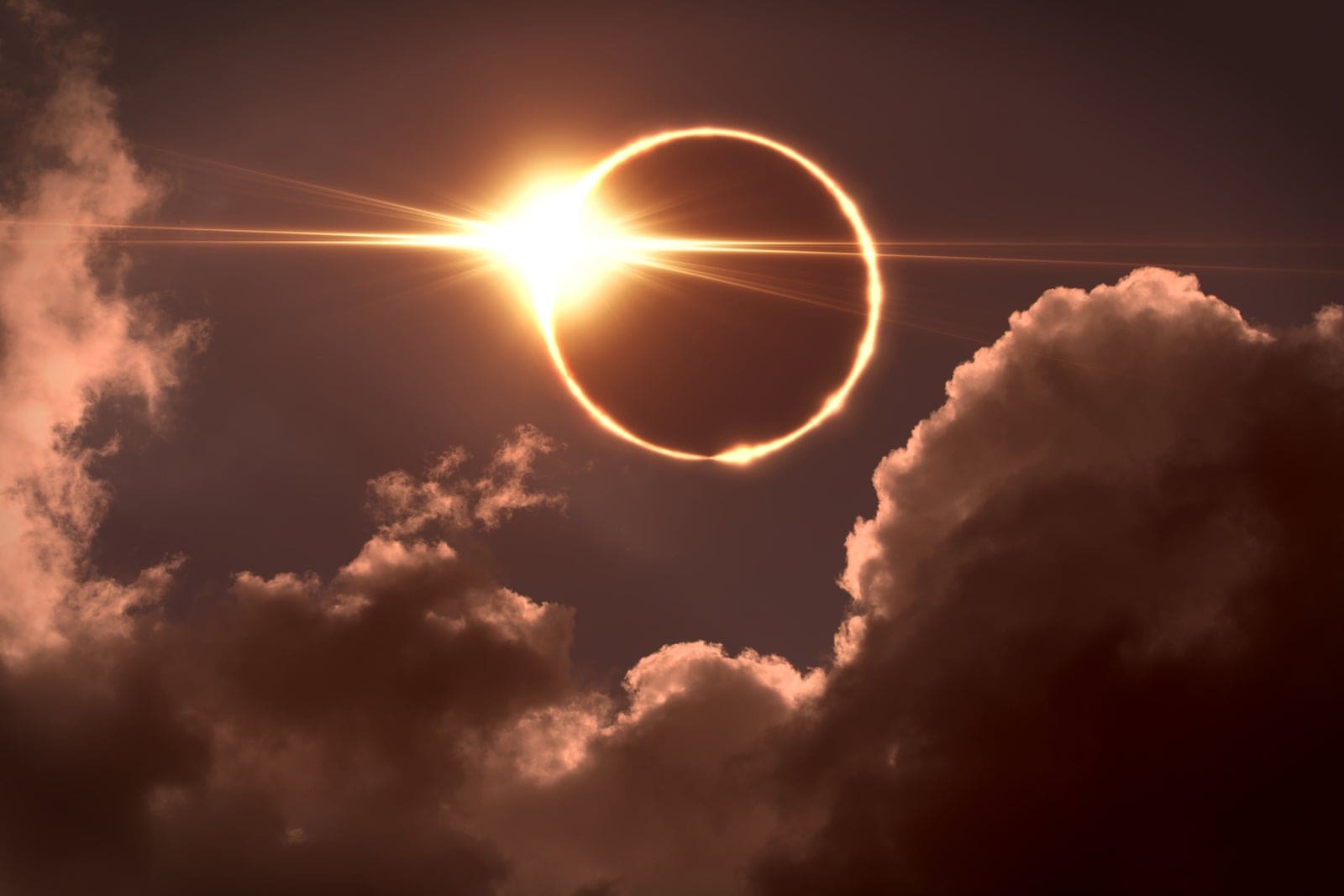
Mainland Spain hasn't seen a total solar eclipse since 1912. That's about to change. On August 12, the moon's shadow will sweep across the Iberian Peninsula near sunset, bringing up to two minutes and 18 seconds of daytime darkness to observers on the ground.
The eclipse path will start near the North Pole before tracking south across the Atlantic. Most of the 5,130-mile journey will cross empty ocean, with maximum totality occurring off Iceland's west coast. By the time the shadow reaches Portugal and Spain, totality will have shortened to around a minute. The show will wrap up over the Mediterranean.
The timing adds another layer to the spectacle. The same day will feature six planets forming an arc in the pre-dawn sky, and the Perseid meteor shower will peak after nightfall under a new moon. Bright meteors could streak across the darkened sky during totality, with planets and stars briefly visible in the background.
Who Gets to See What
Hundreds of millions of people outside the path of totality will still catch a partial eclipse. The closer you are to the centerline, the more of the sun disappears. Dublin will see 94% coverage. Oslo gets 83%. Montreal will see 18% of the sun blocked, dropping to 9% in New York and just 2% in Norfolk, Virginia.
The partial eclipse will be visible as far as Alaska and Siberia, covering Canada, the northern United States, much of Europe, and parts of West Africa. Even a sliver of sun requires proper eye protection, though. Special eclipse glasses are essential for anyone watching, no matter how much of the sun is obscured.
Scientists Line Up Their Experiments
Research teams are treating the eclipse as a natural laboratory. More than 60 high-altitude balloons will launch from Spain and Iceland, according to Montana State University's Angela Des Jardins, who leads the NASA-funded balloon project. The balloons will study atmospheric changes during the brief period when temperatures drop and the moon's shadow races across Earth.
That's a significant scale-up from similar efforts. During the 2024 total solar eclipse over North America, teams launched ten times fewer balloons.
The European Space Agency will observe the eclipsed sun and its corona using two space telescopes. Proba-3, ESA's satellite duo designed to create artificial eclipses, won't be positioned correctly during totality but will attempt to capture images before and after the main event.
Southwest Research Institute's Amir Caspi will chase the eclipse aboard a NASA high-altitude plane. Four cameras will record the corona in nine wavelengths as the jet flies at 460 mph, extending totality to nearly three minutes in the air. Each camera is expected to capture thousands of images during that window.
ESA's director of science, Carole Mundell, described the eclipse as more than a scientific opportunity. It's a moment that connects people on the ground to the wider cosmos, she noted.
An Even Longer Show Is Coming
The 2026 eclipse is only the opening act. On August 2, 2027, another total solar eclipse will cross southern Spain, this time delivering up to six minutes and 23 seconds of totality. The path will continue through Morocco, Algeria, Libya, Egypt, Saudi Arabia, Yemen, and Somalia.
Then on January 26, 2028, a ring-of-fire eclipse will complete Spain's celestial trifecta. It's an unusual concentration of events for a country that last experienced a full solar eclipse in 1912, two days before the Titanic sank. Some astronomers point to 1905 as Spain's last true total eclipse, since the 1912 event was a rare hybrid that toggled between ring-of-fire and just a few seconds of totality.
The Belgian Royal Observatory's Andrei Zhukov has a different perspective on eclipse frequency. His Proba-3 mission has created more than 60 simulated total solar eclipses over the past two years, with the longest lasting five hours and 38 minutes from two satellites flying in formation. He's looking forward to more eclipses, whether natural or artificial.
Chasing the Northern Lights During Totality
Eclipse mapmaker Michael Zeiler will be on a cruise ship in a Greenland fjord for his 13th total solar eclipse. He's sailing as a guest lecturer, but he has a secondary goal: capturing the northern lights during totality. He'll point a video camera north to record any aurora that forms while the moon blocks the sun.
A large solar outburst would make the attempt more likely to succeed. For Zeiler, the appeal is straightforward. He's drawn to rare phenomena, and the combination of an eclipse and auroras fits that description.
The European Space Agency will host a live webcast from Spain's Astrophysical Observatory of Javalambre and hold a public celebration in Leon. NASA and the Italian-based Virtual Telescope Project will provide their own coverage.
What the Eclipse Means for Travelers
The last time mainland Spain saw totality, the country looked very different. A century of development means far more people will be in position to witness this one, and the crowds are expected to be massive. Portugal will also catch a small portion of the path.
Totality happens near sunset in Spain, which could complicate viewing for some but also offers the chance to see an eclipsed sun low on the horizon. That's a different experience from mid-day eclipses, where the sun is directly overhead.
The 2027 eclipse will bring even larger crowds to southern Spain and North Africa. With more than six minutes of totality, it will be one of the longest eclipses of the century. For travelers planning around celestial events, the Iberian Peninsula is about to become a hot destination for three years running.