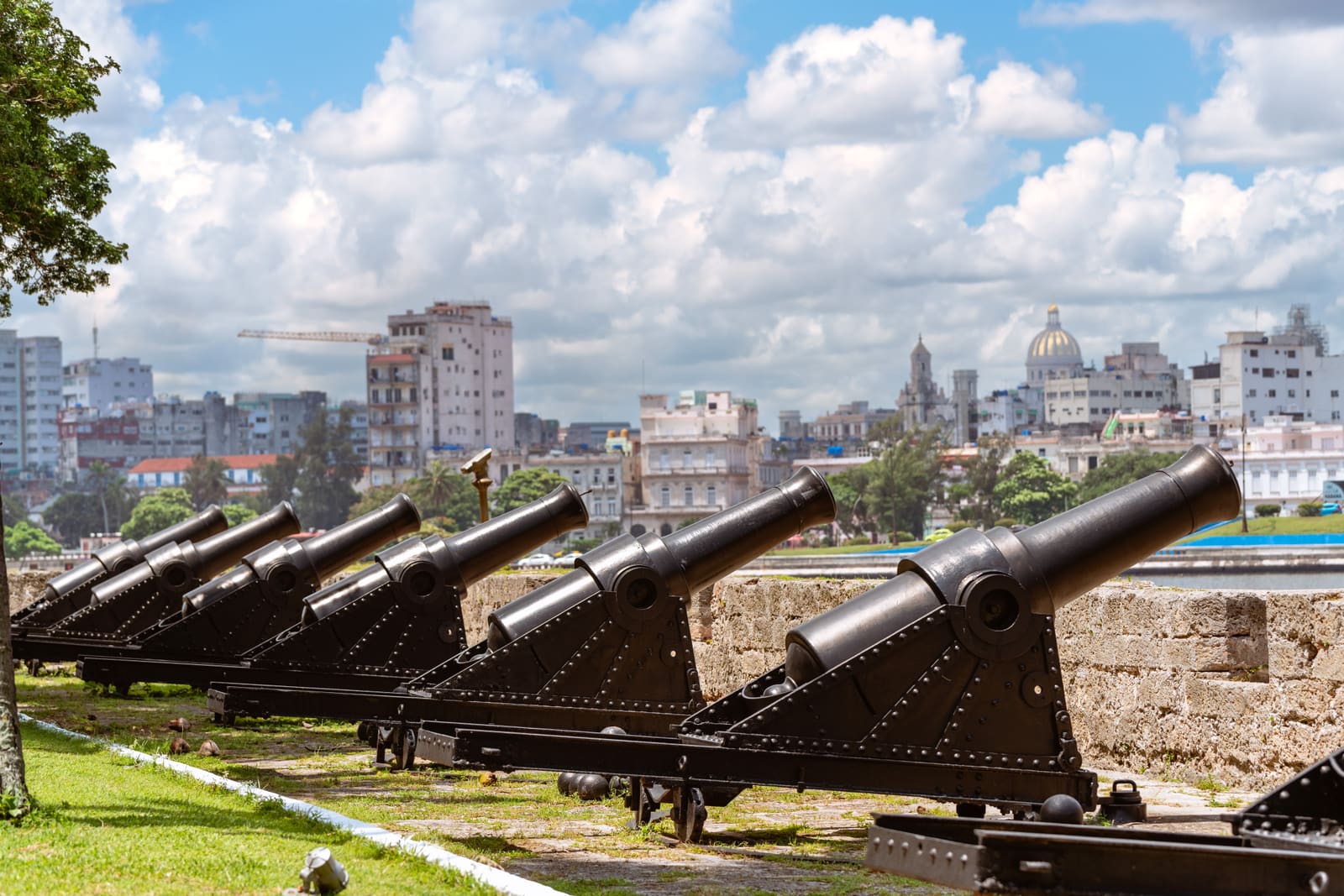
A Ritual That Echoes Across the Bay
At precisely nine o'clock each evening, the boom of a cannon rolls across Havana's waterfront. The sound carries through the narrow streets of the old quarter, reaching most corners of the historic district. For those who make the journey to Castillo de los Tres Santos Reyes del Morro - the 17th-century fortress perched on a rocky promontory at the harbour entrance - the experience is more than auditory.
Re-enactors dressed as Spanish colonial soldiers perform the ritual with the formality of the 18th century, when the ceremony served a practical purpose: signalling the closing of the city gates and the raising of a harbour chain to protect against night-time attacks. Today, the tradition survives as theatre, but the setting and the reverberating blast make it feel immediate.
The nightly ceremony draws a crowd. Visitors gather on the fortress grounds as the costumed figures go through the choreographed steps: loading the cannon, lighting the fuse, stepping back. The explosion is loud enough to startle first-timers, and the smell of gunpowder lingers in the humid air.
A Fortress Built for Defence
El Morro was constructed between 1589 and 1630 to guard Havana from pirates and rival European powers. Spain's treasure fleets stopped in the city on their way back across the Atlantic, making it a high-value target. The fortress, with its thick limestone walls and strategic position, was meant to deter ships from entering the harbour uninvited.
The design was practical rather than decorative. Cannons lined the seaward walls, and the structure's layout allowed defenders to cover multiple approach angles. Over the centuries, the fortress also served as a prison, and sections of the interior still show the cells where inmates were held.
A lighthouse was added in the mid-19th century, and it remains operational. The tower is open to visitors, and the climb rewards with a panoramic view: the city spreading out to the south, the Malecón curving along the coast, and the open Caribbean stretching to the horizon.
What to Expect During the Day
While the evening ceremony is the headline attraction, a daytime visit reveals the fortress in full. Guided tours cover the history of the site, the mechanics of colonial-era defence, and the building's later use as a detention facility. Guides explain how the cannons were aimed and fired, and point out the scars left by British cannonballs during the 1762 siege, when Havana briefly fell to foreign control.
After the tour, visitors are free to explore. The grounds are extensive - wear sturdy footwear, as the terrain is uneven and the stone paths can be slippery. The fortress sits on a headland, and walking the perimeter offers shifting views of the water and the city.
Standing on the ramparts, it's not difficult to picture the scene three centuries ago: lookouts scanning for sails, officers calculating trajectories, the tension of waiting for a threat that might or might not materialise. The fortress was built for a world where distance and firepower mattered in ways that feel almost archaic now, but the physical space makes that history tangible.
Practical Considerations
The cannon ceremony happens every night at 21:00, weather permitting. Arriving early is advisable, as the best vantage points fill quickly. The fortress is accessible by taxi or a short ferry ride from Old Havana, and the journey itself offers a useful perspective on the harbour's layout.
Daytime tours run regularly, and English-speaking guides are usually available. Entry fees are modest by international standards, though they're subject to change. Combining the day tour with the evening ceremony makes for a long visit, but the two experiences complement each other: one offers context, the other offers spectacle.
Havana has no shortage of colonial architecture, but El Morro occupies a unique position - literally and culturally. It's a reminder that the city's picturesque streets were once the edge of an empire, and that beauty and violence often shared the same address.