A System-Wide Breakdown
On 8 September, a technical fault at Nats - the organisation responsible for air traffic control across the United Kingdom - triggered widespread flight disruption at 15 airports. The failure affected departure schedules nationwide, though arriving flights continued to operate. Nats handles approximately 2.5 million flights annually, according to the organisation, making the outage a significant operational event for British aviation.
Engineers were deployed on-site to investigate the issue, but the cause and resolution timeline remained unclear as the disruption unfolded. The UK Civil Aviation Authority advised passengers to contact airlines directly for flight status updates and reminded carriers of their obligation to provide food, drink, and overnight accommodation in cases of significant delay or cancellation.
The incident underscores a structural vulnerability in the UK's aviation network: a single point of technical failure can cascade across the entire system, regardless of airport size or airline.
London's Five Airports All Hit
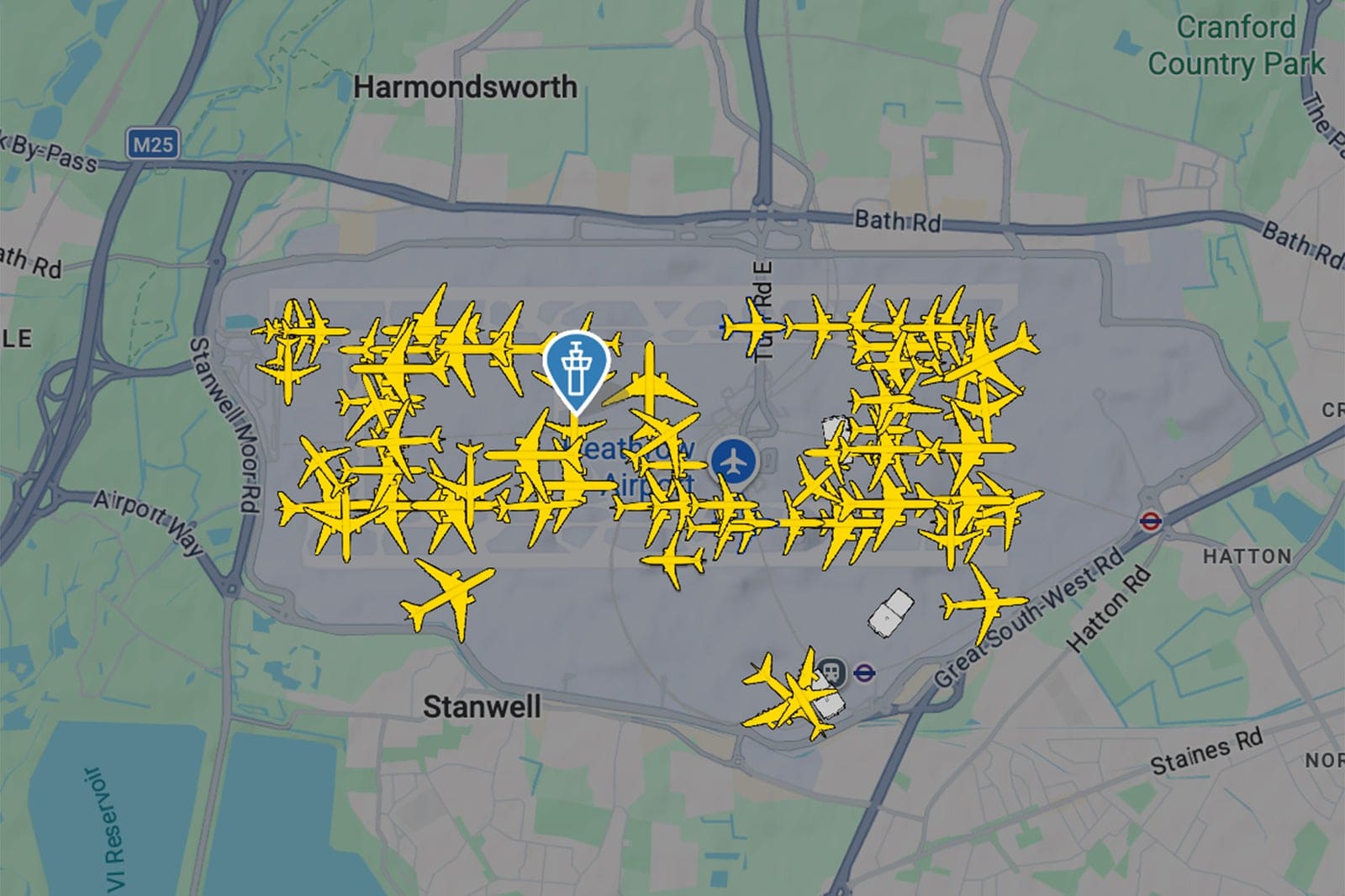
All five of London's commercial airports reported disruption. Heathrow, Gatwick, City, Stansted, and Southend each confirmed that the Nats fault was affecting departures, though the severity varied by location. Gatwick and Stansted issued public statements urging passengers to verify flight status before travelling to terminals, while City Airport noted that the problem was impacting "airports across London."
The concentration of affected hubs in the capital illustrates the centralised nature of UK air traffic management. Unlike systems in some other countries where regional control centres operate semi-independently, the UK relies heavily on Nats for coordination, meaning a technical issue at the core can ripple outward without geographic limitation.
Regional Airports Face Delays
Beyond London, disruption extended to major regional hubs. Edinburgh Airport recorded a 58 per cent delay rate, with an average hold-up of 26 minutes, according to FlightRadar24 data. The tracker ranked Edinburgh fourth globally for air traffic disruption at the time.
Manchester, Birmingham, Bristol, and East Midlands airports all confirmed delays to departing flights. AGS Airports, which operates Aberdeen, Glasgow, and Southampton, issued a unified statement acknowledging the fault. Belfast City and Liverpool John Lennon airports also reported potential impacts, advising passengers to check with airlines.
Jersey Airport, located in the Channel Islands, noted that the issue was affecting services between Jersey and the UK mainland, demonstrating how the fault extended beyond the British landmass to dependent territories.
What Happens When the System Fails
The Nats outage highlights the operational risks inherent in highly integrated air traffic systems. When a single provider manages the majority of a nation's airspace, a technical failure - whether software, hardware, or network-related - can ground flights across multiple airports simultaneously.
For passengers, the immediate consequence was uncertainty. Airlines bore the legal responsibility to rebook, feed, and accommodate affected travellers, but the sheer scale of the disruption meant that rebooking options were limited and wait times extended. The timing, on a Friday in early September, coincided with the tail end of summer holiday travel, compounding the inconvenience for families returning from trips.
The incident also raises questions about redundancy and failover mechanisms. Modern air traffic control systems are designed with backup protocols, but the fact that departures were halted nationwide suggests that either the failure was catastrophic enough to bypass those safeguards, or the redundancy architecture itself was insufficient.
A Recurring Vulnerability
This is not the first time UK air traffic control has experienced a high-profile disruption. Previous incidents have prompted reviews and investment in system resilience, yet technical faults continue to occur. The challenge lies in balancing the efficiency of a centralised system - which can coordinate complex airspace with fewer handoffs - against the risk that a single malfunction can paralyse the entire network.
For airlines and airports, the disruption represents both a logistical and financial burden. Rebooking passengers, compensating for delays, and managing stranded aircraft all carry costs. For passengers, it is a reminder that even in an era of advanced technology, air travel remains vulnerable to system-level failures that are largely invisible until they occur.
The resolution timeline for the Nats fault was not disclosed at the time of reporting, leaving travellers facing an extended period of uncertainty as engineers worked to restore normal operations.