The Scale of the Problem
Britain's aviation network ground to a near-standstill this week after a technical failure at National Air Traffic Services disrupted flight operations across the country. By Wednesday morning, carriers had scrapped more than 1,500 flights over two consecutive days, with 177 additional cancellations announced for Wednesday following roughly 1,300 scrapped departures and arrivals on Tuesday.
The failure originated in NATS' flight data processing system, which handles the routing and coordination of aircraft movements across British airspace. Although engineers resolved the underlying technical issue within hours, the knock-on effects rippled through the network, leaving airlines scrambling to reposition aircraft and crew while passengers faced mounting uncertainty.
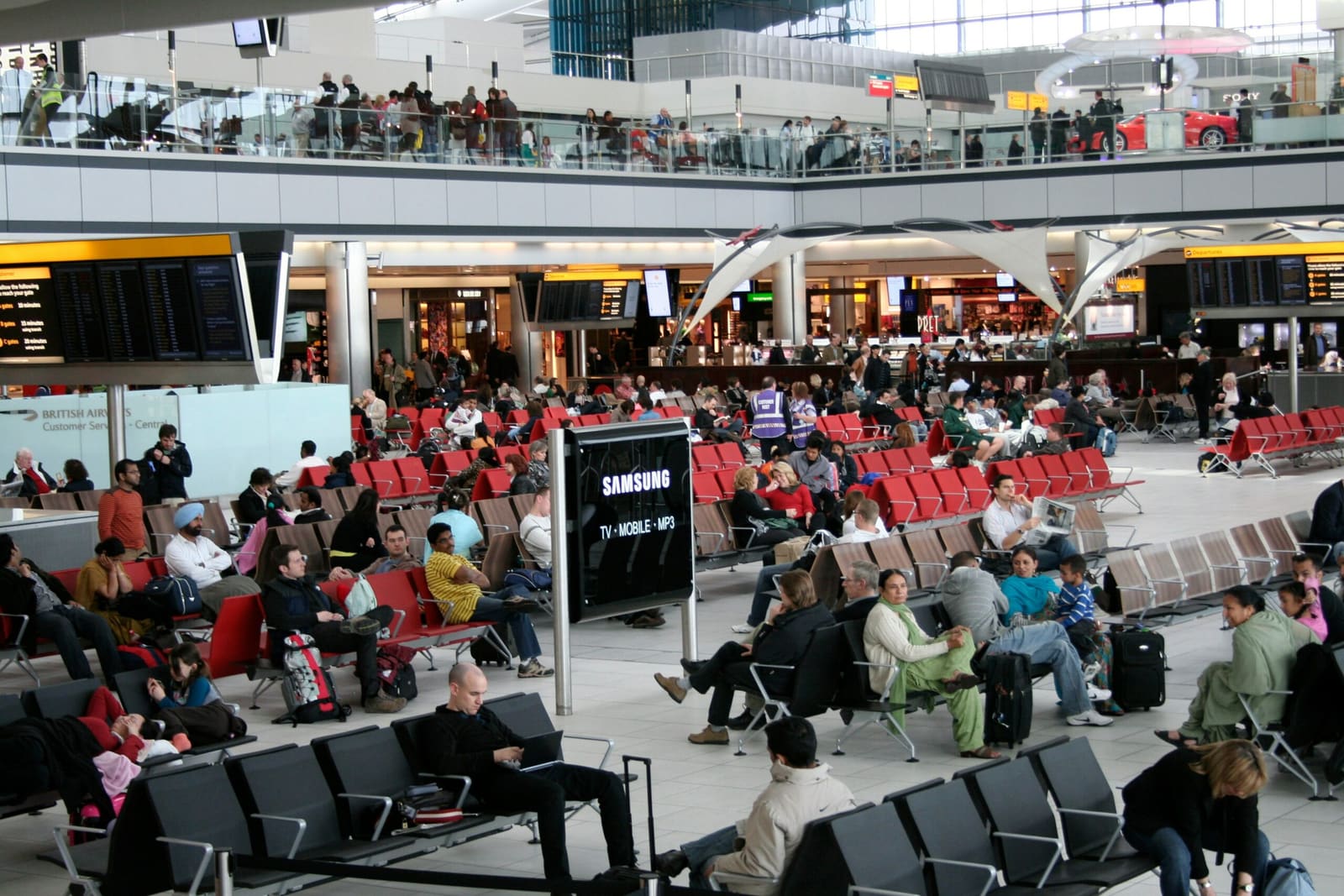
London Heathrow bore the brunt of Wednesday's cancellations, with nearly all of the day's scrapped flights concentrated at the country's busiest airport. The hub warned travellers that disruption would persist as carriers worked to untangle the logistical mess left by Tuesday's suspension of air traffic.
Passengers Caught in the Chaos
The disruption reached beyond London. Gatwick, Manchester, Birmingham, Liverpool and Edinburgh all reported significant delays and cancellations. Even Dublin Airport in Ireland scrapped dozens of flights as the ripple effects spread beyond British borders.
British Airways cancelled or diverted more than 100 services, affecting tens of thousands of customers. Ryanair reported that over 65,000 passengers had their travel plans upended, with more than 50 flights axed from its schedule.
At Gatwick, healthcare worker Josie Donoghue spent three hours sitting on a stationary aircraft before abandoning her flight to Ireland. She described the scene inside the terminal as an "absolute nightmare," comparing the effort to leave the airport to "trying to get out of Alcatraz." Her account, shared with the Press Association, captured the frustration felt by thousands caught in the disruption.
A Pattern of Failures
This marks the third significant air traffic control disruption in Britain in just over three years. In 2023, a major system failure affected more than 700,000 passengers. Another technical glitch in July 2025 caused flight disruptions lasting more than four hours.
The recurring nature of these incidents has intensified scrutiny of NATS, a public-private partnership that manages British airspace. Transport Secretary Heidi Alexander said she was seeking assurances that "lessons will be learned and systems that support aviation are up to the job."
Ryanair chief operating officer Neal McMahon publicly called for NATS chief executive Martin Rolfe to be removed, accusing him of having "failed UK travellers." The Irish carrier shared a video of McMahon's comments on social media, escalating what has become an increasingly public dispute between airlines and the air traffic control operator.
The Recovery Challenge
NATS acknowledged the complexity of the situation in posts on social media. "This has been a very complex recovery and has created difficulties for the whole aviation network, from which it will take time to recover," the organisation stated, apologising for the disruption and advising passengers to check flight status with their airlines.
The challenge facing carriers extends beyond simply rescheduling flights. Aircraft and crew are now out of position across Europe and beyond, creating a cascade of secondary delays. An airline might have passengers ready to board in Manchester, but the plane they need is still sitting in Málaga with a crew that has exceeded its duty hours. Resolving these puzzles takes days, not hours.
Heathrow advised passengers not to travel to the airport without confirming their flight was operating. The warning reflects a lesson learned from previous disruptions: showing up at the terminal without certainty only adds to congestion and passenger distress.
What This Means for Travellers
For anyone planning to fly through Britain in the coming days, flexibility will be essential. Even as the technical problem has been fixed, the operational backlog means delays and last-minute changes remain likely. Passengers with tight connections or time-sensitive commitments face particular risk.
The disruption also raises broader questions about the resilience of air traffic infrastructure. Modern aviation operates on thin margins, with high aircraft utilisation and tightly coordinated schedules. When a critical node like NATS experiences failure, the entire system becomes fragile. The fact that this is the third such incident in three years suggests the problem may be structural rather than isolated.
Airlines have legal obligations to rebook passengers or provide refunds when flights are cancelled, along with compensation in many cases under UK and EU regulations. But those rights offer little comfort to a family stranded far from home or a business traveller who has missed a crucial meeting.
The Bigger Picture
Britain's aviation sector handles more than 280 million passengers annually, according to the Civil Aviation Authority. Heathrow alone processes around 80 million travellers each year, making it one of the busiest airports globally. Any disruption at this scale has economic consequences that extend well beyond the travel industry, affecting business, tourism and the movement of goods.
The technical nature of the failure also highlights the vulnerability of systems that most passengers never think about. Air traffic control operates largely invisibly, coordinating thousands of flights daily with remarkable precision. When it works, it is taken for granted. When it fails, the consequences are immediate and widespread.
For now, NATS has restored normal operations, and the focus has shifted to clearing the backlog. But the political and industry pressure on the organisation is unlikely to fade quickly. With three failures in three years, the margin for future error has narrowed considerably.
Passengers planning travel through British airports over the next week should monitor their flight status closely, consider travel insurance that covers disruption, and build buffer time into their itineraries. The immediate crisis may have passed, but the recovery is far from complete.