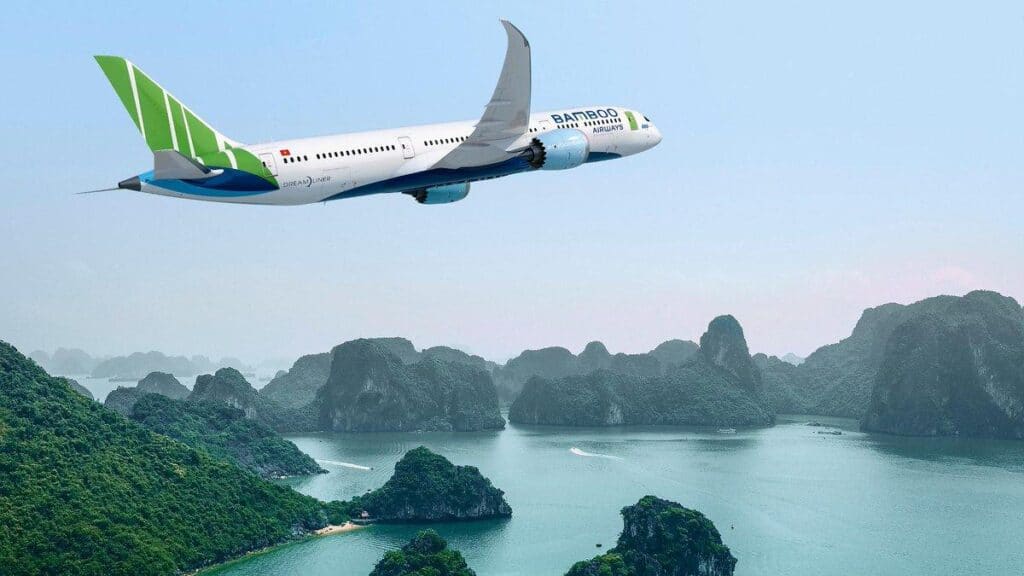
One Plane, No Schedule
Bamboo Airways has withdrawn from the scheduled-flight business. Since the start of August, the Vietnamese carrier has ceased ticket sales for domestic routes and removed departure options from its booking platform. The final scheduled departure is slated for 22 August. After that date, the airline will rely exclusively on ad hoc charter work flown by a lone Airbus A321.
The pullback marks the latest contraction for a carrier that once commanded a fifth of Vietnam's domestic market. From a peak of 44 jets, Bamboo now registers three aircraft on its books, two of which sit idle. Only one narrowbody rotates daily, shuttling between Hanoi, Ho Chi Minh City, Da Nang and occasional international points.
The Tax Problem
Vietnam's tax office in Gia Lai Province disclosed that Bamboo owes more than 440 billion dong, equivalent to roughly 16.8 million US dollars. Officials have signalled they may restrict travel for the airline's beneficial owner if the bill remains unpaid. The warning adds pressure to a balance sheet already strained by years of losses and creditor claims.
Tax debt represents only part of the financial picture. An independent audit completed in mid-2025 tallied liabilities exceeding 9 trillion dong. Airports Corporation of Vietnam holds claims near 2.6 trillion dong for unpaid landing and handling fees. Sacombank, the largest bank creditor, is owed close to 4 trillion dong. Together, these obligations dwarf the airline's shrinking asset base.
A Single Jet Does Everything
On a typical day last month, registration VN-A227 flew six sectors in rapid succession. The aircraft departed Hanoi for Ho Chi Minh City in the morning, turned north to Da Nang, crossed the South China Sea to Macau, then reversed the itinerary. By evening, five of those six flights had landed between two and three hours behind schedule. Cascading delays are inevitable when a single airframe must cover an entire day's flying programme.
Performance metrics reflect the strain. Civil aviation regulators reported that Bamboo's June punctuality stood at 66.8 percent, trailing the national average of 75.7 percent by nearly nine points. The airline has issued apologies and opened a refund channel for affected passengers, cautioning that high volumes may slow processing.
From Boom to Bust
Bamboo launched in 2019 under FLC Group, a conglomerate controlled by entrepreneur Trinh Van Quyet. Early momentum was strong. Within three years the airline deployed nearly 30 aircraft, including widebody Boeing 787s, and built a network spanning dozens of cities. Market share climbed past 20 percent.
The trajectory reversed in 2022 when authorities arrested Quyet on charges related to stock manipulation. FLC's liquidity evaporated. Bamboo recorded an after-tax loss of 17.6 trillion dong that year, pushing equity into negative territory. Accumulated deficits mounted faster than any restructuring plan could absorb.
A new investor consortium linked to property developer Him Lam and led by businessman Le Thai Sam assumed control in 2023. Capital injections and cost cuts stabilised operations briefly, but the debt overhang remained. By September 2025, the Him Lam group returned operational authority to FLC. At that point, the fleet had dwindled to seven jets serving a dozen domestic city pairs.
Fleet Evaporation
Lessors began reclaiming aircraft as payment schedules slipped. By the close of 2025, eight jets remained under Bamboo's control. That figure has since fallen to three, with practical operations limited to one. The two parked airframes await either lease negotiations or formal repossession.
The carrier also suspended its Hanoi to Lijiang charter service at the start of August, citing weak commercial returns. That route had been one of the few international offerings still on the timetable. With its exit, Bamboo's international footprint has shrunk to sporadic charter flights, mostly serving outbound tour groups.
What Comes Next
Management continues to speak of recovery. Public statements outline a target to add eight to ten aircraft annually between now and 2030, rebuilding the fleet to around 40 jets. Discussions have reportedly taken place with Boeing, leasing intermediary Eastbridge Partners and South Korean investment firm RAKSO Holdings. None of these conversations has advanced beyond preliminary stages.
The gap between ambition and reality is wide. Bamboo must first resolve its tax arrears, negotiate payment terms with airport operators and banks, and persuade lessors that future lease obligations will be met. Without a functioning scheduled network, revenue generation depends entirely on charter contracts, which are both irregular and lower-margin.
Travellers hoping to book Bamboo flights on core domestic trunk routes now find empty search results. The airline's website displays no availability for the Hanoi to Ho Chi Minh City corridor, historically Vietnam's busiest air route. Competitors have absorbed much of the displaced demand, though seat supply remains tight during peak travel windows.
The next few weeks will test whether Bamboo can stabilise its financial footing or whether the brand will fade entirely from airport departure boards. For now, one Airbus continues to fly, carrying charter passengers and a faint hope that a turnaround remains possible.