Clean Water, Quiet Streets
Fifteen minutes by bus from central Vilnius sits Green Lakes, a cluster of forested swimming spots with imported sand beaches and water clear enough to see the bottom. The lakeside parkland is clean, the forests thick, and the dragonflies plentiful. It is the sort of accessible nature that many European capitals lack within their city limits.
Vilnius itself holds the same appeal: an old town that is well-preserved but not overrun, electric trolleybuses threading through broad avenues, and river beaches that earn EU Blue Flag status. The Lithuanian capital, independent since 1990, remains one of the better-value destinations on the continent. A train ticket from the airport to the central station costs €0.90 - a figure hard to match anywhere else in Europe.
The Old Town is compact and walkable. The Presidential Palace and Cathedral anchor a grid of cobbled streets, and cafés spill onto pavements without the usual tourist clutter. Dionysos, a small Greek restaurant, serves spanakopita to diners seated outside; the Eureka Bookshop stocks English-language titles. There is little in the way of souvenir shops or litter.
Hills, Views, and Brutalism
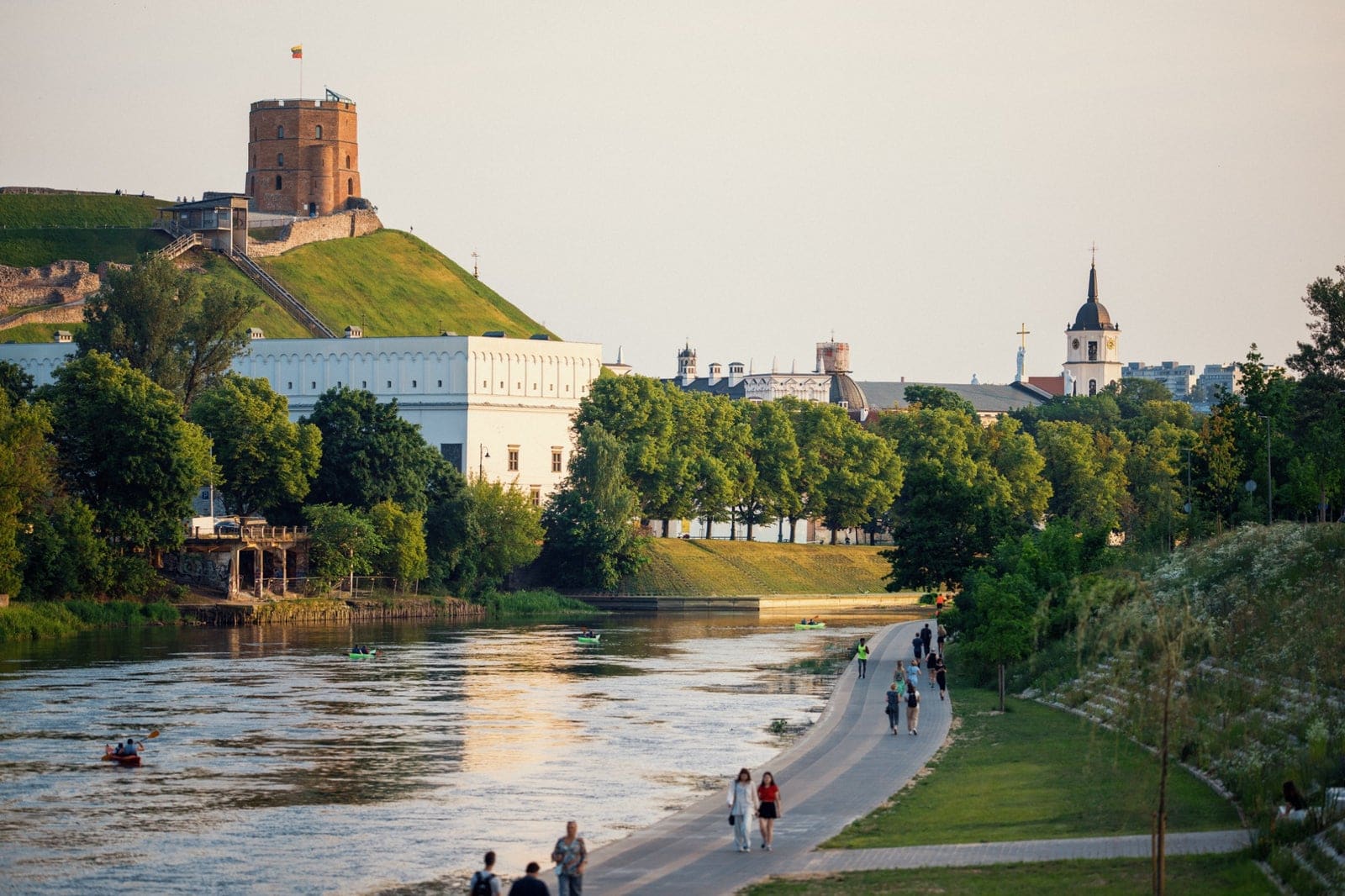
Two hills rise above the city centre. The Hill of Three Crosses commemorates three Franciscan monks who died here, and the monument at the summit offers a sunset view over the rooftops. Gediminas Tower sits atop the smaller hill, overlooking the historic core. At its base, the Pacai hotel - a Design Hotels property - offers minimalist interiors and a bar worth stopping at for a drink.
The Palace of Concerts and Sports, a brutalist structure from the Soviet era, stands in a state of partial neglect. Fences are easy to bypass, and the crumbling stairs lead to a closer look at the building's angular concrete facade. The venue hosted high-level political meetings during Lithuania's push for independence from the USSR in the late 1980s and early 1990s. Various redevelopment proposals have been floated, though none have materialised.
Vilnius ranks among the top cities for wild swimming. Valakampiai Beach, on the Neris River, is maintained with lifeguards in summer, picnic lawns, barbecues, toilets, and showers. The river current is gentle enough to float downstream without effort.
An Hour to Kaunas
A bus connects Vilnius and Kaunas in just over an hour. Kaunas served as the capital of the Lithuanian Republic during the 1920s and 1930s, a brief period of independence that left the city with a concentration of Art Deco and modernist architecture. The Post Office and the former Milk Company headquarters are notable examples. Residential streets hold clusters of inventive apartment blocks from the same era.
The city sits at the confluence of two rivers, and its historic centre retains a lively character. Students fill the bars, and street art covers walls across the downtown. A mural by Osgemeos, the Brazilian street art duo, adorns the side of the Modern Art Gallery. The brothers have Lithuanian heritage through their mother and have referenced their Baltic roots in interviews. The Yard Gallery displays artworks in a courtyard between buildings, open to passersby.
The Britanika Hotel is a 14-storey shell that never opened. Construction began in the 1990s and was abandoned before completion. The building stands empty, its windows dark, a relic of post-Soviet economic turbulence. In the evening, Hop Doc, a bare-brick brewpub, draws a bearded crowd for gourmet burgers and craft beer.
Baroque and Green Fields
A short ride outside Kaunas leads to Pažaislis Monastery, the largest monastic complex in Lithuania. The baroque structure sits in rolling farmland, its four centuries of history visible in the ornate facade and chapel interiors. The site has also served as a filming location; HBO's Catherine the Great used it as a backdrop.
The monastery encapsulates the mix that defines both cities: architecture and nature in close proximity, without the crowds that pack other European destinations. Vilnius and Kaunas are small, accessible, and still relatively quiet.
Getting There and Around
Lithuania, Latvia, and Estonia standardised rail timetables and integrated train services in 2025, according to the three countries' transport ministries. Direct trains now run from Riga and Tallinn to Vilnius. The Rail Baltica project, a high-speed line connecting the Baltic states and Warsaw, remains delayed but is expected to eventually link the region more tightly to the rest of Europe.
Low-cost carriers fly directly to Vilnius from London Stansted and London Luton, with return fares starting around £47. Kaunas also has direct flights from London Stansted, Bristol, Belfast, Liverpool, and Edinburgh, with returns from £41. Bus tickets between the two cities cost roughly £10 and can be booked through multi-modal transport platforms.
Both cities are walkable once you arrive. Vilnius' trolleybus network is extensive and inexpensive. Kaunas is compact enough to cover on foot. The beaches, lakes, and monasteries are all reachable by local bus or a short taxi ride.
Why It Works
Vilnius and Kaunas offer a combination that is increasingly rare in Europe: intact historic centres, accessible nature, and low visitor numbers. The architecture spans baroque, Art Deco, and brutalist periods, often within a few blocks. The swimming is clean and free. The beer is good, the food is straightforward, and the prices are low.
Lithuania's size works in its favour. The two cities are close enough to visit in a single trip without feeling rushed, and the transport links between them are simple. The country's location - between the Baltic Sea and Belarus - has kept it somewhat off the main tourist routes, though that may not last. For now, it remains a place where you can swim in a lake, climb a hill, and sit outside with a coffee without jostling for space.