A Long Weekend Disrupted
More than 4,000 cabin crew members at WestJet stopped work on Sunday, halting operations across Canada's second-largest airline during one of the busiest travel weekends of the summer. The Canadian Union of Public Employees, which represents 4,400 flight attendants at the carrier, announced the strike after negotiations with management broke down.
By early Sunday, WestJet had canceled 309 flights. The airline operates roughly 700 flights daily and carries more than 70,000 passengers each day under normal circumstances. The timing hit hard: the three-day weekend is a peak travel period, and the Calgary Chamber of Commerce estimates the disruption could affect as many as 250,000 travelers.
The Core Dispute
At the heart of the standoff is a question that has dogged airlines for years: how should flight attendants be paid for work they do on the ground? The union argues that a significant portion of pre-flight and post-flight duties go unpaid under the current system. WestJet counters that its "credit hour" model, which compensates crew based on scheduled flight hours rather than actual time worked, already covers these tasks.
Alia Hussain, president of CUPE 8125, said the airline's final offer fell short. "We tried until the very last minute to get a fair deal that recognizes the value of the work cabin crews do," she said. "Unpaid work is a big piece of our priorities, but we are bargaining a comprehensive contract."
WestJet, for its part, said it proposed an hourly rate covering all time before and after flights, which would make it the only airline in Canada to do so. The carrier also offered a double-digit wage increase and addressed other union priorities. Yet the gap proved too wide to close before the deadline.
What It Means for Travelers
WestJet serves more than 100 destinations across Canada, the United States, Mexico, and a handful of other countries. All scheduled flights on Boeing 737s and 787s have been grounded for the duration of the strike. Passengers will receive refunds or rebooking options, with updates sent by email.
Flights operated by WestJet Encore on the smaller Q400 aircraft remain unaffected, as do code-share flights run by partner airlines. Still, the carrier had already canceled around 80 flights on Saturday as it began winding down operations in anticipation of the walkout.
The disruption ripples beyond individual itineraries. Calgary, where WestJet is headquartered, relies heavily on the airline as an economic engine. Deborah Yedlin, president of the Calgary Chamber of Commerce, warned that the strike threatens tourism revenue and supply-chain networks at a critical moment in the travel season.
A Familiar Pattern
This is not the first time Canadian cabin crew have walked out over pay structure. Last August, flight attendants at Air Canada, the country's largest airline, went on strike over similar issues. The federal government intervened to halt that stoppage, but crew members initially defied the back-to-work order. More than 100,000 customers were affected during the three-day disruption.
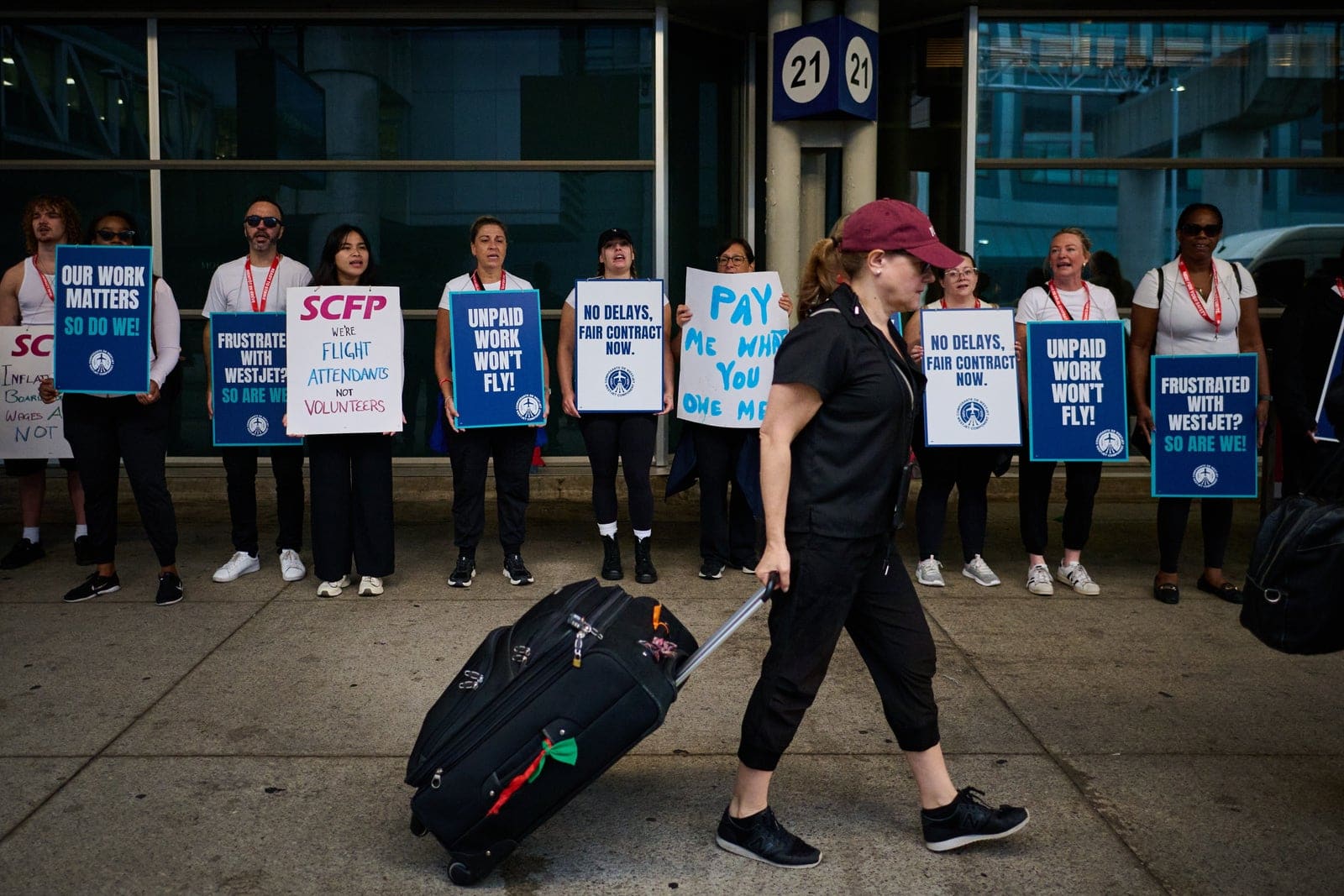
WestJet's union has urged the government to stay out this time and let the bargaining process run its course. As of Sunday, negotiations were continuing even as flight attendants set up picket lines at Toronto Pearson Airport and other locations.
The Broader Context
The ground-pay debate touches on a reality of airline work that passengers rarely see. Flight attendants arrive early to check safety equipment, conduct briefings, assist with boarding, and manage deplaning. Under traditional credit-hour systems, that time often goes uncompensated or is rolled into a blended rate tied to flight duration. Unions have pushed for years to change this, arguing that hours worked should mean hours paid.
WestJet's proposal to adopt an hourly model would have been a significant shift in Canadian aviation labor standards. That it was not enough to avert a strike suggests the gap is not just about rate structure but about how much that time is valued in dollar terms.
For now, thousands of travelers are left waiting, and the airline's summer schedule hangs in the balance. How long the strike lasts will depend on whether the two sides can bridge a divide that has been years in the making.