The Fifteen-Minute Rule Most People Miss
A fifteen-minute delay doesn't sound like much, but it can qualify you for a partial refund on most UK train services. The catch? Not every operator plays by the same rules, and many passengers never file a claim because they don't realize they're entitled to one.
Rail disruptions hit travelers daily across Britain. When delays pile up, passengers have legal rights to compensation, but the system is fragmented. Depending on which company runs your train, you might get a quarter of your fare back for a short delay or nothing at all until you've lost an hour. The variation isn't just confusing; it's a barrier to getting money back.
How Delay Repay Actually Works
Most UK rail firms now offer what's called "DR15," a policy that triggers refunds when trains arrive just 15 minutes late. Under this scheme, you can claim 25 percent of a single fare for delays between 15 and 29 minutes, 50 percent for 30 to 59 minutes, and the full single fare if you're an hour or more behind schedule. A two-hour delay gets you the cost of a return ticket back.
Avanti West Coast, Greater Anglia, Southeastern, Transport for Wales, Great Western Railway, and several others follow this structure. But outliers exist. Caledonian Sleeper, LNER, Lumo, and ScotRail won't pay anything until the delay hits 30 minutes. Grand Central, which links London with Bradford and Sunderland, has the stingiest threshold in the country: you need a full hour of delay to claim even half your fare, and three hours to get it all back.
There's also a statutory baseline that applies across the board. If your train gets you to your destination an hour late or more, you're legally entitled to at least half the single fare, no matter what caused the hold-up. That minimum exists regardless of the operator's own delay repay policy.
The Claims Process Ranges from Automatic to Tedious
Some operators have automated the refund process. Avanti West Coast, LNER, Lumo, GWR, and TransPennine Express offer "auto delay repay" for passengers who opt in and hold advance tickets for a specific train. The system detects the delay and credits you without any action required. It's efficient, but it mostly benefits people traveling on pre-booked, time-specific tickets. If you used an off-peak or anytime ticket valid on multiple trains, you'll still need to file manually.
"One-click" delay repay is the next tier down. You confirm you want to claim, and the money follows. Over half the operators contracted by the Department for Transport now offer one of these streamlined options, according to government figures.
For everyone else, the process takes about ten minutes if you have your details ready: train times, delay length, ticket cost, booking reference, and a photo or QR code of your ticket. Claims must be filed within four weeks of travel. You can usually choose between a bank transfer, credit card refund, or voucher. Payments typically arrive within a few days.
One frustration: passengers who book through third-party retailers like Trainline must still claim directly from the train operator responsible for the delay. The government has said that will change when Great British Railways takes over the network, expected in the first half of 2027, but for now it's an extra step.
What Counts as a Delay and What Doesn't
A canceled train isn't automatically a delay for compensation purposes. Most operators let you use an advance ticket on one of the two trains before or after your scheduled departure when a service is scrapped. You only incur a delay if you take a later train and it pushes your arrival time back.
Engineering work that doubles your journey time? That doesn't count either. Compensation is calculated against the published timetable on the day you travel, not the usual schedule. If track work turns a one-hour trip into two, you're expected to have known that when you bought the ticket. But if that already-extended journey is further delayed, you can claim in the normal way.
If you use multiple operators on a single trip, you can file your claim with any of them. They'll sort out responsibility internally. And if a delay looks set to exceed an hour, you're allowed to abandon your journey and travel another day using the same ticket, subject to the original restrictions.
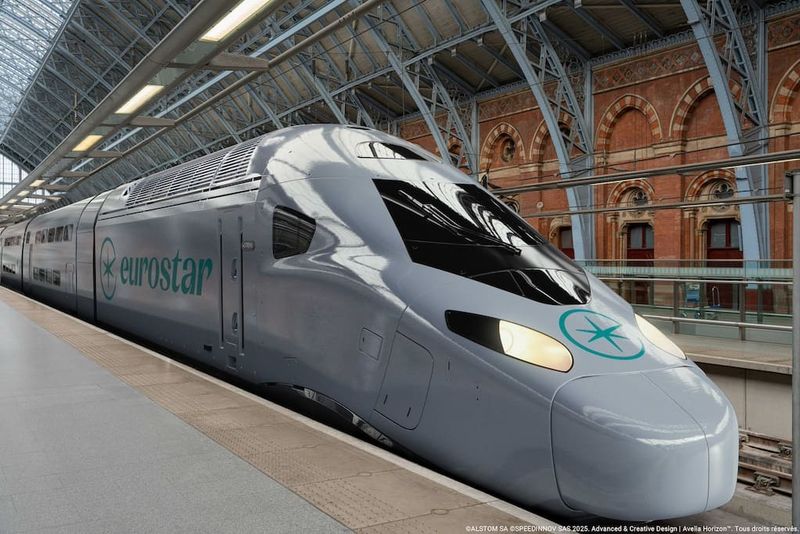
Eurostar Plays by Different Rules
Cross the Channel and the compensation picture changes. Eurostar's thresholds are higher and payouts lower. A delay of 60 to 119 minutes gets you 25 percent of the affected leg back in cash or 30 percent as a voucher. For delays over two hours, it's 50 percent cash or 60 percent voucher; three hours pushes the voucher option to 75 percent.
Eurostar may cover meals and accommodation if you're stranded overnight at one of its stations, and the operator has occasionally been more generous during major disruptions. After a pre-New Year power failure in the Channel Tunnel caused widespread chaos, some passengers received full cash refunds and vouchers. But as a baseline policy, it's less favorable than most domestic UK services.
The Gaps in the System
The UK's rail compensation framework is better than the airline equivalent in one respect: it's proportionate. Air passenger rights rules can award someone who paid £15 a £220 payout for a three-hour delay caused by the carrier, which skews fairness. Rail operators generally adopt a no-fault stance, paying out regardless of who or what caused the problem.
But inconsistencies remain. Business travelers on employer-paid tickets often receive the highest refunds, particularly in first class, where fares can be five times standard class on the same train. A half-hour delay on the 12-hour Caledonian Sleeper from Fort William to London might net twenty times the payout of the same delay on a commuter run, even though the latter is often more disruptive to someone's day.
Season ticket holders face separate arrangements and need to contact their operator directly. And while the law says train companies "may, in certain circumstances" provide meals and refreshments after an hour's delay, there's no binding obligation. Unlike airlines, rail firms have discretion, not duty.
You can, in theory, claim additional losses if a delay caused you to miss a concert, match, or weekend booking, but operators handle these on a case-by-case basis with no guarantees. National Rail's guidance makes clear it's entirely up to the company's discretion.
What's Next
The Department for Transport has committed to simplifying ticketing and claims through the forthcoming Great British Railways app and network overhaul. Officials say the goal is to rebuild trust by making trains run on time and making compensation easier to claim when they don't. Millions of passengers already use delay repay successfully, particularly through one-click systems on publicly owned operators.
Unifying the rules across all operators would at least make the system transparent. Right now, the variety of thresholds and payout structures means passengers need to know which company runs their train and what that company's specific policy is before they can figure out if they're owed anything. That's a lot to ask when you're just trying to get somewhere on time.