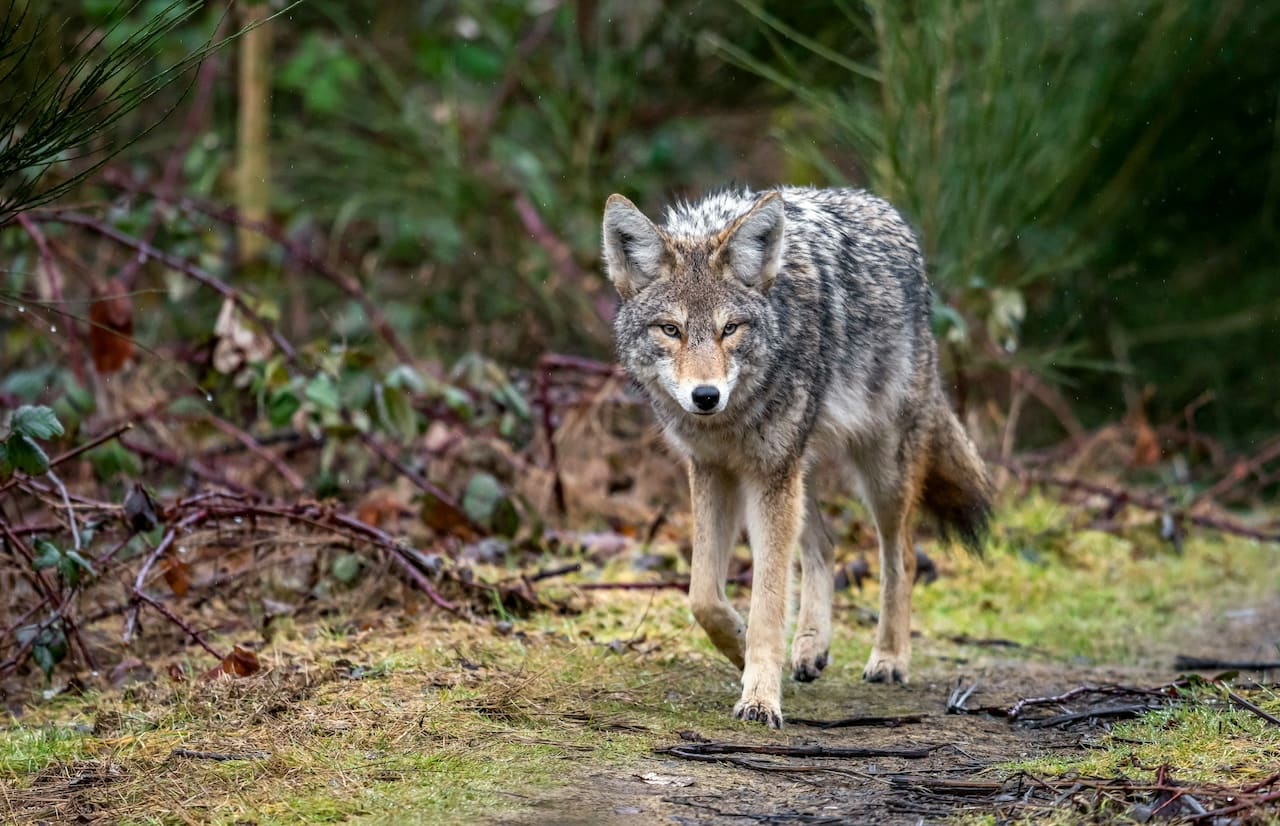
Leaflets Now Available at Tourist Sites
Visitors heading to the coastal stretch around Oksbøl, Vejers, and Blåvand will now find safety leaflets at campsites, tourist offices, and holiday rentals. The materials, printed in Danish, English, and German, outline practical steps for anyone who comes face to face with a wolf.
The guidance is straightforward: stay calm, look directly at the animal, and resist the urge to move closer or offer food. If the wolf lingers, people can make loud noises, clap, or wave their arms. Running away or turning your back is discouraged, as is letting children under 10 wander unaccompanied in the Oksbøl zone.
The Varde municipality and Visit Vesterhavet, the regional tourism body, launched the campaign after multiple sightings involving wolves that seemed unusually comfortable around humans. Sandie Eis Ravn, Varde's second deputy mayor, said local businesses requested clear instructions so guests would know how to respond if they spotted one of the animals near a forest trail or cottage.
What Sparked the Campaign
The push for public information follows observations recorded in May by the Danish Centre for Environment and Energy. Researchers documented at least one young wolf displaying what they described as notably reduced shyness, venturing close to people in and around Oksbøl.
Peter Sunde, a professor of wildlife ecology at Aarhus University, noted that at least two young animals had been seen approaching humans during the winter and spring months, keeping much shorter distances than adult wolves typically maintain. He explained that repeated exposure to people can shape how young wolves behave, especially if they encounter humans frequently during their early months.
Danish authorities stress that no wolf has attacked a person in the country. The current behavior does not signal imminent aggression, but officials want visitors to understand basic protocols. The leaflets also cover what to do in the highly unlikely scenario of an attack: defend yourself with kicks, strikes, or anything within reach. If a wolf goes after another person or a pet dog, aim defensive actions at the animal's rear quarters.
A Population Still Finding Its Footing
Wolves vanished from Denmark after the last known individual was shot in 1813. Nearly two centuries passed before they began drifting back across the border in 2012. By 2017, the first breeding pack had settled in western Jutland.
Monitoring data from the Natural History Museum of Aarhus shows 49 wolves recorded across the country this year. Most live in Jutland, where researchers have identified 10 territories. Seven pairs produced pups in 2025, three pairs remain without offspring, and one male holds a territory alone.
The animals feed primarily on roe deer and red deer, both abundant in Denmark. They also take smaller prey like hares, rodents, birds, and occasionally scavenge roadkill. The stable food supply has supported steady population growth, but it also means wolves and people increasingly cross paths in the same landscapes.
Balancing Recovery and Coexistence
The situation in Denmark reflects a broader European pattern. Wolf populations have rebounded across the continent, prompting governments to rethink management strategies. In 2025, the Bern Convention downgraded wolves from strictly protected to protected status, giving countries more room to manage numbers and address conflicts.
For Denmark, where the species only recently returned, the challenge is twofold: allow wolves to re-establish themselves while ensuring public safety. Wildlife experts worry that if young wolves grow accustomed to human presence now, future generations may carry the same behavior, making coexistence harder.
Authorities are asking both residents and tourists to avoid approaching wolves or leaving food outdoors that might draw them in. The goal is to reinforce natural wariness before it disappears altogether.
The Oksbøl area draws significant numbers of summer visitors who stay in cottages and campsites. Many come for the beaches and dunes, not expecting to navigate wildlife encounters. The leaflets aim to close that knowledge gap without alarming people or discouraging travel.
For now, the advice remains simple: if you see a wolf, stand your ground, make yourself heard, and give the animal space to leave. The hope is that clear guidance will keep both species safe as they learn to share the same stretch of coast.