Eight Airports Shuttered
Mount Anak Krakatau erupted late Friday, sending volcanic ash across the Sunda Strait and forcing the closure of eight Indonesian airports. More than 270,000 passengers have been affected, according to Indonesia's transport minister, with over 2,000 flights delayed or canceled by Monday.
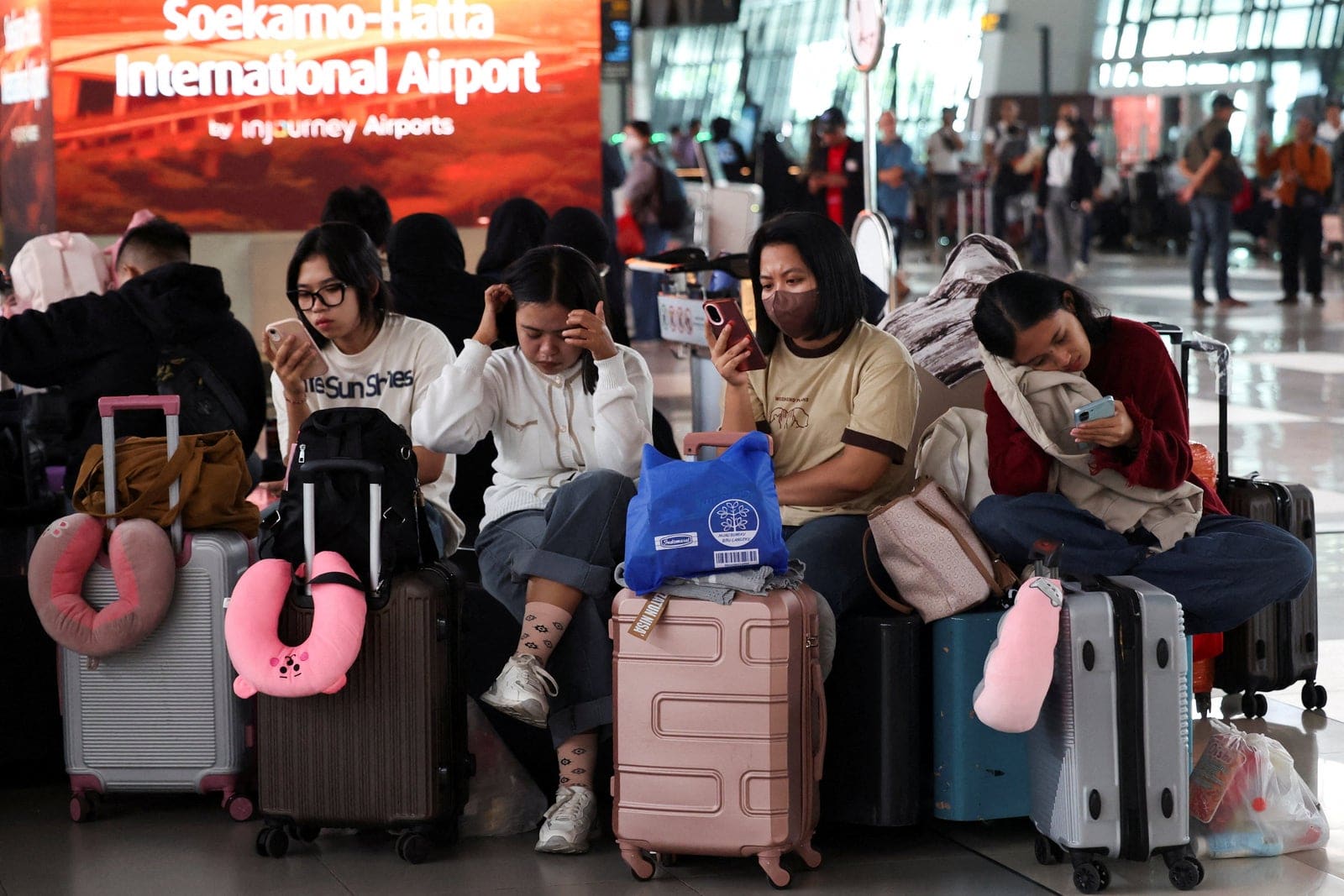
The disruption hit hardest at Soekarno-Hatta International Airport, Jakarta's main gateway, where 963 flights were delayed. The airport remained closed until 6 p.m. local time Monday, operators announced. Seven other airports, including those in Lampung and West Java provinces, were scheduled to stay shut until at least late Monday morning.
Bali's Ngurah Rai Airport also saw cancellations Sunday, mostly on the Jakarta-Bali route. Airlines including Garuda Indonesia, Indonesia AirAsia, Citilink, TransNusa, and Pelita Air grounded services. Despite the cancellations, airport operations otherwise continued as usual, according to Gede Eka Sandi Asmadi, head of the airport's communication and legal division.
Passengers Left in Limbo
Many travelers only learned of cancellations after clearing immigration. Muhammad Akbar, a 55-year-old businessman heading from Jakarta to Bangkok, told reporters he had already received his boarding pass and reached the gate before being turned back. "I understand there is a volcanic eruption but we need solutions," he said.
Others faced medical uncertainty. Catrine Carina, seven months pregnant, was flying from Singapore to Indonesia to give birth when her Singapore Airlines flight was scrapped. Now she and her husband worry whether she'll need a fresh fit-to-fly certificate for any rescheduled departure. At least 19 Singapore Airlines flights were canceled because of the eruption.
The UK government updated its travel advisory, noting that both Soekarno-Hatta and Jakarta's Halim Airport were temporarily closed September 5 due to the ash cloud. Although both have reopened, delays and cancellations persist. Authorities advised travelers to check with airlines for current flight status.
Ash Plumes and Safety Warnings
Anak Krakatau sits roughly 150 kilometers from Jakarta, halfway between Java and Sumatra. Ash from the eruption blanketed the capital and surrounding areas, prompting closures on safety grounds. Plumes reached 6,000 meters on the Java side and soared to 15,000 meters over Sumatra and parts of Banten province, according to Indonesia's meteorological agency.
The volcano monitoring agency recorded the most recent eruption Sunday evening and warned Monday that "the probability of further eruptions in the coming periods remains high."
Transport Minister Dudy Purwagandhi said weather conditions made it impossible to predict when normal operations would resume. "We cannot ascertain when this will end due to the dynamic weather," he said in a statement Monday.
Indonesia's disaster agency urged residents to wear masks outdoors to avoid inhaling ash. Jakarta's city government shifted schools to online learning Monday, without specifying how long the measure would last. Schools in Lampung province followed suit to reduce health risks for students.
Shipping and Exclusion Zones
The eruption also disrupted maritime traffic in the Sunda Strait. Port authorities barred vessels from a three-kilometer exclusion zone around the volcano and told ships to increase vigilance. Lana Saria, head of Indonesia's geology agency, warned people against approaching Anak Krakatau, saying ejected material could endanger anyone inside the zone. She added that the current series of eruptions did not have the potential to trigger a tsunami.
A Volcano Born from Catastrophe
Anak Krakatau, meaning "child of Krakatau," began forming a century ago in the area once occupied by Krakatoa, the volcano that destroyed itself in 1883. That eruption killed more than 36,000 people in a series of tsunamis. In 2018, a partial collapse of Anak Krakatau triggered a tsunami that killed 429 people and displaced thousands.
Indonesia straddles the Pacific Ring of Fire, where tectonic activity drives frequent earthquakes and volcanic eruptions. The country has more than 120 active volcanoes, and eruptions regularly disrupt air travel, fishing, and farming.
The scale of this week's disruption underscores how quickly volcanic ash can paralyze infrastructure across a sprawling archipelago. With monitoring agencies predicting further eruptions, travelers and residents alike face an uncertain wait for skies to clear and routines to resume.