A 400-Year Woodland Gets Clinical Recognition
Bussaco National Forest, a walled enclave in central Portugal about 80 minutes south of Porto, has received certification as a healing forest from the International Certification Office. The designation makes it the first such site in southern Europe and places it among just four certified therapeutic forests worldwide, according to the Mata do Bussaco Foundation.
The 105-hectare forest, enclosed by a five-kilometer stone wall, met criteria that go beyond simply being pleasant to walk through. Certified healing forests must be designed for therapeutic use, staffed by qualified personnel, and supported by medical evidence of health benefits. Requirements include natural protection from noise and wind, trails for varying mobility levels, and designated spaces for therapy sessions and rehabilitation exercises.
Gonçalo Breda Marques, president of the Mata do Bussaco Foundation, noted the global standing that comes with the designation. The certification, awarded in July and valid through 2031, links Bussaco to standards established by the International Society of Forest Therapy, formed in Austria in 2018.
What Makes a Forest Therapeutic
The distinction between a nice forest and a certified healing forest lies in structure. While any woodland can offer the stress reduction and immune system benefits associated with time among trees, a therapeutic forest is built for trained professionals to run formal rehabilitation programs.
These programs can support treatment for cardiovascular, respiratory, orthopedic, psychosomatic, and neurological conditions. Qualified forest therapists guide participants through the environment, which in Bussaco's case includes more than 250 tree and shrub species. The Foundation describes it as one of Europe's finest dendrological collections.
The practice draws on research linking forest environments to measurable health outcomes: lower blood pressure, reduced anxiety and depression, improved cognitive function, and better sleep quality. The most widely recognized version is Japan's shinrin-yoku, or forest bathing, introduced in 1982 as a national wellness initiative.
Bussaco takes that concept further by providing infrastructure and expertise for clinical application. Trails accommodate different physical abilities, therapy zones offer quiet spaces for guided sessions, and safety and accessibility standards meet certification requirements.
Monks, Explorers, and Mexican Cypress
The forest's botanical richness has roots in an unusual history. Monks from the nearby Monastery of Vacariça managed the land as early as the 6th century. In 1628, the Discalced Carmelites established a monastic retreat there, protected by papal decree that forbade women from entering and imposed penalties, including excommunication, for cutting trees.
During Portugal's Age of Discovery, when the country dominated maritime trade routes, monks received exotic species from around the world. One import, a cypress from Mexico, became known as the Bussaco cedar and gave the forest its name.
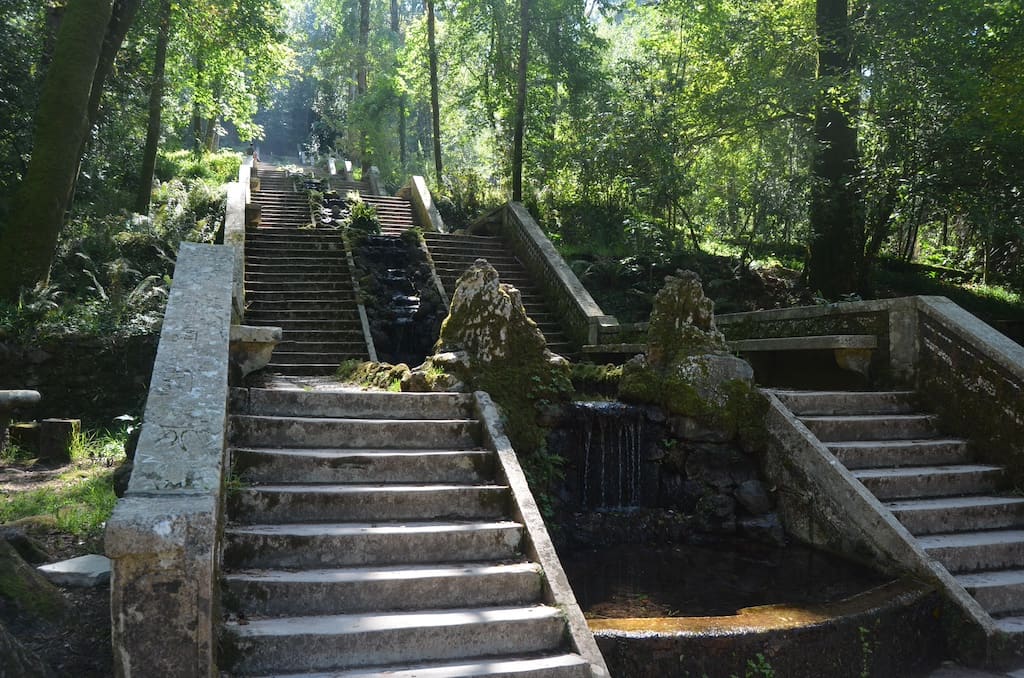
The landscape evolved significantly in the 19th century with the addition of ornamental gardens, lakes, and what the Foundation calls four distinct landscape units: an arboretum, gardens and fern valley, relic forest, and Pinhal do Marquês. Near the end of that century, construction began on a palace intended as a hunting lodge for King Carlos I. It later became the Palace Hotel do Bussaco, a luxury property that still operates today.
The forest's architectural and natural heritage has kept it on Portugal's tentative list for UNESCO World Heritage status since 2017, under the title referencing the Carmelite desert and palace ensemble.
Positioning Wellness Travel Beyond Spas
Bussaco's certification reflects broader interest in nature-based wellness offerings that don't fit the traditional spa resort model. Travelers increasingly seek experiences tied to measurable health outcomes, whether that's forest therapy, cold-water immersion, or altitude training.
For Portugal, the designation adds a wellness dimension to a tourism portfolio that has leaned heavily on beaches, wine regions, and cities. The forest sits in the parish of Luso in central Portugal, accessible for visitors based in Porto or those traveling between Lisbon and the north.
The certification requires reassessment in 2031, giving the Foundation a six-year window to build out programs and track outcomes. Meanwhile, the forest remains open to casual visitors who simply want to walk among centuries-old trees without a formal therapy session.
That dual function may be part of the appeal. Not every traveler wants a structured wellness program, but knowing the infrastructure exists for those who do adds credibility. It signals that the health benefits touted by forest environments aren't just marketing language but meet clinical standards.
Whether Bussaco's model spreads to other European forests will depend partly on demand. Certification isn't cheap or simple, and the requirements for trained staff and accessible infrastructure represent significant investment. But for a 400-year-old forest already rich in biodiversity and history, the designation offers a way to formalize what monks have understood for centuries: some landscapes do more than look good.