A Hotel That Remembers Its Past
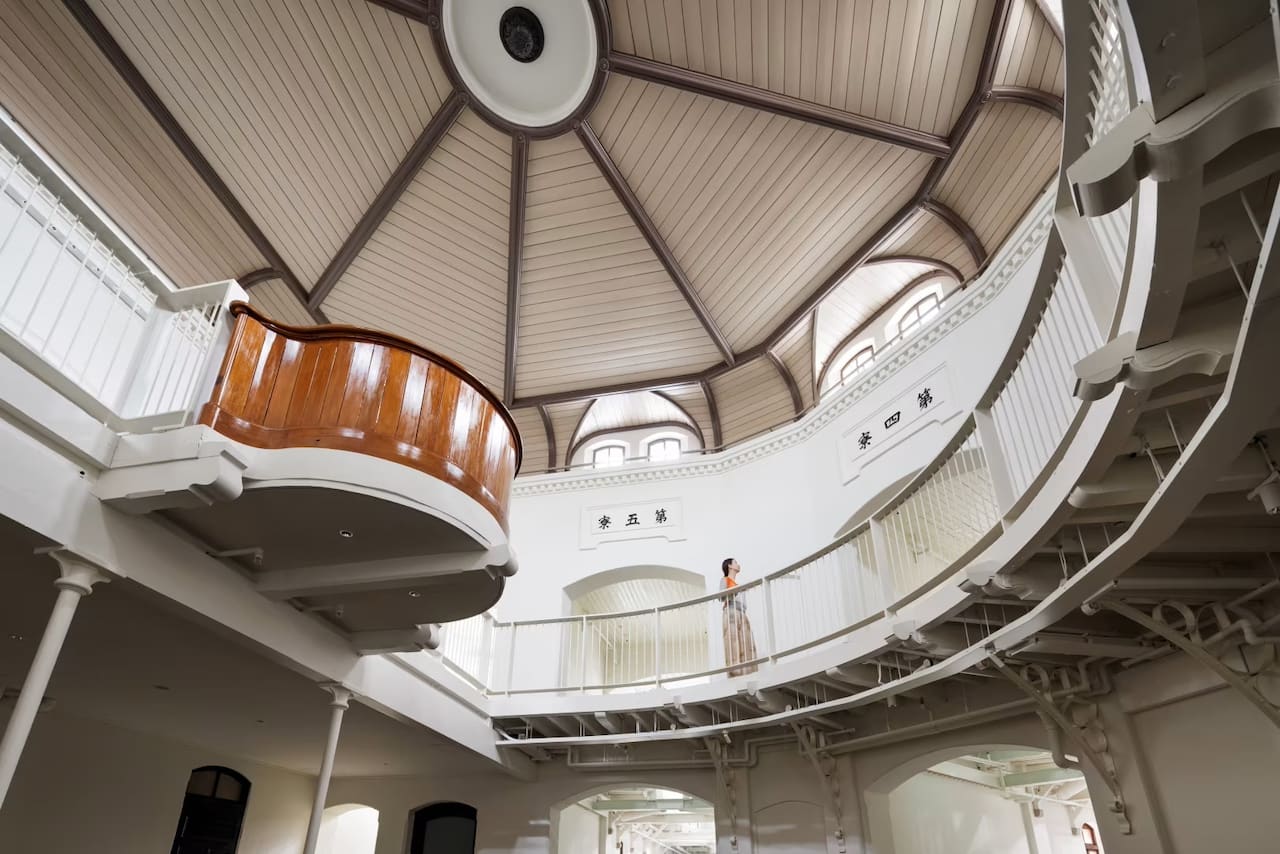
Most adaptive reuse projects try to soften the edges of the buildings they inherit. HOSHINOYA Nara does the opposite. The hotel, which opened in a century-old detention facility, keeps the guard posts at the entrance, the institutional corridors, and the small barred windows intact. Guests walk through heavy gates that once controlled the movement of prisoners, and the five cellblocks still fan out from a central core like spokes on a wheel.
The architects chose not to disguise what the building was. Rooms occupy former cells, nine to eleven joined together to create suites, but the walls that came down left traces. Rooms remain long and narrow. Ceilings sit at the same height they did when inmates slept below them. The concrete walls and window placements follow the logic of confinement, not hospitality.
One guest described feeling a sense of tension from the moment the entrance gate opened, an involuntary straightening of posture that came from the building itself. Another noted that the hotel values the experience of history over the pursuit of luxury alone, allowing visitors to feel the weight of the past in the bricks that inmates reportedly made and laid themselves.
What Gets Left Out
There is no pool, no fitness center, no meeting rooms. The hotel does not offer a kids' club, and rooms do not include televisions. The design decisions reflect a deliberate restraint, a recognition that some spaces do not lend themselves to the usual amenities. One guest called it a place for adults to quietly experience the space and its history, not a destination suited to children.
The stripped-back approach extends to the atmosphere. The corridors feel sterile, the proportions institutional. Single cells in the museum wing measure just 4.88 square meters and contain little more than a washbasin and a small window. The architects and designers wanted that austerity to remain legible, not as a gimmick but as an honest acknowledgment of what the building once held.
A Museum in the Same Building
One of the five wings remains preserved in its original state and operates as a museum open to the public during the day. The displays include prison meals, instructions for how inmates were required to fold their futons, and artworks created by those who served time in Nara. The final section features work by manga artist Kazuichi Hanawa, who was imprisoned there in the 1990s and later chronicled his experience in Doing Time.
The museum sits alongside the hotel, and the contrast is unavoidable. Staff now make the beds in rooms where prisoners once followed strict routines. The hotel's menu has drawn praise online, while the museum displays the meals that inmates received. The juxtaposition is not accidental. A placard in the museum suggests that those on the outside may have lost sight of what is truly irreplaceable in everyday life.
The Cost of Staying
Suites at HOSHINOYA Nara range from $350 per night for a nine-cell room to $610 for the eleven-cell deluxe option, not including breakfast. One guest described it as the most expensive hotel she had ever stayed in, but also the most memorable. The price reflects the unusual nature of the experience, though whether that experience feels like luxury depends on what a guest expects from a hotel.
The building's history shapes every part of a stay. The narrow proportions, the barred windows, the long corridors. Nothing about the design asks guests to forget where they are. That choice sets HOSHINOYA Nara apart from other heritage hotels, which often soften or romanticize the past. Here, the past remains present, and the tension that creates is part of what guests pay for.
Why Some Buildings Should Not Be Comfortable
Adaptive reuse usually aims to make old buildings feel new again, to smooth over the rough edges and insert contemporary comforts. HOSHINOYA Nara suggests a different approach, one that accepts discomfort as part of the story. The hotel does not try to make the prison feel welcoming. It lets the building speak for itself, and guests either respond to that honesty or they do not.
The tension that one guest described is not a flaw in the design. It is the design. The sense of sitting up straight, of feeling the weight of history, of recognizing that the space once held people who had no choice about being there. That awareness does not make for an easy stay, but it makes for a meaningful one.
Not every building deserves to become a hotel, and not every hotel should feel like a retreat. Some spaces carry too much history to be turned into something comfortable without losing what made them significant in the first place. HOSHINOYA Nara understands that, and it asks its guests to understand it too.