A Self-Governing Island Finds Its Groove
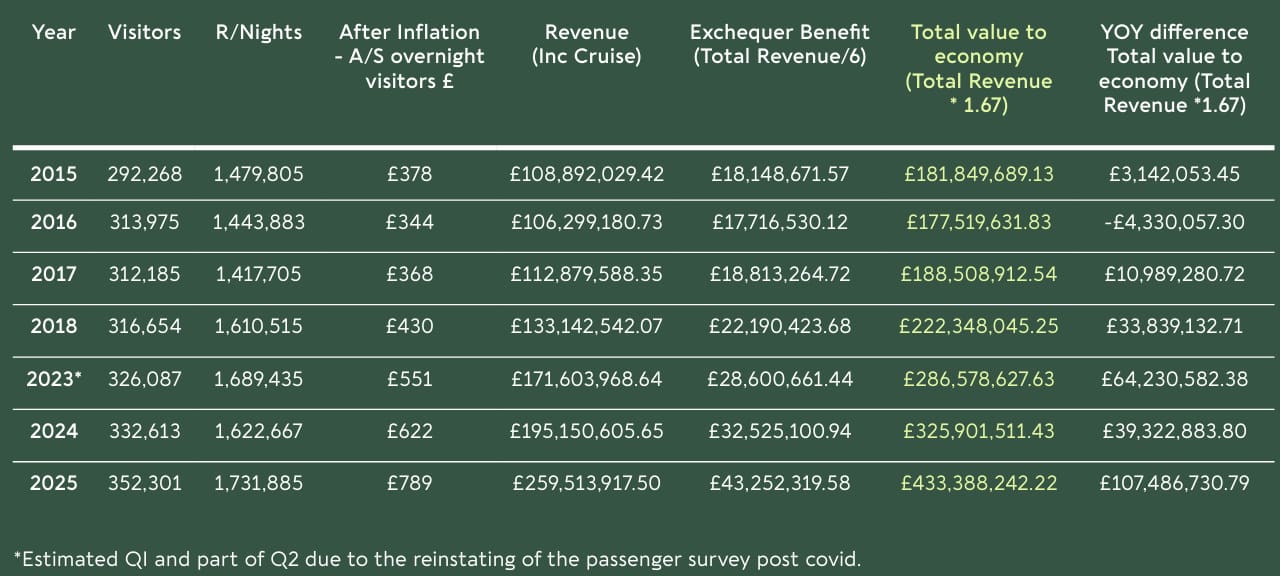
The Isle of Man welcomed 352,301 visitors in 2025, according to Visit Isle of Man, a seven-percent climb over the previous year. The total visitor economy now sits at £433 million - just over €505 million - representing 95-percent growth since 2018. What makes the numbers noteworthy isn't the headcount; it's the spending. Average visitor expenditure has already sailed past the target Visit Isle of Man set for 2032, even after adjusting for inflation.
The island, a British Crown dependency wedged in the Irish Sea between England and Ireland, has long played dual roles: offshore finance hub and motorsport pilgrimage site. Its annual cross-country motorcycle race draws thousands, and its low-tax status keeps a small but wealthy expatriate population. But the latest data suggest a third identity is taking hold - one built around landscape, heritage, and a quieter brand of authenticity that doesn't shout from glossy brochures.
Value Over Volume
Deborah Heather, CEO of Visit Isle of Man, framed the shift in blunt terms: "We are not simply growing visitor numbers; we are growing value." Visitor satisfaction clocked in at 99.2 percent in 2025, a figure Heather described as "essentially a 10 out of 10 in Net Promoter Score terms." The island's ten-year tourism strategy, launched in 2022, explicitly prioritized spending per visitor and resident sentiment over arrival totals - a gamble that appears to be paying off.
The approach stands in contrast to many European destinations now grappling with overtourism and local backlash. While Barcelona debates tourist apartment bans and Venice experiments with entry fees, the Isle of Man has opted for a slower build: longer stays, higher per-capita spend, and a marketing message that leans into what the island actually is rather than what a focus group might want it to be.
UNESCO and the Long Game
Part of the momentum traces back to 2016, when the Isle of Man became the first entire nation to receive UNESCO Biosphere status. The designation recognized the island's mix of beaches, nature reserves, uplands, and heritage sites - along with efforts to balance conservation and economic activity. UNESCO also noted the revival of Manx Gaelic and the persistence of traditional events like Oie Voaldyn, a spring fire festival with pre-Christian roots.
The recognition didn't trigger an overnight surge, but it gave the island's tourism board a narrative anchor. By 2024, Visit Isle of Man rolled out its "Extraordinary Isle" campaign, spotlighting local folklore, landscape, and the Manx language. The campaign aimed to carve out a niche in a crowded market where "authentic" and "off-the-beaten-path" have become travel-industry buzzwords - often hollow, but occasionally tied to something real.
The strategy seems to have resonated. Visitor spending rose in 2025 even as many European destinations reported flat or declining per-capita expenditure. The island's rugged coastline, medieval castles, and Celtic and Viking layers offer plenty of raw material, but the packaging matters. Visit Isle of Man has positioned the island not as a luxury escape or an adrenaline rush, but as a place where you can see how a small community maintains its own language and customs without turning them into theme-park props.
What It Means for Other Places
The Isle of Man's trajectory offers a case study for destinations trying to escape the volume trap. Growing arrivals is easy; growing value per visitor while keeping locals on board is harder. The island's combination of UNESCO credibility, targeted marketing, and a long-term strategy that treats satisfaction and spending as twin goals suggests a formula that might travel - though replicating it requires patience and a willingness to say no to quick wins.
The 2032 target of 500,000 visitors, set by Visit Isle of Man, would represent a 42-percent increase over 2025 levels. Whether the island can maintain per-capita spending growth while adding another 150,000 visitors remains to be seen. Infrastructure, housing costs, and resident goodwill all have limits. But for now, the Isle of Man is showing that a small island with a clear identity and a disciplined strategy can punch above its weight - without turning itself into something it's not.