A Rare Request
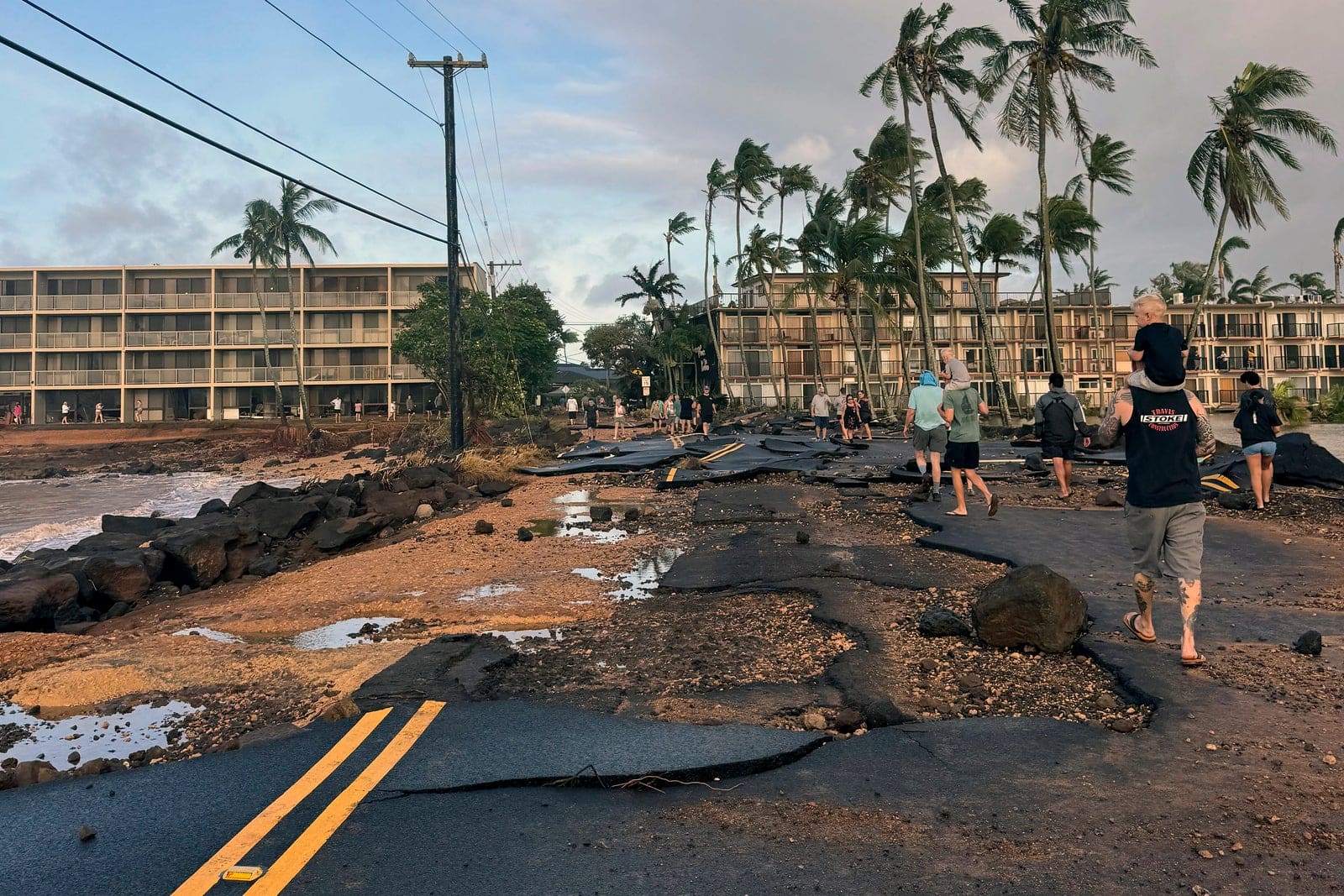
Kauai officials are doing something unusual in a place where tourism funds four in every ten jobs: they are asking prospective visitors to stay away, at least temporarily. Hurricane Lowell tore through the island earlier this week, leaving thousands without electricity, buckling coastal roads, and sending water surging through hotel lobbies. By Thursday evening, repair crews were still hauling away fallen trees and utility poles whilst long queues snaked through the island's main airport.
The request from the Hawai'i Tourism Authority stops short of an outright ban. Instead, Caroline Anderson, the authority's interim chief executive, suggested that travellers redirect their plans to other Hawaiian islands rather than scrapping their holidays entirely. The logic is straightforward: Kauai needs breathing room, but the state's wider economy still depends on visitor spending.
Kauai pulls in only a sliver of Hawaii's nearly ten million annual arrivals, yet the island's economic reliance on those visitors is acute. The storm's timing underscores a tension familiar to many tourism-dependent places: how to balance immediate recovery needs with the longer-term imperative to keep revenue flowing.
What the Storm Left Behind
Lowell's storm surge twisted and severed sections of coastal roadway, collapsed walls of residential buildings, and inundated resort properties on the south shore. Two people died, one a 74-year-old man discovered near the southern coast on Wednesday, the other killed on Oahu when a tree crushed his tent. Governor Josh Green has requested a federal disaster declaration to speed aid to Kauai and neighbouring Maui County, according to the state administration.
Several resorts have announced closures or partial shutdowns. The Ko'a Kea Resort in Poipu said it would refund guests who could not reschedule, with normal operations expected to resume within a fortnight. The Sheraton Kauai Coconut Beach Resort, which reported no structural harm, shut its doors Thursday evening pending the return of mains power.
Yet the picture is uneven. Chris White, a 68-year-old Kauai native who rents out a property in Poipu, noted that large swathes of the island escaped serious harm. His rental has a backup generator and solar water heating, and he has been fielding calls from prospective guests wondering whether to cancel. White's advice: check with your accommodation provider first. "Guests can still walk to Poipu Beach," he said. "The water's running."
Community First, Visitors Second
Kelly Kakalia, who co-owns The Musubi Truck, a mobile food business on Kauai, is less concerned about the short-term drop in tourist trade. On Wednesday, she and her team used their commercial kitchen in Wailua to serve nearly 600 free meals, relying on propane cookers and generators to keep ingredients cold. They prepared poke bowls, chicken, ahi katsu, and rice whilst a neighbouring café owner blended smoothies using power from her pickup truck. A nearby brewery contributed warm beer for volunteers. The queue ran from half past ten in the morning until four in the afternoon without pause.
Kakalia, 36 and Kauai-born, said she had no interest in charging for food when so many people she grew up with were in need. Once mains power returned to the kitchen, she donated the generators to families still in the dark. "The community and island are more important," she said.
Her stance reflects a broader sentiment among some residents: that the island deserves time to stabilise before welcoming back the flow of visitors. Tourism underpins Kauai's economy, Kakalia acknowledged, but "our island needs time to rest and rebuild and make sure locals have power and water" before that resumes in earnest.
The Calculus of Delay
The tourism authority's appeal to redirect rather than cancel is a calculated compromise. Hawaii's visitor economy is vast, generating tens of billions of dollars annually across the archipelago. Kauai's share is modest, but for the island itself, that income is critical. The challenge now is to manage a phased return that does not overwhelm fragile infrastructure or divert resources from residents still without electricity.
Social media has amplified images of buckled roads and flooded resorts, which may deter some travellers regardless of official guidance. Yet White's point, that damage was localised and many areas remain accessible, suggests the reality is more nuanced than the most dramatic photographs imply.
How long the informal moratorium lasts will depend on how quickly power companies restore the grid and road crews reopen key routes. In the meantime, Kauai finds itself in the uncomfortable position of turning away the very visitors its economy depends upon, a reminder that even the most tourism-reliant places sometimes need to press pause.