A Season That Changes by Region
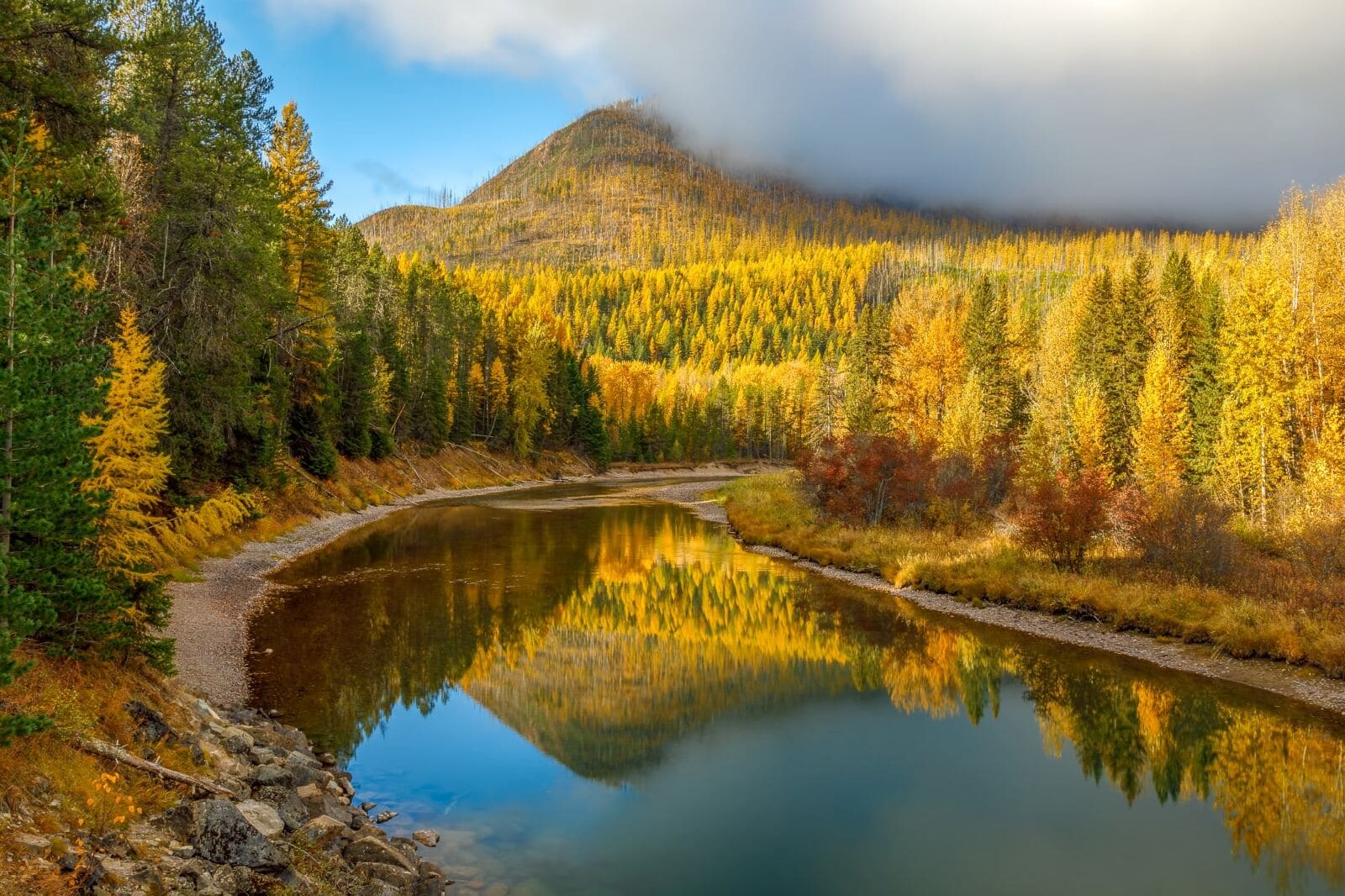
Montana's fall unfolds differently depending on where you stand. In the southwest and central mountain zones, aspen groves turn gold. In the eastern plains, wheat stubble catches late-afternoon light in amber waves. The shoulder season, roughly September through early October, sees fewer visitors than summer but offers active wildlife, fishable rivers, and cooler air. Timing matters: peak color shifts by elevation and latitude, so checking regional forecasts before booking helps set expectations.
The state's sheer size means you can't see it all in one trip. But five distinct regions offer different takes on autumn, from larch-lined reservoir roads to cottonwood corridors along the Missouri.
Northwest: Glacier, Flathead, and Larch-Lined Drives
Northwest Montana centers on Glacier National Park and the Flathead Valley. North Fork Road runs along Glacier's western edge, with Flathead National Forest on the opposite side. The route sees yellows and oranges in late September, and the corridor doubles as a migration path for waterfowl heading south.
Seeley Lake, tucked into Lolo National Forest, offers a loop trail that circles the water with views of surrounding ridges. The lake itself is calm enough for kayaking or canoeing, and several outfitters rent gear. Nearby, the Hungry Horse Reservoir area saw extensive larch planting after fires in 2003. West Side Road and East Side Road trace the reservoir's perimeter, with pullouts for hiking and camping.
The National Bison Range and Mission Valley, near Polson and Ronan, add another layer. The bison range is a wildlife preserve with open sightlines across grassland and low hills. Mission Valley's dirt roads wind through farmland edged with deciduous trees that shift color in early October.
Whitefish Mountain Resort, better known for winter skiing, opens some trails to hikers in fall. The higher elevations catch the larch season, and the resort's access roads make it easier to reach stands that would otherwise require bushwhacking.
Eastern Plains: Deciduous Pockets and Highway Loops
Eastern Montana doesn't have the density of trees you'll find in the Rockies, but it has its own palette. The Seven Sisters Wildlife Management Area, between Sidney and Glendive along the Yellowstone River, holds cottonwoods and other deciduous species that turn yellow and rust-orange. The area is less visited than western parks, and the Yellowstone's low water in fall concentrates fish.
The Hi-Line, following US Highway 2, runs through small towns like Glasgow, Malta, Chinook, and Havre. A loop starting in Glasgow and heading out to Tampico, then back via Riverside Drive Road, covers farmland, river bottomland, and prairie. The cottonwoods along the river provide most of the color, but even the grasses shift tone as temperatures drop.
This part of Montana won't give you alpine drama, but it offers scale and light. The plains open up in ways the mountains don't, and the sky becomes a bigger part of the composition.
Southwest: Aspen Tunnels and Alpine Lakes
Southwest Montana holds some of the state's most concentrated aspen stands. The Pioneer Mountains Scenic Byway cuts through groves that create a near-continuous canopy of yellow in late September. The byway is a winding route, so plan extra time. Cliff Lake, Wade Lake, and Georgetown Lake sit along or near the route, and all three reflect surrounding trees when the wind drops.
For a longer walk, the Goat Flats Trail in the Anaconda-Pintler Wilderness runs seven to eight miles round trip. The trail climbs through mixed forest into meadows, then up to ridgelines with views across the Pioneer and Bitterroot ranges. Aspen and larch mix at mid-elevations, and the color shift happens over a two-week window, so timing is tight.
The Bitterroot Valley, farther west, runs north-south and holds working farms alongside national forest land. The valley floor is mostly agricultural, but the foothills on either side hold pockets of aspen that turn in early October.
Central Montana: River Corridors and Island Ranges
Central Montana's defining feature is the Missouri River Corridor, which stretches from Holter Dam to Fort Peck. Cottonwoods line the banks, and the river's meanders create habitat for waterfowl and raptors. The cottonwoods turn yellow in late September, and the contrast with the river's grey-green water is stark.
The Rocky Mountain Front, where the Great Plains meet the Rockies, offers a different view. Aspen cluster along creeks and river drainages, and the Front's geology creates dramatic relief. The area is remote, with limited services, so fuel and supplies matter.
Lewistown and the surrounding island ranges, isolated mountain blocks rising from the plains, don't have dense tree cover. But the shrubs and low vegetation shift to rust and gold, and the open landscape makes even small color changes visible from a distance.
Where to Stay: From Treehouses to Working Ranches
Montana's fall accommodation options range from secluded cabins to ranch stays that let you see how working farms operate.
Raven's Nest Treehouse, near Columbia Falls, sits on five wooded acres 30 minutes from Glacier and close to Whitefish. The two-story structure sleeps four and offers deck space with forest views. Rates start around $607 per night.
In Hamilton, a four-bedroom farmhouse on ABC Acres sits in the Bitterroot Valley. The property includes chickens, goats, and permaculture gardens. Guests can watch daily farm routines, and the location is near farmers' markets that run through October. The house sleeps nine and costs approximately $508 per night.
Erik's Ranch, a 230-acre working ranch near Yellowstone's north entrance, operates as a nonprofit run by young adults with autism. The two-bedroom guesthouse sleeps six, and guests can arrange horseback lessons, guided hikes, or fly-fishing sessions for an additional fee. Nightly rates are around $433.
A three-bedroom A-frame in the mountains near Helena, 20 minutes from Jefferson City, includes a hot tub, two fire pits, and ridge views. The location sits between Yellowstone and Glacier, making it a practical midpoint for a multi-park trip. It sleeps six and runs about $514 per night.
Practical Notes
Montana's fall weather can shift quickly. Daytime temperatures in September range from the 50s to 70s Fahrenheit, but nights drop into the 30s, especially at elevation. Layering matters, and rain gear is useful even in dry years.
Wildlife activity picks up in fall. Elk rut in the mountains, and bears are active as they prepare for winter. Carry bear spray in backcountry areas, and check local regulations on food storage.
Fishing season varies by river and species, but many streams remain open through October. Lower water levels in fall make wading easier, and trout move into predictable holding patterns.
The shoulder season also means shorter hours at some businesses and reduced services in small towns. Calling ahead to confirm hours for restaurants, outfitters, and visitor centers saves time.
Montana's fall isn't a single experience. It's a collection of microclimates and regional shifts, each with its own timing and character. Whether you're chasing larch gold in the northwest or cottonwood corridors along the Missouri, the season rewards flexibility and a willingness to follow the color as it moves.