A New Stop for Caribbean Itineraries
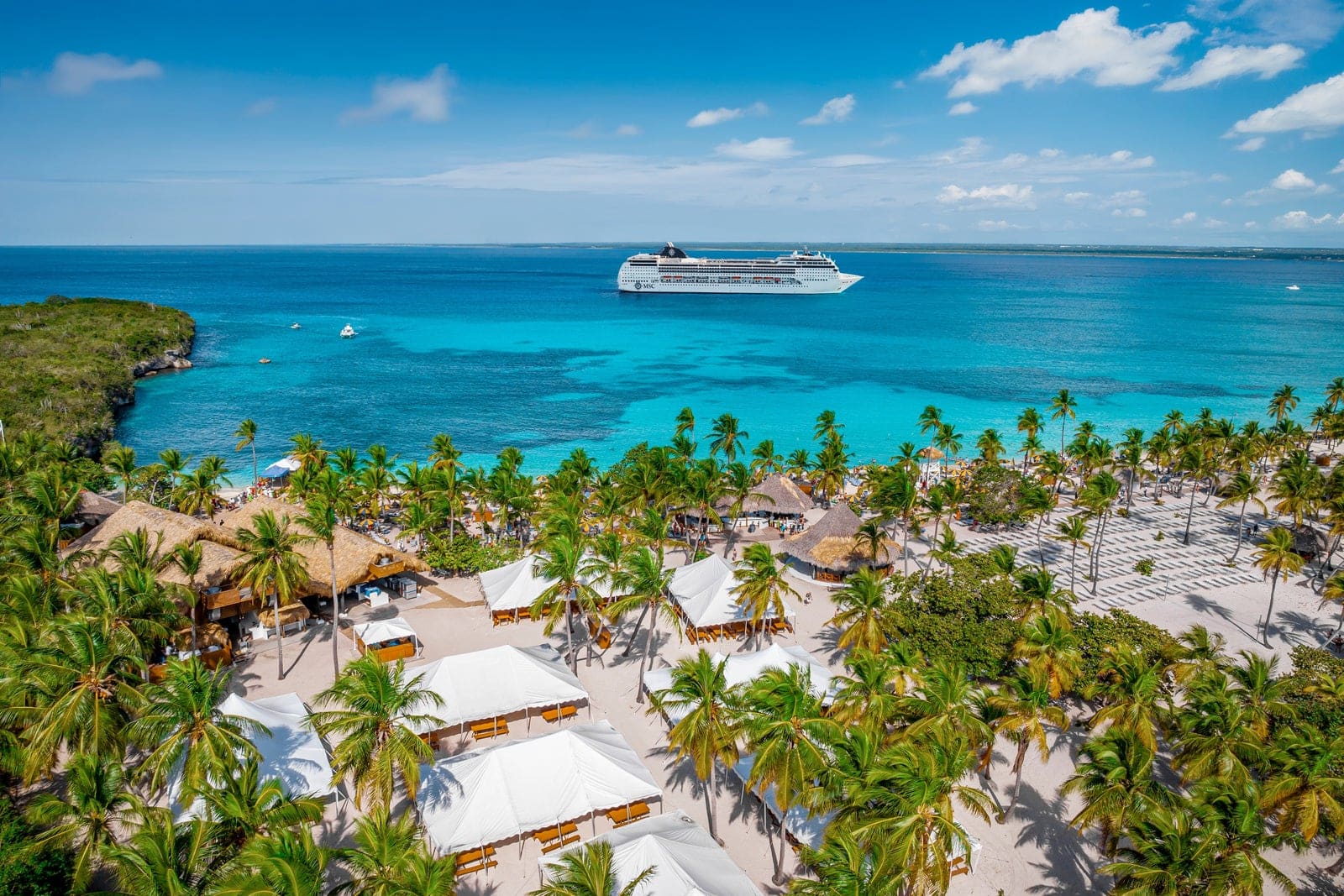
MSC Group will open a private beach destination on Catalina Island, just off the coast of La Romana in the Dominican Republic, starting in November 2026. Passengers sailing with MSC Cruises and Explora Journeys will gain access to the stretch of sand through a partnership with CTL Maritime, an MSC Group subsidiary, and Casa de Campo Resort & Villas, a local luxury property.
The beach club, named Catalina Sugar Beach, will feature an open-air buffet, two bars, private cabanas, and a walking trail highlighting the island's tree species. A watersports center will let guests book excursions to nearby Saona Island, the Cave of Wonders (an underground network known for pre-Columbian petroglyphs), and Altos de Chavón, a recreated Mediterranean-style village.
MSC Opera will begin calling at La Romana this November, marking the first time MSC Cruises has offered year-round itineraries in the southern Caribbean, according to MSC Group.
Why Cruise Lines Are Building Their Own Beaches
Private beach clubs and islands have become a competitive advantage in Caribbean cruising. They give cruise lines control over the shore experience, from food and drink to activities, and they generate additional revenue through cabana rentals and excursions. For passengers, these destinations promise a more predictable experience than public ports, where crowds and variable infrastructure can be a gamble.
MSC is already developing Sandy Cay, a second private island in the Bahamas located near its existing Ocean Cay destination off Miami. The company has described Sandy Cay as a luxury destination built on a natural sandbank, though few other details have been released. Both MSC Cruises and Explora Journeys will include Sandy Cay in future Caribbean sailings.
The move puts MSC in closer competition with other major cruise operators, all of whom have invested heavily in private destinations over the past few years. Royal Caribbean opened Royal Beach Club Paradise Island in the Bahamas at the end of 2025. Carnival Cruise Line launched Celebration Key last year, adding to Half Moon Cay, which it shares with Holland America Line. Norwegian Cruise Line operates Great Stirrup Cay, and Disney Cruise Line has two private islands: Castaway Cay and Lighthouse Point.
What This Means for Travelers
The proliferation of private beach destinations reflects a broader shift in cruise itinerary design. Where ports of call once revolved around historic towns and local markets, many Caribbean sailings now include at least one stop at a cruise line-owned property. That trade-off can be a matter of preference. Private beaches tend to offer more polished amenities and fewer logistical headaches, but they also mean less exposure to local culture and independent businesses.
For MSC, Catalina Sugar Beach offers a foothold in the southern Caribbean, a region where the company has had limited year-round presence. The Dominican Republic is already a popular cruise destination, with ports in Santo Domingo, Amber Cove, and Puerto Plata. La Romana, on the island's southeast coast, is less developed as a cruise hub but benefits from proximity to Casa de Campo, one of the Caribbean's best-known resorts.
The partnership structure is worth noting. Unlike Ocean Cay, which MSC developed on its own, Catalina Sugar Beach is a joint venture with an established local resort operator. That model could allow for faster buildout and lower capital risk, though it also means MSC will share control and revenue.
Whether the beach club becomes a draw or just another port of call will depend on execution. The watersports center and excursion options suggest MSC is aiming for more than a beach-and-buffet setup, but the real test will be how the destination differentiates itself from the growing list of competitors in the region.