A Hotel Born From Economic Necessity
Ytri Island Retreat sits on Husøya, part of the Træna archipelago, a scatter of 477 islands off Norway's northern coast. Getting there requires a 112-mile ferry journey from Bodø, and winter storms have been known to blow buildings into the sea. Yet the hotel that opened in April feels less like a rugged hideaway than a carefully planned community anchor.
The project began a decade ago when local fishing jobs dried up. The municipality and Træna 365, a local development company, gathered residents to imagine other futures. After six years of planning, investors Asle Helgheim and Ellen Hestenes, who already ran a Swedish spa hotel and knew the waters as sailors, signed on. Since opening, the island's population has grown nearly two percent, a modest but meaningful shift for a place that has been losing people.
The location's name, which translates to "outer point," captures the physical reality. Træna is far enough from the Lofoten islands, a better-known archipelago to the north, that overtourism is not yet a worry. Anders Budde, a water engineer who moved to Træna seven years ago and now works as one of the hotel's two activity guides, sees the remoteness as protective. Only so many people can arrive by sea, and the journey itself filters for a particular kind of visitor. Private helicopters from Bodø are available, but most guests take the ferry. Hurtigruten cruise ships bring day trippers a few times a week, though they rarely stay long.
Spare Rooms, Big Windows
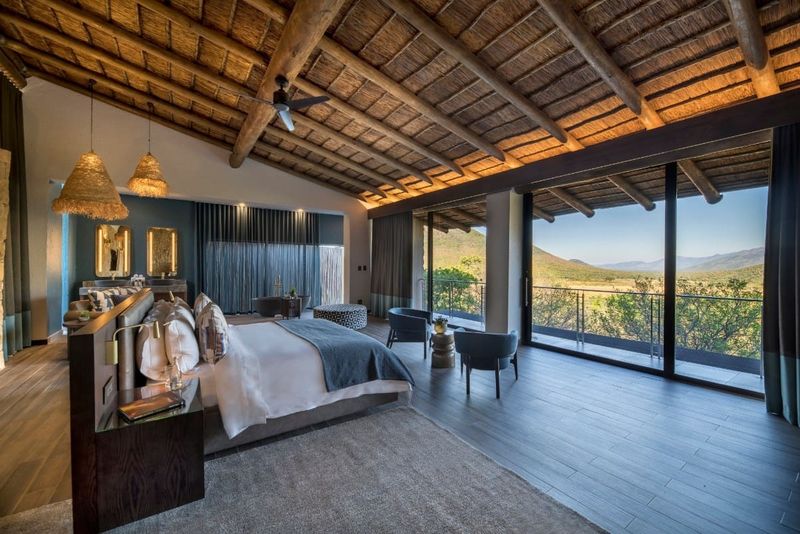
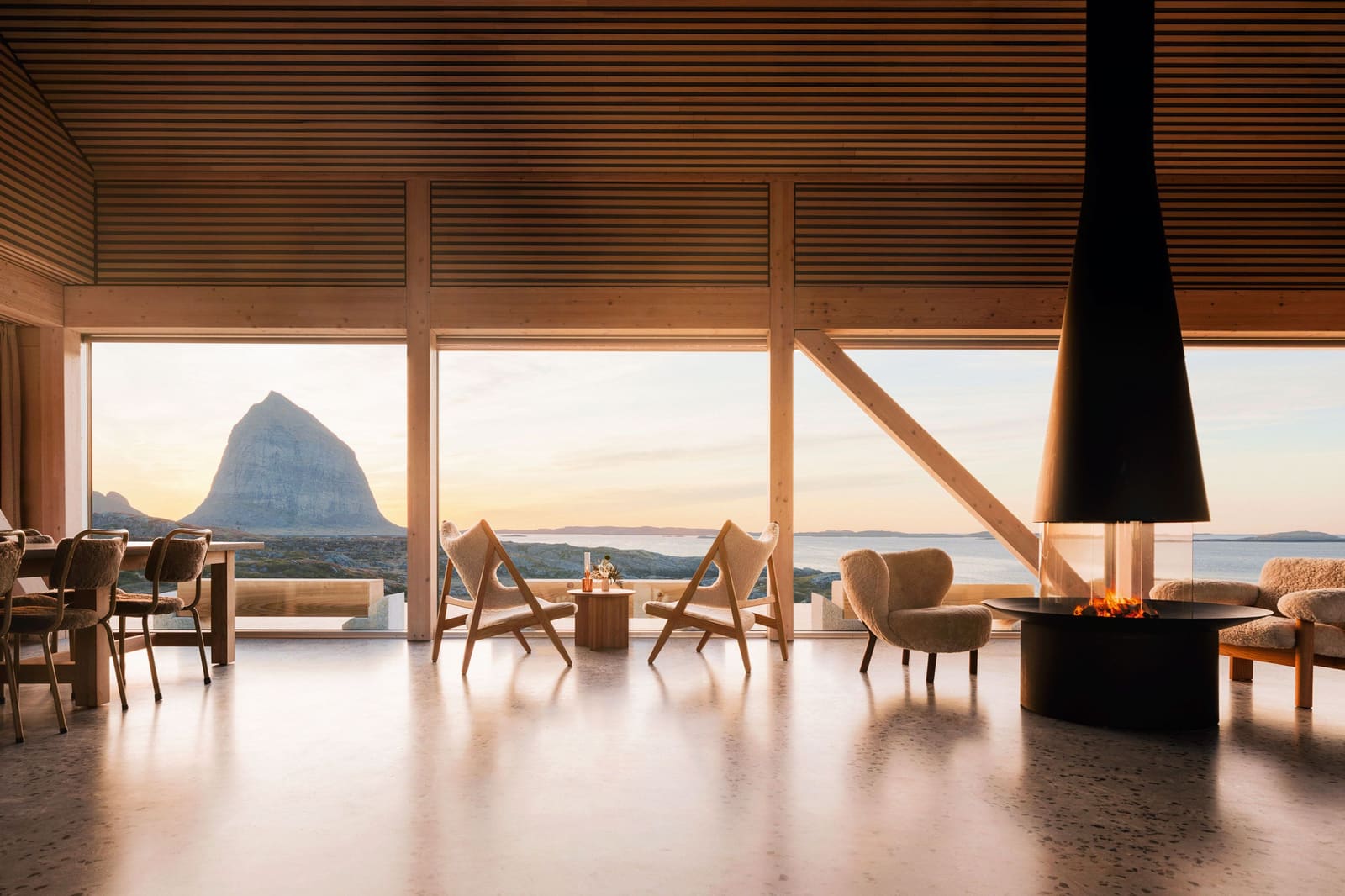
The 38 rooms and suites are simple. High, pitched ceilings in pale wood give a church-like feel. Norwegian wool cushions and blankets in dark blues and grays sit alongside ceramic vases holding dried flowers. Suites have bioelectric fireplaces. Design firm Bonaparte Interiør used materials pulled from the island: terrazzo floors made of local sand, stone, and shells. Abstract prints by Norwegian artists hang on the walls, and pine-scented Skøn toiletries stock the bathrooms.
But the real draw is the view. Every room has floor-to-ceiling windows facing Trænstaven, a jagged mountain rising from the ocean on Sanna island. One suite includes a smooth bathtub positioned to take in the same scene. The buildings themselves, modeled after fishermen's dwellings and painted in garnet, mint, and silver, catch the midnight sun in summer and reflect a calm, boat-free ocean.
Digging Into History and the Ocean Floor
Sanna island, visible from the hotel, is one of the oldest inhabited places in northern Norway. A massive cave called Kirkhelleren, or church cave, holds fish hooks and tools dating back at least 9,000 years, along with mass graves containing victims of the Black Death. The Trænafestivalen music festival, held in July, ends with a rave at the cave's altar, a gesture linking modern visitors to the early travelers who once pulled kayaks ashore there.
Budde, who is also a freediver, harvests scallops and kelp from the ocean floor for the hotel restaurant. Guests can join him on custom speedboats for hikes, kayaking, or freediving trips. Those less inclined to plunge into cold water can drift in flotation suits over kelp forests or watch for northern lights. The hotel also has an ocean-facing sauna.
A Meal That Doubles as a Story
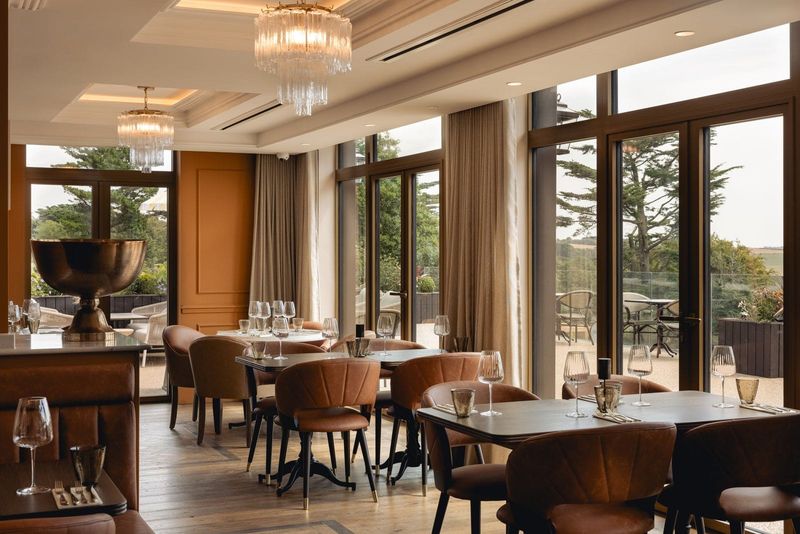
The restaurant, Alma, serves breakfast as a small tasting menu: cured lamb, brown cheese, barley porridge, lentil hummus on seed crackers, coffee ground by a neighbor on another island. The four-course dinner includes a melting brown butter candle scooped up with bread, a nod to the beacons sailors once used at sea.
The standout is the 12-course chef's table, which reimagines a journey from Hawaii to Træna. Diners share a table with strangers and eat whale tartare for Hawaii, mussel chowder in a batter cup for San Francisco, and cod-tongue fish and chips wrapped in newspaper for London. After the meal, guests often dip in the cold sea before heading to the village pub, sometimes to watch a football match under the midnight sun.
Connection, Not Escape
The surprise at Ytri is how social it feels. The design and programming push guests toward each other and toward the community that built the place. This is not a retreat where you vanish into solitude. It is a place where small stories accumulate, where a hotel becomes a reason for people to stay on an island that might otherwise empty out.
Whether that model can sustain itself over years, through harsh winters and the inevitable friction between tourism and local life, remains to be seen. For now, Ytri offers a version of remote hospitality that ties its success to the people already living there, rather than offering an escape from them.