A Sandbar Between Two Waters
The Vistula Spit runs into the Baltic Sea like a narrow finger, with Gdansk Bay on one side and the Vistula Lagoon on the other. At its thinnest, the sandbar measures just a few hundred meters across. Golden sand, dunes, and pine forest line the Polish side, which ends abruptly where Russian territory begins.
Krynica Morska, the largest town on the spit, sits in the Pomorskie region alongside the better-known port cities of Gdansk, Gdynia, and Sopot. With a year-round population of 1,300, the town swells during summer when Polish families arrive for beach holidays. International visitors remain rare. While hundreds of thousands of foreign travelers spend time in Krakow or Gdansk each year, only a small fraction make it to this stretch of coast.
The seasonal divide is sharp. In late March, shuttered hotels and tarpaulin-covered fairground rides give the town an empty feel. By July and August, the same beaches fill with picnicking families, windbreakers, and music.
The Economics of a Quiet Season
Accommodation costs reflect the off-season calm. A one-bedroom wooden chalet near the beach rents for around £60 per night in March, when temperatures hover near 5C. Even at peak summer rates, the same chalet reaches only £221 per night, competitive with most European beach destinations.
The pricing advantage extends beyond lodging. Meals and activities cost less than in Polish cities, which already offer lower prices than most Western European capitals. The combination makes the Vistula Spit accessible to a range of budgets, not just luxury travelers.
A Border Town Without Tension
Ten kilometers east of Krynica Morska, the smaller town of Piaski sits directly against the Kaliningrad Oblast. The Russian exclave, roughly the size of Yorkshire, is home to about one million people and hosts the Baltic Fleet. It provides Russia's only year-round ice-free Baltic port, a strategic asset that has led analysts to describe the territory as a dagger aimed at Europe.
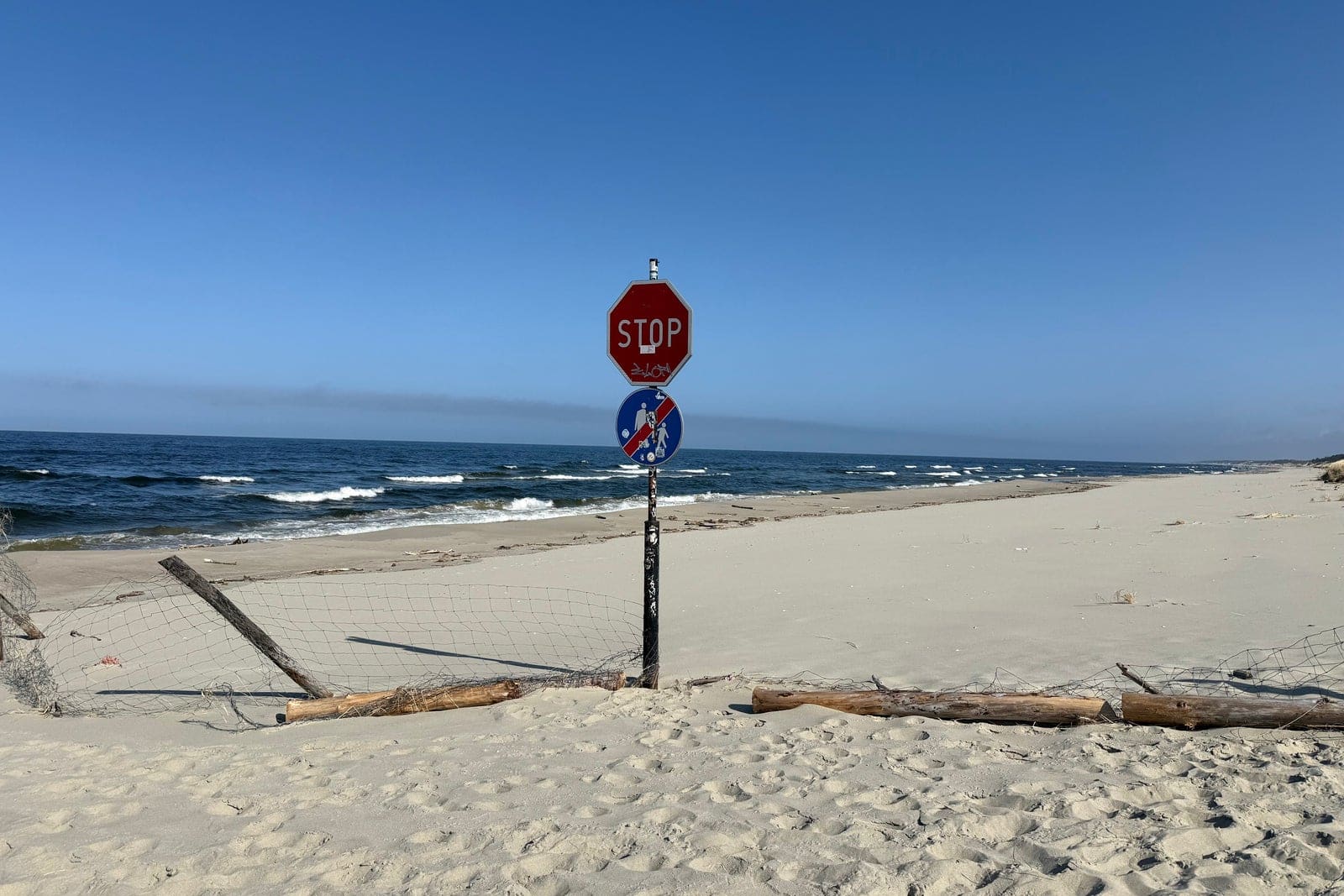
Despite the proximity, the border barely registers in daily life. Weathered wire fencing and a few stop signs mark the line, along with a sign warning of fines or up to three years imprisonment for crossing. The Polish side shows scattered footprints; the Russian side stretches away untouched.
Piaski focuses on nature rather than amusement. Fishing brings in flounder, herring, and turbot. The sandbar sits along several migratory bird routes, attracting birdwatchers. A cafe called Koniec Świata (the end of the world) opens in summer, along with a handful of hotels and restaurants. The rest of the year, the village stays quiet.
Walking the Edge
The most striking section of beach runs along the border, reached by a five-kilometer walk from Piaski through woodland. To the north, white sand meets the Baltic; to the south, marshland extends toward the lagoon. Early morning walkers share the path with roe deer moving through pine forest, while gulls sweep over the dunes.
The border itself holds a strange appeal. On one side, evidence of visitors; on the other, empty sand disappearing into the distance. The contrast makes the location memorable, even if the political implications remain muted for most visitors.
Why International Crowds Stay Away
Several factors keep foreign travelers from discovering the Vistula Spit. The region lacks the cultural landmarks that draw visitors to Krakow or Warsaw. Marketing focuses on the domestic Polish market, which already fills hotels during peak weeks. Transport connections favor travelers coming from within Poland rather than international arrivals.
The seasonal business model also limits year-round appeal. Many businesses close from September through May, leaving few services for travelers who prefer off-season visits. The cold Baltic waters and short summer season narrow the window for beach activities compared to Mediterranean destinations.
Yet these same factors preserve the area's quiet character. Without crowds, the beaches remain spacious even during Polish school holidays. Prices stay low because the market remains primarily domestic. The natural environment stays largely intact, with development concentrated in a few towns rather than sprawling along the entire coast.
What Works for Whom
The Vistula Spit suits travelers looking for simple beach holidays rather than resort amenities or nightlife. Families with children find safe swimming and playgrounds. Nature enthusiasts have access to birdwatching, fishing, and forest trails. Budget-conscious visitors appreciate the low costs.
The area works less well for travelers seeking cultural activities, diverse dining, or warm water. The Baltic stays cold even in summer, and the range of restaurants and attractions remains limited compared to larger coastal destinations. English speakers may find communication more challenging than in Polish cities that see regular international tourism.
The proximity to Russian territory adds a unique dimension without creating practical concerns. The border remains firmly controlled, and the geopolitical tension that marks other European frontiers feels distant here. For most visitors, the location simply adds an unusual footnote to a beach holiday rather than shaping the experience.
The Path Ahead
Whether international visitors eventually discover the Vistula Spit depends partly on infrastructure and marketing. Direct flights to Gdansk provide the closest major airport, about two hours away by car. From there, travelers need either rental cars or buses to reach the spit. Improved connections and English-language promotion could shift the visitor mix.
Climate change may also play a role. Warmer Baltic summers could extend the swimming season and make the region more competitive with southern beaches. Rising costs at established Mediterranean resorts might push budget travelers to explore alternatives.
For now, the Vistula Spit remains largely a Polish secret. The beaches offer space, the prices stay reasonable, and the towns retain a local character that mass tourism often erodes. Whether that changes depends on factors beyond any single traveler's control, but the current moment offers a window into a coastal region still shaped primarily by domestic visitors rather than international trends.