Archive as Blueprint
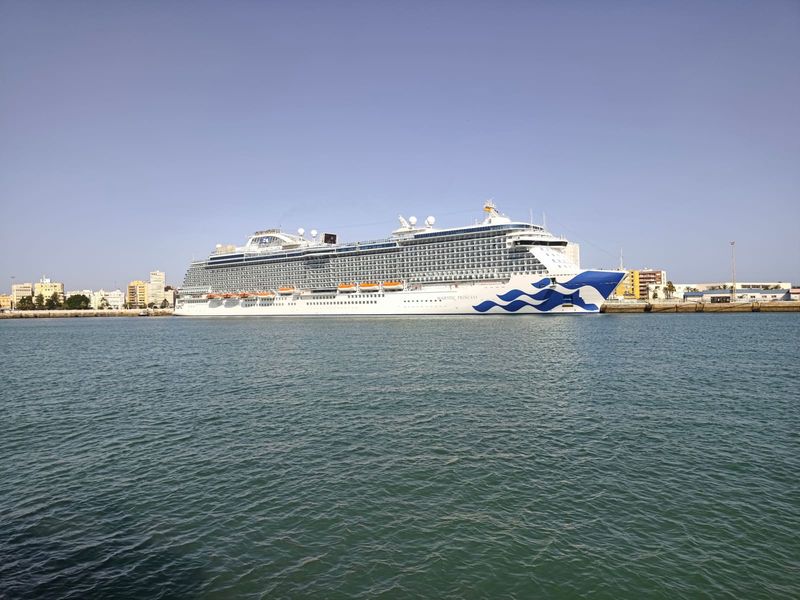
Cunard has released design illustrations for the refurbishment planned for Queen Mary 2, the sole ocean liner still operating regular transatlantic service. The vessel will spend two months at Damen Shiprepair Brest starting in March 2027, emerging with 31 additional cabins, reconfigured public areas and interiors that look to the company's 1930s archive for their visual language.
The design scheme, labelled "Cunard Deco" by the operator, mines the decorative vocabulary of the original Queen Mary, which sailed the North Atlantic from 1936 until its retirement in 1967. London studio AD Associates led the interior work, pulling motifs, palette choices and craft techniques from that earlier vessel rather than inventing a contemporary aesthetic from scratch.
Illustrator Tanu Vasu produced a series of renderings to communicate the direction. The images show how the grand lobby, suite accommodations and lounge spaces will interpret archive material, from carpet patterns to wall treatments. The approach signals a deliberate step away from the glossy, resort-style interiors common on newer cruise tonnage, anchoring the project instead in a specific chapter of transatlantic passenger history.
Scallop Shell as Through Line
One motif appears across multiple spaces: the scallop shell, historically associated with safe sea passage. AD Associates adapted the shell's fanned geometry to suit different contexts aboard the ship. In the Queens Grill Suites, the pattern evokes the bow cutting through the Atlantic. In the Princess Grill Suites, it takes on a symmetrical form inspired by the Manhattan skyline, nodding to the New York terminus of the transatlantic route.
The Grill Suites Lounge will feature a peacock-fan design, a reference to a social corridor on the original Queen Mary known informally as "Peacock Alley." Suite headboards will carry embroidered cityscapes, tracing the narrative arc of crossings between Southampton and New York. Bathroom panels reinterpret a Leslie MacDonald Gill map of the Atlantic that once hung in the first-class dining room of the 1936 liner. Gill's original included a working clock; the new version freezes the hands at 4.33pm, the moment the first Queen Mary departed Southampton in May 1936.
The repetition of these elements across cabin categories and public rooms creates a visual thread, though the risk is that the vocabulary becomes predictable. The success will depend on execution: whether the scallop and fan motifs read as elegant restraint or as a single idea stretched thin.
Craft Revival and Material Choices
The refurbishment emphasises traditional techniques. Marquetry and cabinet-making, both prominent in Cunard's 1930s fleet, will feature in the new interiors. Carpets will come from Ulster Carpets, a Royal Warrant holder that supplies floor coverings to Buckingham Palace and other royal residences. The choice of supplier reinforces the British heritage angle, though it also reflects a narrower luxury market that values provenance and craft credentials over contemporary design innovation.
Existing timbers, stone floors and fittings will be restored rather than replaced where possible. This reduces waste and keeps some continuity with the ship's 2004 build, but it also limits how far the refurbishment can shift the vessel's character. The result will be a layered interior: original 2004 bones, restored elements from that era, and new 1930s-inspired overlays.
The approach contrasts with the tear-out-and-rebuild method common in cruise refits, where operators strip interiors to the steel and start fresh. Cunard's choice preserves more of the ship's existing fabric, which aligns with the company's positioning of Queen Mary 2 as a historic continuation rather than a floating resort.
Expanded Capacity and Public Zones
The addition of 31 cabins represents a modest increase in passenger capacity for a vessel that already carries around 2,600 guests. The new accommodations will likely be concentrated in areas previously used for other purposes, though Cunard has not detailed which decks or zones will house them. The refurbishment also expands the pool deck, dining venues and the onboard spa, responding to guest demand for more space in high-traffic areas.
The kennels, a distinctive feature of Queen Mary 2 that allows passengers to bring pets on transatlantic crossings, will also see updates. The facility is unusual in the cruise industry, where most ships prohibit animals outside of service roles. Maintaining and upgrading the kennels signals Cunard's commitment to the transatlantic niche, where passengers often relocate between continents and prefer to travel with their animals rather than arrange separate transport.
Transatlantic Service in a Cruise-Dominated Market
Queen Mary 2 operates in a category that has almost disappeared. While thousands of cruise ships offer loops and itineraries that return passengers to their departure port, Queen Mary 2 runs scheduled point-to-point service between Southampton and New York, typically taking seven nights. The vessel also undertakes cruises, but the transatlantic route remains central to its identity and revenue model.
The refurbishment arrives as the ship marks its 450th crossing of the Atlantic, a milestone that underscores the durability of the route despite competition from air travel. Transatlantic crossings appeal to a particular passenger: those with time, often retirees or relocating professionals, and those who prefer sea travel for its pace and lack of jet lag. The market is small but stable, and Cunard has no direct competitor operating regular liner service on the route.
The investment in a 1930s-inspired refit reinforces the historical narrative that differentiates Queen Mary 2 from the broader cruise market. By leaning into archive material and craft traditions, Cunard is betting that its core audience values continuity and heritage over novelty. The risk is that the design feels nostalgic rather than timeless, or that it limits the ship's appeal to younger travellers who may not share the same attachment to mid-century transatlantic glamour.
Positioned for Longevity
Paul Ludlow, Cunard's president, framed the project as protective rather than transformative, emphasising that the goal is to preserve what distinguishes the vessel while refining the guest experience. The language suggests incremental improvement rather than reinvention, which is consistent with the operator's broader strategy for Queen Mary 2.
The ship launched in 2004 and has undergone periodic updates, but this refurbishment is more comprehensive, touching accommodations, dining, wellness and outdoor spaces. The timing, more than two decades into the vessel's service life, positions it for another decade of operation. Cruise ships typically have a lifespan of 30 to 40 years, though some sail longer with successive refits.
The focus on craft, archive research and material provenance reflects a segment of the luxury market that prioritises story and authenticity. Whether that translates into sustained demand will depend on how well the interiors deliver on the promise of the renderings, and whether the expanded capacity and updated amenities address the practical needs of passengers who spend a week at sea. The refurbishment is a bet that the past, carefully curated, still has commercial pull in a market crowded with newer, larger ships.