A Hundred Hotels by Decade's End
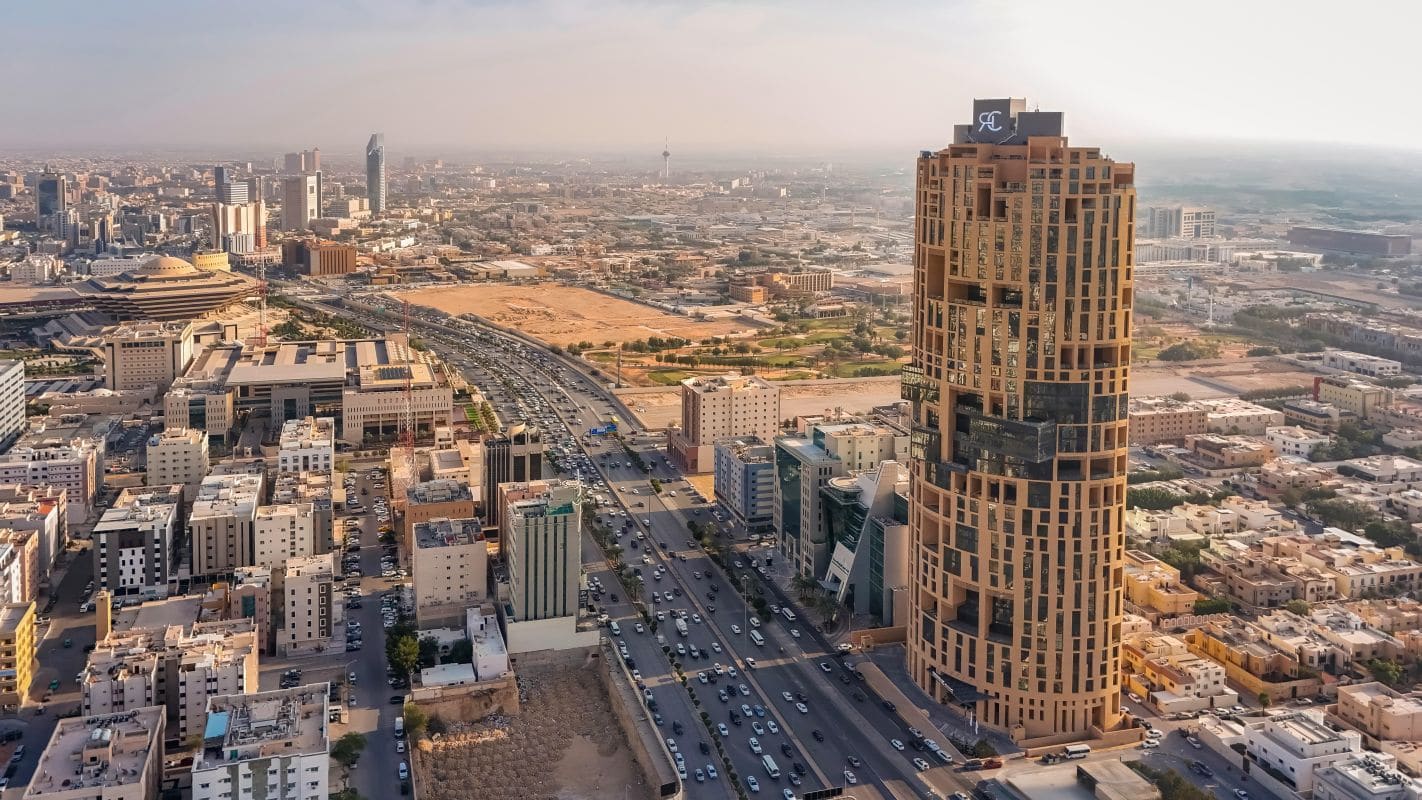
Radisson Hotel Group runs 35 properties in Saudi Arabia today. Another 15 are under construction. By 2030, the company wants 100 hotels either open or in the pipeline across the kingdom, a goal it insists remains unchanged despite the war between the United States and Iran that has rattled visitor arrivals across the Gulf.
The expansion plan is ambitious by any measure. It means roughly tripling Radisson's footprint in Saudi Arabia in less than four years, threading projects through secondary cities as well as the usual hubs of Riyadh and Jeddah. But the company's conviction rests less on optimism about geopolitics and more on arithmetic: where guests come from, and whether they can still show up when flights thin out.
According to Radisson Hotel Group, markets that lean heavily on domestic and regional travel held up better during recent disruptions than those dependent on long-haul arrivals. Saudi Arabia, with its large population and government-backed push to get citizens traveling within their own borders, falls squarely in the first camp. That structural advantage, the hotel group argues, makes the kingdom a safer long-term bet even when headlines turn dark.
Why Domestic Demand Changes the Math
The distinction matters because hotel development is a multi-year commitment. Sign a deal today, and the property might not open until 2027 or later. Operators need to believe the fundamentals will outlast the news cycle.
Radisson's assessment is that Saudi Arabia offers a cushion others in the region do not. The kingdom has spent years cultivating domestic tourism through festival seasons, heritage site development, and incentives aimed at keeping Saudi travelers inside the country rather than sending them to Dubai, London, or Cairo. That effort has built a base of demand that does not evaporate when international routes get suspended or when travelers from Europe and Asia decide the Gulf feels too uncertain.
The contrast with markets more reliant on inbound tourists is stark. When long-haul bookings drop, occupancy falls quickly, and operators face the choice of steep discounting or watching rooms sit empty. Domestic travelers, by definition, are already in the country. They are less sensitive to visa complications, flight cancellations, or the perception of regional instability. They also tend to travel on shorter booking windows, which means demand can bounce back faster once conditions stabilize.
Radisson's experience during the recent conflict appears to validate that logic. While some Gulf markets saw sharper declines in trading performance, Saudi Arabia weathered the disruption with less damage. That resilience is what allows the company to keep its pipeline targets intact, even as it acknowledges that the pace of new signings may slow this year.
The Long View Versus the Headlines
Elie Younes, the executive responsible for Radisson's global development, frames the strategy in terms of timeframe. Short-term volatility, he suggests, is noise. The real question is whether the structural drivers, Vision 2030 chief among them, remain in place.
Vision 2030 is Saudi Arabia's blueprint for economic diversification, with tourism and hospitality central to the plan. The government has committed billions to new destinations, entertainment districts, and infrastructure meant to turn the kingdom into a top-ten global tourism market. For hotel operators, that translates into a pipeline of projects with state backing, regulatory support, and, crucially, a domestic audience being cultivated in parallel.
Radisson's bet is that those forces matter more than a single year of disrupted air traffic or jittery traveler sentiment. The company is not alone in that calculation. Other international chains have also committed to large-scale expansion in Saudi Arabia, though few have articulated the domestic-demand thesis as explicitly.
Still, the strategy carries risk. If Vision 2030 slows, or if the domestic travel habit fails to take root as deeply as hoped, the kingdom could end up with more rooms than it can fill. And while domestic demand is less volatile than international tourism, it is not immune to economic headwinds. A downturn in oil revenue, for instance, could quickly dampen consumer spending and travel budgets.
What Radisson Is Not Saying
The company's public messaging emphasizes continuity and confidence. Targets have not changed. The long-term story is intact. But there are hints of caution beneath the surface.
Radisson acknowledges that signing volumes may slow this year. That is a polite way of saying that developers and investors are taking longer to commit, that financing is harder, or that some projects are being delayed. In a market moving at full speed, signing volumes do not slow.
There is also the question of when the Gulf's broader recovery will arrive. Younes has suggested that a rebound could come by mid-2026, but external forecasts, including those from aviation analysts and tourism bodies, point to 2027 or later. The gap between those timelines reflects uncertainty about how long the current conflict will drag on, how quickly flight networks will rebuild, and whether traveler confidence will return in step.
For Radisson, the timeline matters less if domestic demand holds. But for the wider Gulf hospitality market, the difference between a 2026 and a 2027 recovery could mean another year of suppressed occupancy, stalled openings, and financial strain.
A Divided Region
What Radisson's Saudi focus underscores is that the Gulf is not a monolith. The United Arab Emirates, for all its infrastructure and global connectivity, depends heavily on international visitors. When those visitors stop coming, the impact is immediate. Saudi Arabia, by contrast, has a large and growing domestic market that can absorb some of the shock.
That divergence is reshaping where hotel groups place their bets. Saudi Arabia is pulling investment and attention, while other markets wait for the recovery everyone hopes is coming. Whether that recovery arrives on schedule, or whether it takes longer than anyone wants to admit, will determine whether Radisson's confidence was justified or premature.