A Wave Break That Time Forgot
Rote Island sits closer to Darwin than Jakarta, a speck off West Timor in the eastern Indonesian archipelago. For the past forty years, it has attracted surfers chasing clean breaks formed by rare combinations of wind, swell, and seafloor geometry. The journey has always been long, the infrastructure minimal, and that difficulty has kept crowds thin.
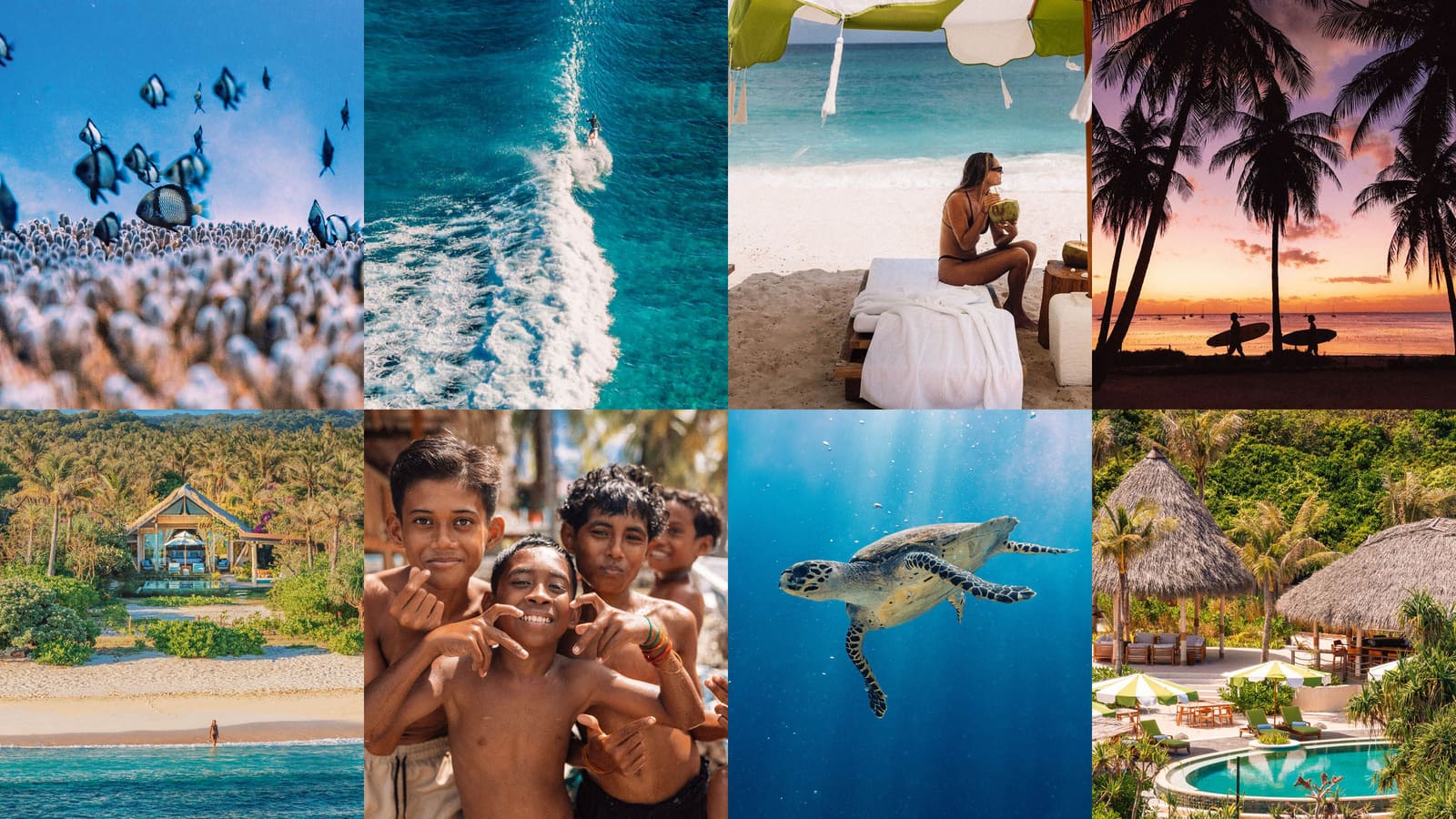
The island runs on what locals call island time. White sand beaches curve under coconut palms. Dry-season trade winds keep mosquitoes at bay. Villages blur into one another along a potholed coastal road, separated only by painted bollards reading "Selamat Datang" or outsized churches that resemble Noah's Ark. Roadside vendors sell petrol in glass bottles. Cows wander freely. It is the kind of place where strangers on the street ask if you live here, then invite you to stay.
That rhythm is now shifting. Nihi Rote & Hospitality Academy opened in October 2025, the island's first top-end resort. The property sits at the eastern end of Bo'a Bay, fronting one of the most sought-after waves in the region. At full capacity, it offers 21 thatched villas, three pools, a spa, and a beach club called Nammo. Each villa uses lontar palm and ikat textiles sourced locally. The resort also plans to build and sell multimillion-dollar residences on adjacent land.
The Hospitality Academy Experiment
Nihi Rote is a sister property to Nihi Sumba, located a few hundred miles west. Both resorts share a similar model: luxury accommodations paired with surf access and a training program for local staff. The Rote Hospitality Academy employs Timorese trainees, many in their first formal job. They learn to cook, serve, and swim, skills not universally held in a region where livelihoods have traditionally centered on seaweed farming and fishing.
Before the resort opened to guests, the academy hosted a large birthday celebration for Michael Schwab, the property's owner and son of investment firm founder Charles Schwab. For the trainees, the event was a trial run. One student described it as unlike anything Rote had seen before.
The academy aims to channel some of the resort's revenue into local education and employment. Whether that model holds as the island develops further remains an open question. Similar efforts elsewhere in Indonesia have produced mixed results, with benefits often uneven.
A Community in Transition
Drive past the tin-roof huts and cinder-block homes that line the main road, and the contrast with Nihi Rote becomes stark. Women plait hair on porches. Frangipani petals scatter across dirt yards. The island has long been open to outsiders, but the scale of recent arrivals is new.
Small guesthouses and surf camps have multiplied over the past decade. Bo'a Vida, a six-villa property on Bo'a Beach, started fifteen years ago as a thatched shack and now features stone paths and a yoga pavilion. Sardine Beach Rote, a three-villa property run by a French-Slovenian couple, sits on five acres of garden. Mick's Place Rote, opened by an Australian hotelier who spent three decades in Bali, offers three self-catering bungalows and a lap pool.
The operators are quick to emphasize lifestyle over profit. Many moved to Rote after decades elsewhere, trading busier scenes for a slower pace. One described the island as a retirement village for surfers seeking peace. Another called it chaotic, meaningful, and free.
The Appeal of Inconvenience
Rote's remoteness has been its shield. The island is difficult to reach by design, requiring multiple flights and a ferry crossing. That inconvenience has kept development at bay and waves uncrowded. Surfers who arrived in the 1980s found long, clean breaks and little competition. Those conditions still hold, though the window may be closing.
Offshore islands and reefs are accessible by boat. One rocky outcrop shelters a cave full of fruit bats. Snorkeling reveals triggerfish, parrotfish, and occasional sightings of oceanic manta rays and whale sharks. Ndana Island, Indonesia's most southerly point, offers clear water and coral visible from the surface. On some days, the only other people in the water are a handful of sun-worn Australians who arrive late in the afternoon.
The island's colonial history is less visible but still present. Timor was contested by the Dutch and Portuguese for centuries, a conflict rooted in the sandalwood and spice trade. The British occupied briefly, and Japan held the area during the Second World War. Cultural remnants appear in woven ikat textiles and the Ti'i Langga, a hat made of lontar palm with a phallic spike on the brim, worn by men.
What Comes After the First Resort
The arrival of Nihi Rote raises familiar questions about tourism development in fragile places. The resort brings jobs and infrastructure, but also precedent. Multimillion-dollar residences signal a market for high-end real estate, which typically attracts more investment, more construction, and more people. The island's go-slow rhythm may not survive that trajectory intact.
Some residents welcome the change. The Rote Hospitality Academy offers opportunities that did not exist before. Others are more cautious, aware that similar islands in Indonesia have seen rapid transformation once the first luxury property opens. Bali's trajectory is often cited as a cautionary tale.
For now, Rote retains much of its original character. The coastal road is still quiet. Villages are still small. The waves are still uncrowded. But the island is no longer as inconvenient as it once was, and that shift alone may determine what comes next.
The Practical Reality
Accommodations on Rote range from simple surf shacks to the new luxury option. Bo'a Vida and Sardine Beach Rote sit in the middle tier, offering thoughtful design and beachfront access without the full-service amenities of a resort. Rote Island Huts operates as a nonprofit, channeling income into local education. 81 Palms, near the T-Land break at Nemberala Beach, includes a Spanish restaurant run by a former Michelin-starred chef.
Prices vary widely. Budget options start around fifty dollars per night. Nihi Rote rates begin in the four-figure range. The island has no major grocery stores, limited medical facilities, and inconsistent internet. Visitors should expect to adapt to local conditions rather than the reverse.
The best time to visit is during the dry season, roughly April through October, when waves are most consistent and trade winds keep temperatures comfortable. The wet season brings rain and humidity but fewer crowds. Flights from Bali to Kupang, the nearest city, take about two hours. From Kupang, a ferry to Rote runs several times per week and takes four hours.
What Rote Offers Now
Rote is not for travelers seeking polished infrastructure or predictable services. It is for those willing to trade convenience for space, quiet, and a sense of distance from more developed parts of the world. The island offers surf, snorkeling, cycling, and little else. That simplicity is the point.
The opening of Nihi Rote does not change the island overnight, but it does change the conversation. For the first time, Rote is accessible to travelers who would not consider staying in a surf shack. That shift brings new money and new attention, both of which will shape the island's future in ways not yet clear.
For now, the stars still glow like light bulbs over the Timor Sea. The sunsets still linger. The waves still roll in clean and long. How long that lasts depends on what happens next.