The City That Stayed Off the List
Barcelona sits less than two hours by air from London, packed with Gaudí masterpieces, Mediterranean beaches, and some of the finest tapas bars in Spain. Yet for some travelers, the city has become a symbol of something darker: the price paid when tourism grows faster than infrastructure or community tolerance can absorb.
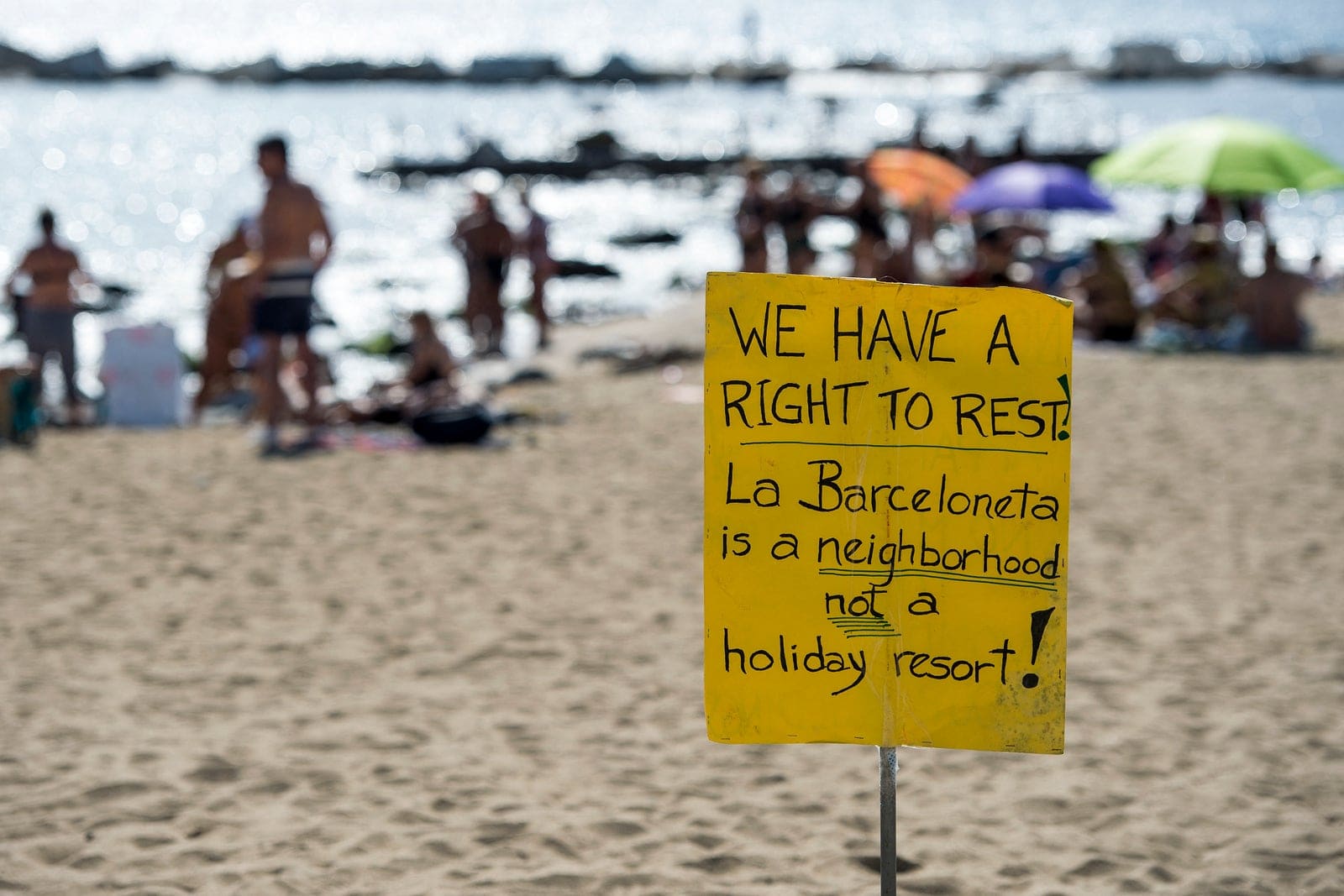
The hesitation is understandable. Spain recorded more than 58.1 million arrivals between January and July 2026 alone, a 4.6 percent rise year-on-year, according to official tourism data. Barcelona, as one of the country's marquee destinations, absorbs a disproportionate share. Housing costs climb, local shops give way to souvenir stands, and sidewalks narrow under the weight of tour groups. In summer 2026, protesters armed with water pistols doused restaurant diners to make their point. Banners reading "mass tourism kills the city" and "your holidays, my misery" appeared at rallies across Catalonia.
The city's new commissioner for sustainable tourism has adopted a blunt stance: no more active promotion, no encouragement of additional visitors. The message is "not one tourist more."
What the Protests Actually Say
But a closer look at those protests reveals a more textured argument. Demonstrators are not calling for tourism to end; they are demanding it be restructured. The issue is not the presence of visitors but the economic model that extracts value without leaving much behind, that prioritizes short-term rentals over long-term housing, and that treats neighborhoods as stage sets rather than living communities.
Tourism remains essential to Barcelona's economy. The question is not whether people should visit, but how they do so, and whether their presence supports or erodes the fabric of the place they came to see.
How to Visit Without Adding to the Problem
Responsible travel in Barcelona starts with accommodation. Staying in officially regulated lodging, whether a licensed apartment or a hotel that employs local staff, ensures that tourism revenue flows through legitimate channels and supports enforceable standards. Unlicensed short-term rentals, by contrast, often worsen the housing shortage that has made the city unaffordable for many residents.
Dining and shopping choices matter, too. Independent restaurants and bars, especially those serving Catalan cuisine rather than generic "international" menus, keep money circulating within the local economy. The same applies to shops: a neighborhood bakery or bookstore contributes more to community resilience than a chain selling mass-produced keychains.
Language is another gesture. Learning a handful of Catalan phrases, beyond the usual Spanish greetings, signals respect for the region's distinct identity. It is a small effort that can shift the dynamic from extraction to exchange.
Respecting local customs and rules, from noise ordinances to beach regulations, is equally straightforward. These norms exist for residents' quality of life, not as obstacles to tourist enjoyment.
The Case for Off-Season Travel
Timing may be the most effective lever a visitor controls. Traveling outside peak season spreads demand across the calendar, easing pressure during the summer crush and delivering economic benefit when it is most needed. Autumn and winter in Barcelona bring cooler temperatures, fewer crowds, and a rhythm closer to the city's everyday life.
Venice offers a parallel. Long avoided by some travelers as hopelessly overrun, the city reveals a different character in winter. Mist rolls off the canals, Christmas lights reflect in the water, and it becomes possible to stand in St. Mark's Square without jostling for space. The same logic applies to Barcelona: a January or February visit offers access to the same architecture, museums, and food, but within a context that feels less like a theme park and more like a city.
Off-season travel also aligns visitor and resident interests. Restaurants and hotels that struggle in the quiet months welcome guests. Cultural institutions have more capacity to engage meaningfully with smaller audiences. The city itself has room to breathe.
The Tension Between Presence and Harm
The reluctance to visit places under tourism stress reflects a broader anxiety about travel's impact. If your presence contributes to displacement, environmental strain, or cultural erosion, is it better to stay home?
The answer is rarely that simple. Avoiding a destination entirely can deprive it of revenue that funds preservation, employment, and public services. The challenge is not to eliminate tourism but to practice it with attention to its consequences.
Barcelona's situation illustrates the stakes. The city needs visitors, but it needs them on terms that do not hollow out its neighborhoods or price out its residents. That requires travelers to think beyond convenience and cost, to consider where their money goes and what their visit leaves behind.
A Shift in Approach
The debate over overtourism often presents a false binary: visit or don't. In reality, the spectrum is wider. You can visit thoughtfully, outside peak times, staying in places that follow local rules and spending money in ways that support the community rather than extracting from it.
Barcelona is not beyond repair, and it is not off-limits. But it does demand more from visitors than simply showing up. The city's beauty and cultural wealth remain intact; the question is whether travelers are willing to engage with it on terms that acknowledge the people who live there year-round.
For those who have held back out of concern, the path forward may not be continued avoidance but a different kind of visit altogether. One that happens in November rather than July, that prioritizes neighborhood taverns over tourist traps, and that treats the city as a living place rather than a backdrop.
That shift in approach may be the difference between tourism that sustains and tourism that consumes.