Beyond the Ski Season
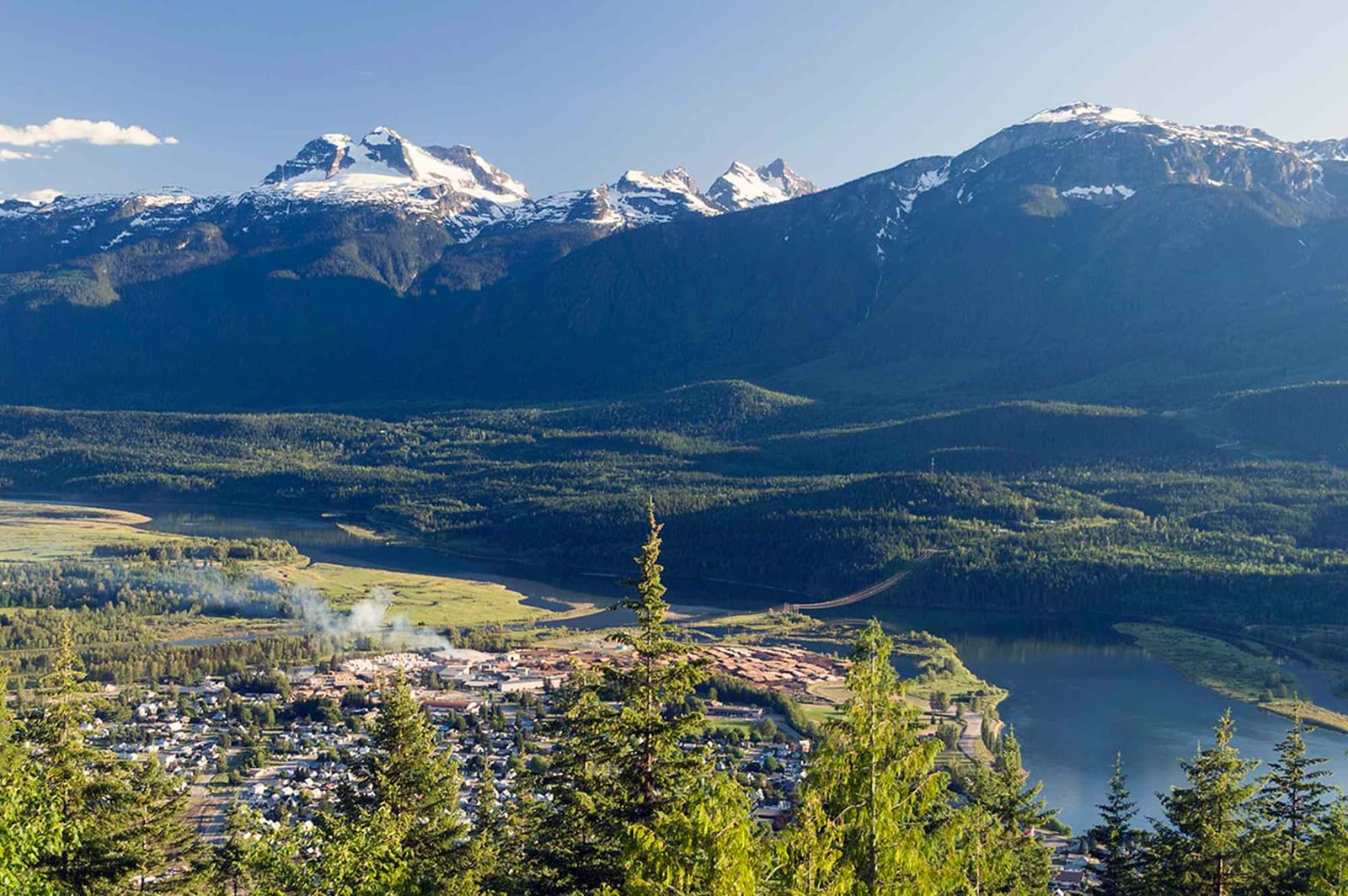
Revelstoke has long been synonymous with powder skiing, but the town's summer identity is quietly gaining traction. Nestled between the Monashee and Selkirk mountain ranges in British Columbia's interior, the destination transforms once snowmelt begins. Glacier-fed lakes appear in shades of turquoise, hiking trails open across alpine meadows, and the region's ecological oddity comes into full view: the world's only inland temperate cedar rainforest.
Most ski towns struggle with shoulder-season tourism, but Revelstoke is making a case for warm-weather visits. The same topography that traps snowstorms in winter creates microclimates in summer, with enough rainfall to sustain ancient cedars far from any ocean. That forest, located in the nearby Giant Cedars Boardwalk area, draws botanists and casual walkers alike. Trees here can exceed 500 years old, their trunks wide enough that several people linking arms cannot encircle them.
Water and Rail
The town sits along the Columbia River, and several glacier-fed lakes lie within an hour's drive. Lake Revelstoke and Upper Arrow Lake are the most accessible, both offering flat-water paddling and shoreline camping. The water stays cold through August, a reminder of its source high in the icefields, but that does not deter swimmers on hot afternoons.
Rail history runs deep here. Revelstoke was a divisional point on the Canadian Pacific Railway, and remnants of that era remain visible. The Railway Museum downtown chronicles the construction of the transcontinental line through Rogers Pass, a route that claimed lives and budgets in equal measure. Scenic train excursions still operate on select summer dates, tracing sections of track that hug cliff faces and cross wooden trestle bridges.
Hiking Without Crowds
Trail access here is more straightforward than in neighboring national parks. The Revelstoke area does not require advance reservations for most hikes, and trailheads see lighter traffic than those in Banff or Jasper. Popular routes include the Eva Lake trail, a moderate climb that ends at a small alpine tarn, and the Skunk Cabbage Boardwalk, a short loop through wetland where the namesake plant grows in dense clusters.
Mount Revelstoke National Park, distinct from the town itself, offers higher-elevation hikes. The Meadows in the Sky Parkway, a winding road to the subalpine zone, opens in late June once snow clears. From there, short trails lead through wildflower meadows that peak in early August. The park is small by Canadian standards, but its elevation gain compresses several ecosystems into a compact area.
The Inland Rainforest Question
The cedar rainforest near Revelstoke puzzles first-time visitors. Temperate rainforests typically cling to coastlines, where ocean moisture sustains them. Here, the phenomenon occurs roughly 400 kilometers from the Pacific. The explanation lies in weather patterns: storms push inland from the coast, collide with the Selkirk range, and dump rain throughout the year. The result is a pocket of old-growth forest with moss-draped branches and thick understory, visually similar to coastal stands but ecologically isolated.
Access is straightforward. A short boardwalk loop near the town allows close inspection without damaging root systems. Interpretive signs explain the forest's rarity, though the experience itself needs little narration. The air is noticeably cooler under the canopy, and the sound of dripping water persists even on dry days.
Practical Considerations
Revelstoke's summer season runs shorter than its ski season. Trails at higher elevations may not clear until July, and September brings early snow. Accommodation options lean toward motels and vacation rentals rather than large resorts. Dining is limited, with most restaurants concentrated on a few downtown blocks.
The town is not positioning itself as a luxury escape. It lacks the polish of Whistler or the infrastructure of Banff. What it offers instead is functional access to landscapes that remain undervisited. For travelers who prioritize trails over amenities, that trade-off may be worth making.