Alpine Water, Coastal Energy
Switzerland counts roughly 1,500 lakes, including the largest in Europe. When warm weather arrives in May, stretches of those lakes - and urban rivers - shift into swimming zones outfitted with wooden frames, piers, changing rooms, showers, lunch kiosks, and gear rentals. By evening, many turn into bars or concert venues. German-speaking Swiss call these spots "badis," and they anchor summer social life in cities like Zurich, Geneva, and Lucerne.
The badi phenomenon blurs the line between neighborhood pool and waterfront hangout. Some are carved from fast-flowing rivers; others use wooden structures to section off calmer lake water. Many charge modest entry fees - typically 4 to 8 Swiss francs for adults - while others remain free. All share a distinctly Swiss attention to infrastructure: proper lifeguard stations, clean facilities, and clear rules about where you can swim.
City Center, River Current
Flussbad Oberer Letten sits on the Limmat River in Zurich, a short walk from the city's Kreis 5 district. A concrete structure creates a quarter-mile swim lane alongside the main current. Regulars drift with the flow, then climb out and walk back upstream to repeat the circuit. The adjacent Panama Bar serves drinks; beach volleyball courts fill most afternoons. Entry is free, and the spot draws a younger crowd that lingers into the evening.
The same river hosts a one-day event each August: the Limmat Swim. Participants buy tickets - 4,500 sell out within hours - then jump into the river at the Frauenbadi, a women-only badi near City Hall, and float downstream to Oberer Letten. The lake empties into the narrow river channel, creating a strong northward current that even non-swimmers can navigate with a dry bag and inflatable.
Frauenbadi itself operates as a women-only space during daylight hours and has long been a gathering point for Zurich's lesbian and queer community. After sunset it becomes Barfussbar, a barefoot bar open to all genders. Visitors remove their shoes at the entrance and move between an interior courtyard and an exterior wooden deck, both with small pools for cooling off.
Wooden Decks, Floating Rafts
Seebad Utoquai opened in 1890 on Lake Zurich, an eight-minute walk from the Opera House. The whitewashed wooden structure originally separated men's and women's pools, though a shared sundeck now connects them and swimmers of all genders use the three floating rafts anchored offshore. Stand-up paddleboard rentals are available, and the spot keeps one of the longest seasons - mid-April to late October.
Farther south, Strandbad Tiefenbrunnen uses a circular wooden deck to create a lakewater pool. Multiple diving boards and a spiraling water slide make it popular with families. Two gender-separated sundecks allow clothing-free tanning. The spot has also become a hub for gay men visiting Zurich in summer.
Seebad Enge offers swim coaching, SUP classes, yoga, and massage. At night it shifts into a nightclub and concert space. Entry costs 4 francs during the day, 8 in the evening; a full-summer pass runs 110 francs. Saunas operate in colder months but close when the badi season begins.
Islands, Sand, and Mountain Views
Werdinsel is an island on the Limmat with a 200-meter lap pool, paddling areas, playgrounds, and barbecue pits. Walk farther and you'll find a nudist beach and a separate gay beach. Zurich police enforce rules against public hookups, but the island remains one of the city's more permissive spaces. Access is free year-round.
In Geneva, Eaux-Vives Beach runs a quarter-mile along Lake Geneva, offering sand, shade trees, and a Baby Plage section for young children. The view takes in the Geneva Water Fountain and the cluster of international-organization buildings nearby - United Nations Geneva, World Health Organization - though most visitors focus on the sand and the water.
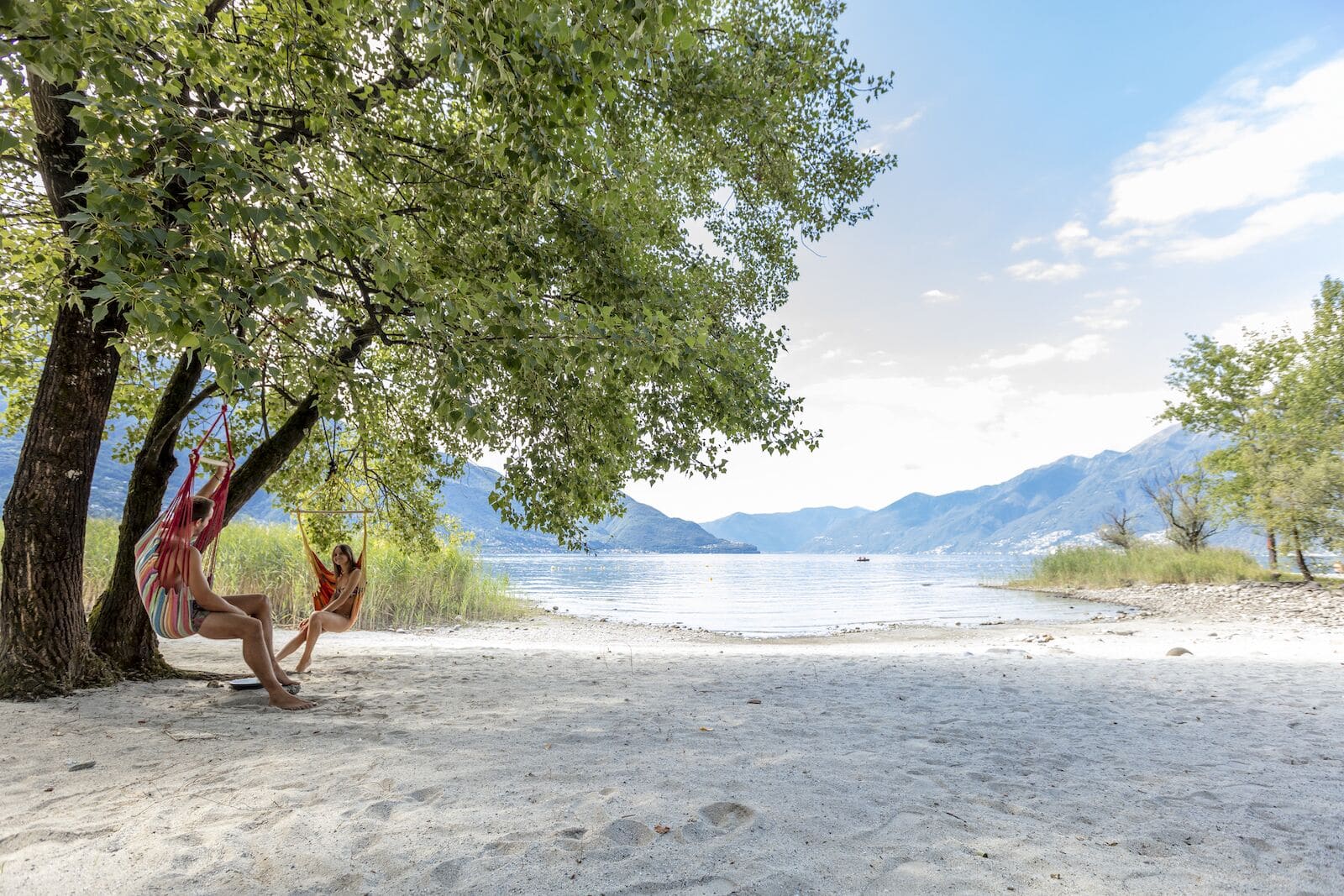
Ticino's Italian-speaking region claims Lido di Ascona, a third-of-a-mile sandy beach on Lago Maggiore. Chaise lounges can be reserved in advance; the site also has beach volleyball, ping-pong, a playground, and a pizzeria. Water activities include stand-up paddleboarding, wakeboarding, windsurfing, and pedal boats. The freshwater and mountain backdrop are the only reminders you're not on a coast.
Lucerne Lido sits on Lake Lucerne, where mountains drop directly into the water. The beach is sand; the lake offers a diving platform and floating rafts. Entry is free, and the mountain views are consistently cited as among the best in the country.
Water Parks and Grass Picnic Zones
Biel Lido, on the lake of the same name, leans into a full-summer atmosphere with beach volleyball, a diving board, water slides, and a dedicated kids' water park. The site mixes sandy sections with grassy picnic areas. Entry costs 4 francs for adults, 6 for students, 2 for children.
The broader pattern holds across the country: Switzerland's lakes and rivers become structured, well-maintained swimming zones each May, then revert to quiet waterfronts - or indoor pools - come September. The infrastructure investment is consistent, the amenities reliable, and the social energy high. For a landlocked country, Switzerland has worked out a credible alternative to coastline.