A Different Kind of Upgrade
The Efflorescence lodge sits at ground level, surrounded by trees and positioned beside a natural watering hole that attracts deer and other forest animals. At 55 square metres, it's the largest option at this woodland property in France's Loire Valley, and the only one that doesn't require climbing stairs or ladders. While other accommodation units perch on stilts four metres above the forest floor, this suite sprawls horizontally, trading elevation for proximity to the wildlife that wanders past throughout the day.
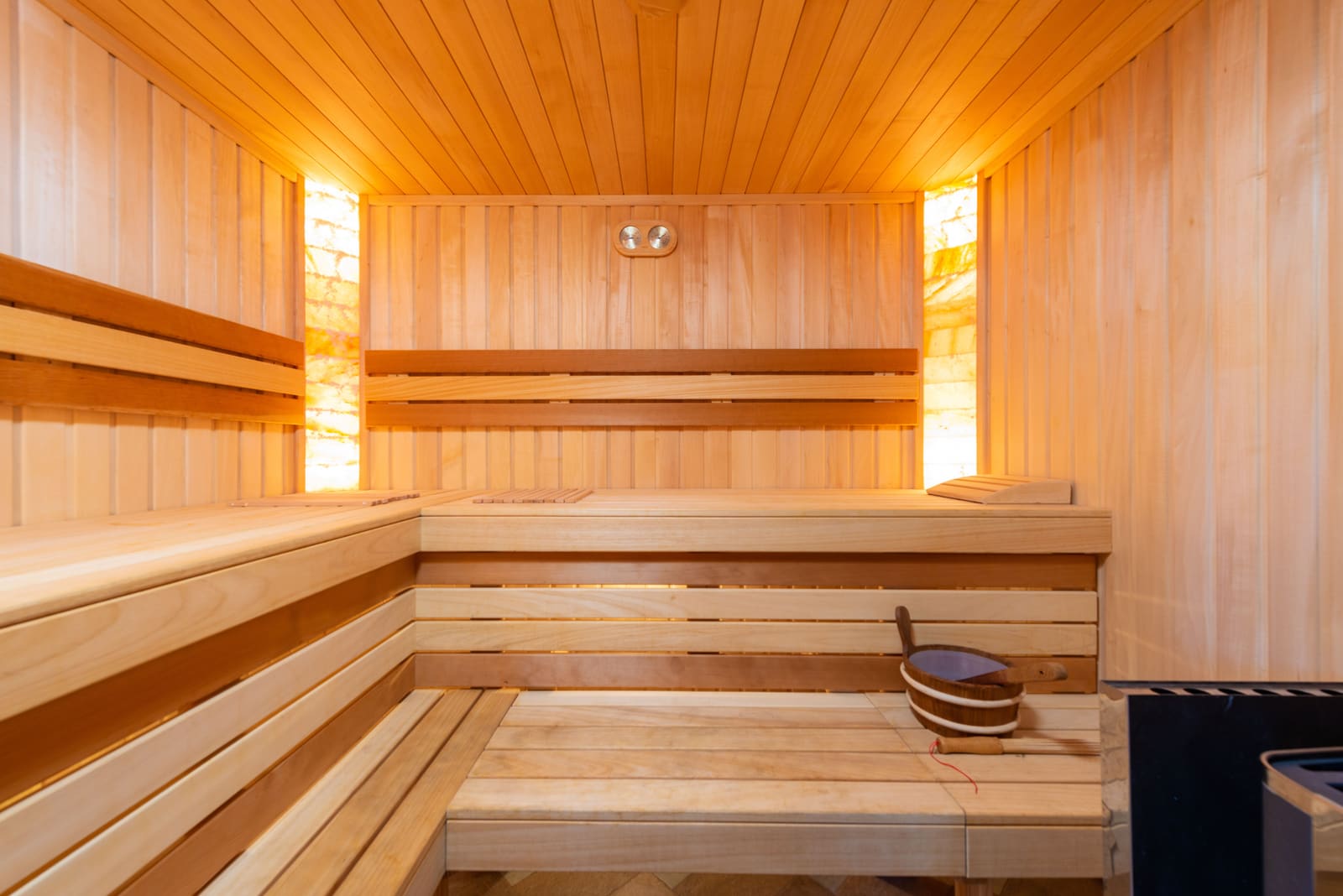
The outdoor facilities include a massage Jacuzzi, a Finnish sauna, and an Italian-style shower, all exposed to the elements. Inside, a four-poster bed draped in white fabric anchors the space, with irregular mirrors mounted on the wall behind it to reflect the surrounding greenery. The design, developed with Cédric Porchez and Isabelle Poulain, pairs black and white surfaces with floating artwork made from Japanese paper, a technique Porchez is known for. The absence of internet connectivity is deliberate. A mango wood speaker serves as the only electronic option, turning a mobile phone into a music player if guests choose to use it.
What No Connectivity Actually Means
The decision to exclude Wi-Fi from guest rooms is becoming less common in commercial hospitality, even in rural settings. Most properties that market themselves as retreats still offer internet access, either in rooms or in shared spaces, as a hedge against guest dissatisfaction. This property takes a harder line. There's no backup lounge with a router, no apology for the inconvenience. The assumption is that disconnection is part of the transaction, not a gap in service.
That framing shifts the experience. Without the reflexive option to check a screen, the rhythm of a stay changes. Mornings are slower. Guests notice the incremental shift in light as the sun rises through the trees, or the sound patterns of the forest at different times of day. These aren't extraordinary observations, but they're easy to miss when another tab is open. The mango wood speaker, an analogue design element, becomes more than decoration. It's a prompt to curate sound intentionally rather than scroll through notifications.
The question is whether this trade-off appeals beyond a narrow slice of travellers. Families with children, remote workers on extended trips, and anyone managing logistics from the road may find the absence of connectivity more frustrating than freeing. The property is betting that enough guests will pay for the privilege of opting out, at least for a few nights.
Food as Extension of Place
Dinner takes place at Ardent, the on-site restaurant, which holds recognition from the Michelin guide. The menu is designed to reflect the surrounding landscape, with ingredients either foraged from the forest or sourced from nearby producers. One dish served during a recent stay featured trout from a local mill, prepared simply to foreground the fish itself rather than elaborate technique.
The restaurant's location within the property boundary matters. Guests don't need to drive or arrange transport to eat well, which reduces the friction that can make rural stays feel isolating. At the same time, the meal becomes an anchor point in the day, a structured event that gives shape to otherwise unscheduled time. Diners finish and walk back to their lodges along forest paths, a transition that reinforces the setting rather than breaking from it.
Breakfast arrives in a wicker hamper left on the front porch, packed with items chosen the previous day. Options include pressed green juice, smoked salmon, country bread, chocolate spread, and birch sap, all prepared in-house or sourced from the immediate area. For guests staying in the elevated lodges, the basket is hoisted up by pulley, a logistical necessity that doubles as theatre. The ground-level suite skips that step, but the contents remain the same.
The emphasis on local and foraged ingredients isn't unique to this property, but the execution is more consistent than at many places that claim a farm-to-table ethos without following through. Birch sap, for instance, is a seasonal product with a short harvest window in early spring. Its presence on the breakfast menu signals attention to what's available in the forest at a given time, not just what's fashionable.
The Loire Valley Context
The Loire Valley is better known for its châteaux and vineyards than for wilderness accommodation. Travellers typically come for wine tours, cycling routes along the river, or visits to Renaissance estates. A forest lodge without internet access doesn't fit neatly into that tourism infrastructure, which may be part of the appeal.
Central France has seen a gradual increase in nature-based accommodation over the past decade, often aimed at domestic travellers from Paris and other urban centres looking for weekend escapes. The pandemic accelerated that trend, with demand for rural and outdoor stays spiking in 2020 and 2021. Some of that momentum has since cooled, but occupancy rates for rural properties in France have remained higher than pre-2019 levels, particularly during shoulder seasons.
This property is positioned at the higher end of that market. The inclusion of a Michelin-recognised restaurant, in-room massage services, and design collaborations with named artists and architects signals an audience willing to pay for curation and craft, not just seclusion. The risk is that the overlap between guests who want luxury finishes and those who accept no Wi-Fi is smaller than the property assumes.
Wildlife as Amenity
The watering hole adjacent to the Efflorescence lodge brings deer, and occasionally other animals, into close range. Sightings are frequent enough that they're mentioned in guest accounts, but not guaranteed. The animals arrive on their own schedule, usually at dawn or dusk, and leave quickly if startled. A camera-ready moment depends on timing and luck.
That unpredictability is harder to package than a spa treatment or a tasting menu, but it's central to the property's identity. The forest and its inhabitants aren't backdrop; they're part of what's being sold. For some guests, that proximity to wildlife justifies the trade-offs elsewhere. For others, it's incidental to the accommodation itself.
The broader question is whether nature-based hospitality can deliver on the promise of immersion without overstating what's actually on offer. Deer sightings are pleasant, but they're not transformative. The value lies in the accumulated effect of small shifts: quieter mornings, slower meals, fewer distractions. That's a subtler sell than most hotel marketing allows for, and it requires guests to meet the property halfway.
What the Model Tests
A stay at this lodge is a wager on what travellers prioritise when they say they want to disconnect. If the answer is temporary relief from digital demands, with the understanding that connectivity will resume in a few days, then the model works. If the answer is deeper solitude or a break from structured hospitality norms, the property may still feel too curated, too designed, to deliver that.
The inclusion of high-end finishes, a Michelin-recognised restaurant, and in-room massage services keeps the experience within the bounds of luxury hospitality, even as the no-Wi-Fi rule gestures towards something more ascetic. That tension is deliberate. The property is testing whether a segment of the market will pay premium rates for a stay that withholds one of the most basic modern amenities, as long as everything else is polished.
The answer won't be universal. Some guests will find the trade-off clarifying. Others will spend the stay wishing they could check the weather forecast or confirm a dinner reservation for the following week. The property's success depends on attracting enough of the former and screening out the latter before they book.