From Water Supply to Overnight Stay
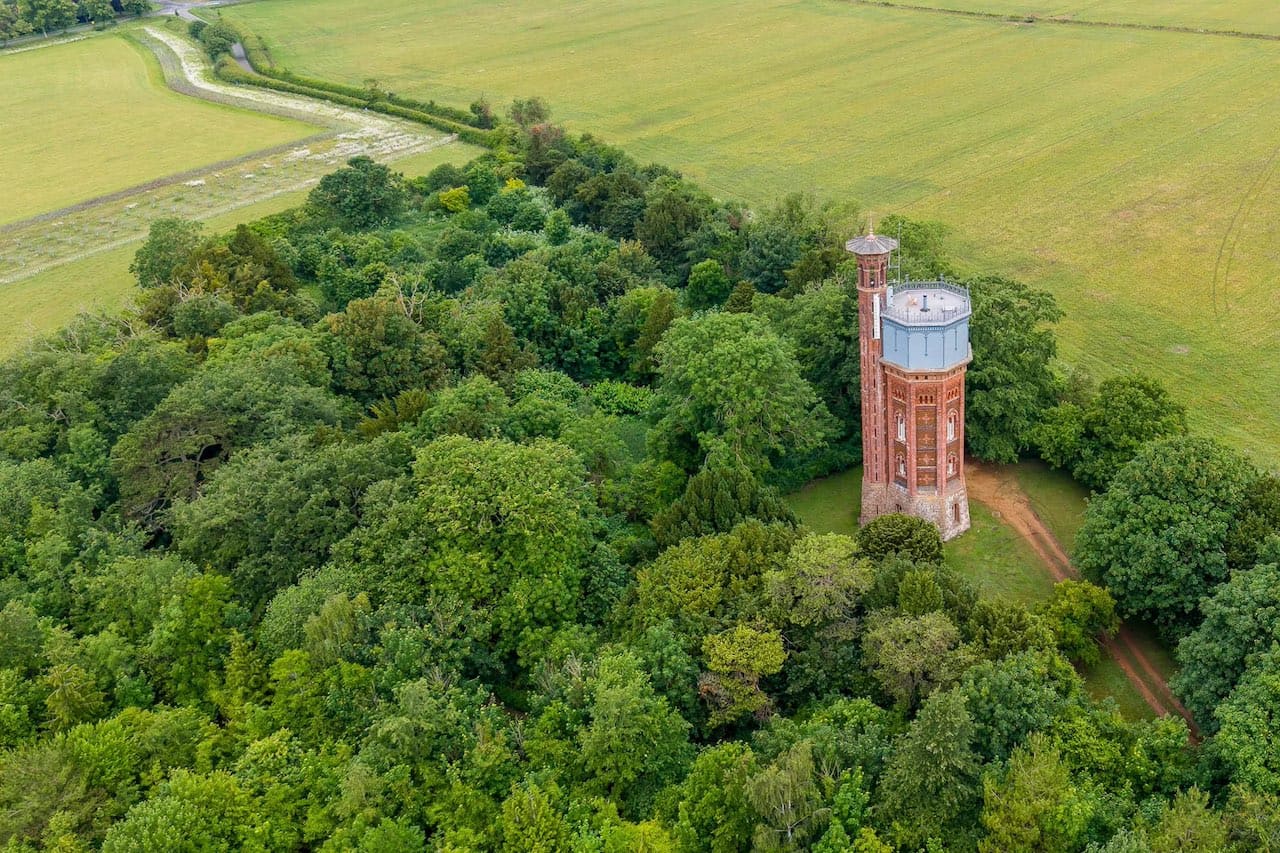
A circular brick tower that once pumped thousands of gallons of water across Sandringham Estate now holds a bedroom, a sitting room with a fireplace, and a rooftop terrace overlooking the Norfolk countryside. Built in 1877 to supply Sandringham House, the tower served its original function for more than a century before being converted into holiday accommodation for two guests.
Rates begin at £151 per night, and the property accepts one dog. The project is part of a broader pattern in which disused infrastructure, from water towers to railway stations, is repurposed for tourism rather than demolished or left empty.
The tower was designed by James Mansergh, a British civil engineer whose portfolio included the Elan Valley Reservoirs in Wales. Its neo-Byzantine style features rounded arches and decorative brickwork, and a cast-iron tank at the top once held 32,000 gallons. That tank is gone, but the structure's silhouette remains a fixture on the estate's skyline.
Living Across Four Levels
The accommodation is stacked vertically. The ground floor holds the kitchen, dining area, and bathroom. One flight up is the bedroom. Above that sits a living room with a working fireplace, useful during Norfolk's cooler months. The top level opens onto a terrace with long views over farmland and woodland.
The interior leans on muted tones and reclaimed materials sourced from elsewhere on the estate. Historic photographs of the Royal Family and Sandringham appear on the walls, tying the space to its setting without attempting to mimic a conventional hotel. The goal appears to be preservation of character rather than polish.
Sandringham as Working Estate and Royal Residence
Sandringham has been in royal hands since 1862, when it was acquired for the future King Edward VII. Today it functions as King Charles III's private Norfolk residence and the site of the Royal Family's annual Christmas gathering. Beyond the house itself, the estate spans roughly 20,000 acres and includes active farmland, a sawmill, gardens, and an apple juice pressing operation. More than 200 people work across the property, according to Sandringham Estate.
The Water Tower is the third holiday property on the estate. Gardens House, a red-brick Edwardian building once occupied by the head gardener, now sleeps eight. The Folly, a 19th-century structure that served as both hunting lodge and tearoom, accommodates six after a year-long restoration. All three are bookable through Oliver's Travels, a holiday rental company.
Heritage Conversions and the Appeal of the Uncommon
The rise of heritage accommodation reflects both supply and demand. Old structures that no longer serve their original purpose represent potential income rather than maintenance burdens. At the same time, travelers increasingly seek stays that feel distinct from standard hotel formats, whether for novelty, atmosphere, or a sense of place.
Water towers, in particular, offer height and views, two assets that translate easily into hospitality. Their compact footprints suit small-scale projects, and their industrial bones often photograph well. The challenge lies in retrofitting plumbing, heating, and accessibility into buildings designed for function, not comfort.
Sandringham's location, roughly 100 miles north of London, positions it as a weekend destination rather than a day trip. Norfolk's appeal rests on a quieter pace, coastal access, and a landscape of marshes, villages, and country lanes. The Water Tower offers that backdrop with the added layer of royal association, a draw for some and irrelevant to others.
What This Signals for Rural Tourism
The conversion of estate infrastructure into lodging points to a wider rethinking of rural tourism assets. Historic properties that once required upkeep now generate revenue. Estates with land and buildings can diversify income streams without selling parcels or opening their private quarters to the public.
For visitors, the appeal is less about luxury than distinctiveness. A water tower is not inherently comfortable, but it is memorable. The question for the sector is whether the novelty holds or whether the market for quirky heritage stays reaches saturation as more estates, trusts, and landowners pursue similar projects.
Sandringham's three properties sit at the intersection of heritage, landscape, and royal branding. The Water Tower, smallest of the three, offers seclusion and elevation. Whether that combination justifies the nightly rate depends on what a guest values: a bed with a view, a story to tell, or simply a weekend away from predictable lodging.