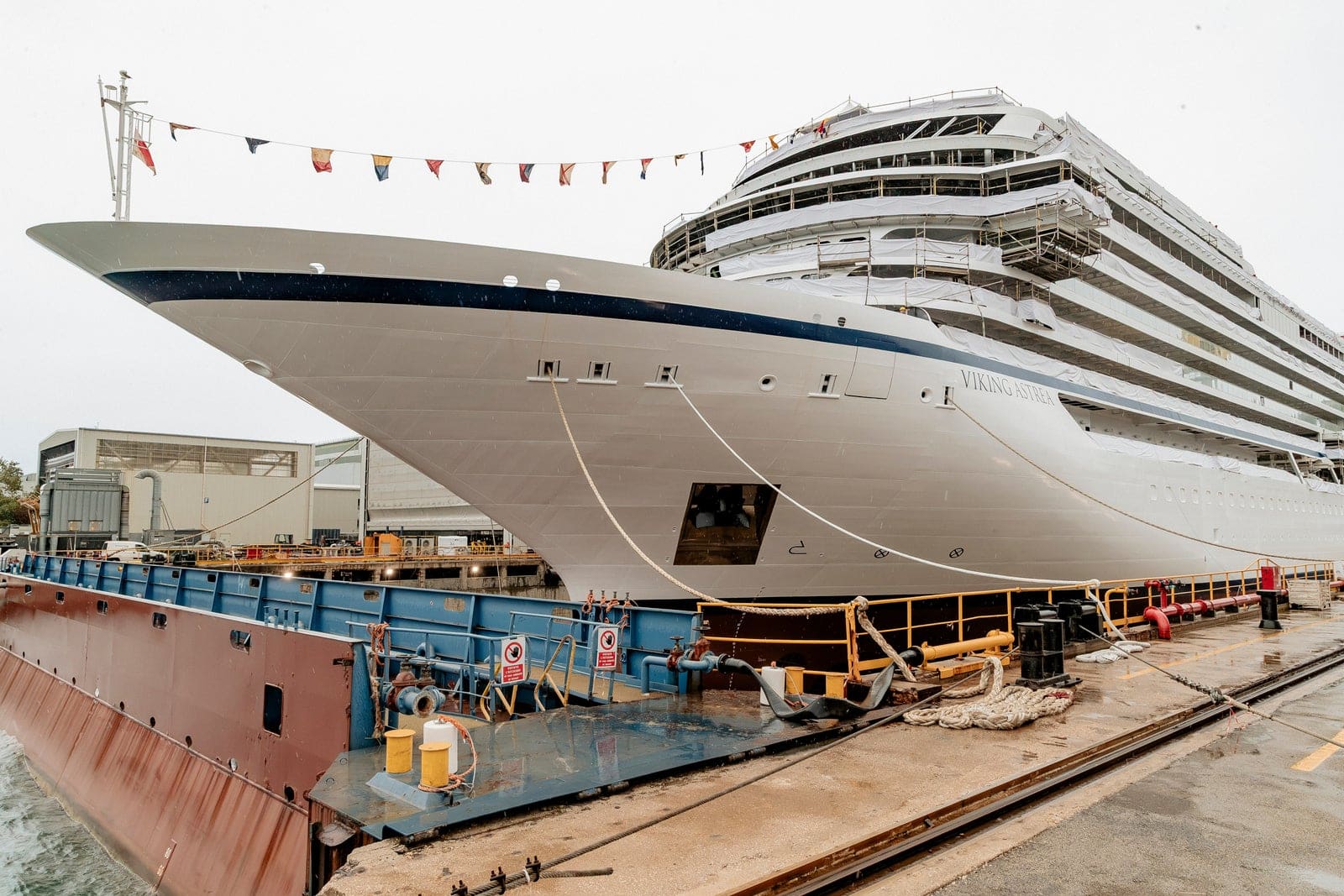
A Second Hydrogen Vessel Takes Shape
Viking's newest ocean ship touched water for the first time last week at Fincantieri's Ancona facility in Italy. Astrea, which accommodates 998 passengers, follows the design of its sister ship Libra and incorporates a hybrid propulsion system that can run on liquified hydrogen for portions of each voyage.
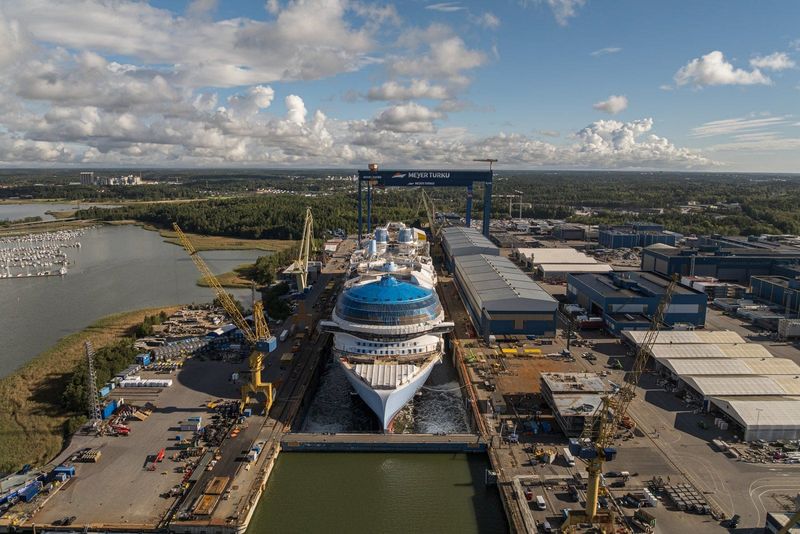
The float-out ceremony followed shipbuilding tradition: a ceremonial cord was cut, the dock flooded, and the hull was towed to an outfitting berth where interior work will continue through to delivery in May 2027. Astrea will sail the Mediterranean and northern Europe during its inaugural season, with fares starting at £1,995 per person.
How the Fuel Cell Works
The propulsion architecture, developed by Isotta Fraschini Motori, a Fincantieri subsidiary, centres on a polymer electrolyte membrane fuel cell that draws on stored liquified hydrogen. According to Viking, the system can generate up to six megawatts and produce zero exhaust emissions when operating in fuel-cell mode.
The ship will not carry enough hydrogen to power an entire itinerary. Instead, the design allows the vessel to switch to hydrogen in port approaches, coastal zones, and protected areas such as the Norwegian fjords, where local regulations and conservation priorities are tightening. For open-water cruising, the ship relies on conventional marine fuel.
The Libra Precedent
Astrea is the second vessel in this configuration. Libra, scheduled to enter service in November, will be the first hydrogen-capable cruise ship in commercial operation. Both ships share the same hull form, guest capacity, and fuel-cell installation, giving Viking a pair of vessels that can meet evolving emissions standards in northern Europe without redesigning routes or skipping sensitive ports.
The timing reflects broader regulatory pressure. Norway has signalled plans to restrict high-emission vessels in its fjords, and several European port authorities are considering low-emission zones. Hydrogen fuel cells offer one pathway to compliance, though infrastructure for bunkering liquified hydrogen remains sparse and expensive.
A Wider Shift in Propulsion
Viking is not alone in testing alternative fuels. Hurtigruten completed a climate-neutral voyage in Norway in October 2025 using biodiesel, and Havila Voyages ran a biogas trial the following month. Havila's ships also carry battery packs that can supply power for up to four hours, enough to navigate confined waterways or manoeuvre in port without running diesel generators.
Each approach has trade-offs. Biodiesel and biogas rely on supply chains that are still developing and can be costly. Batteries add weight and require frequent charging, limiting their usefulness on longer legs. Hydrogen offers high energy density and zero exhaust emissions but demands cryogenic storage and specialised handling, both of which add complexity and capital cost.
What It Means for Passengers
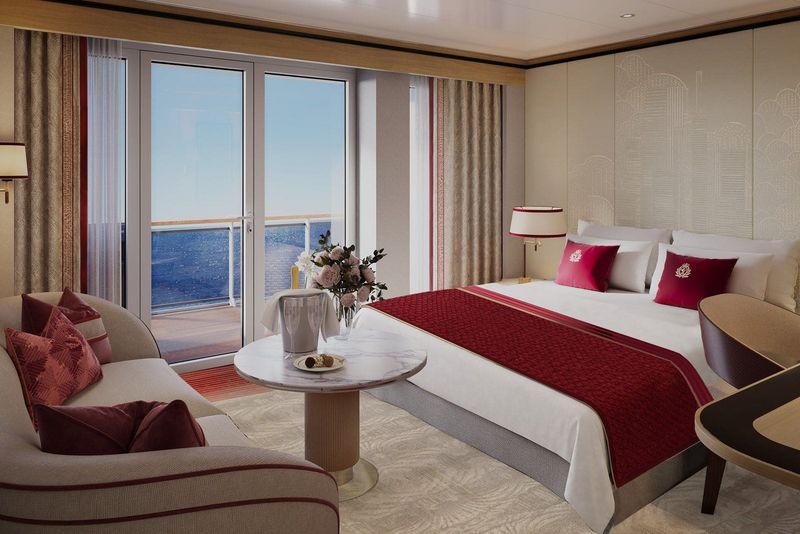
For travellers, the immediate effect is access. Ships that can switch to zero-emission propulsion are more likely to secure permits for sailings in protected waters, especially as destinations such as Iceland, Svalbard, and parts of the Baltic tighten environmental controls. That access comes without a major change in onboard experience; Astrea follows Viking's established design language, with Nordic interiors and reproductions of the Bayeux Tapestry in the stairwells.
Pricing so far suggests that Viking is absorbing much of the technology premium rather than passing it directly to guests. The starting fare for Astrea matches the broader market for mid-tier ocean cruising in Europe, though that may shift as hydrogen bunkering costs become clearer.
The Infrastructure Question
The constraint is not the ship but the fuel supply. Only a handful of ports in Europe can currently deliver liquified hydrogen in the volumes a cruise ship requires, and the production process remains energy-intensive. Unless that hydrogen is generated using renewable electricity, the climate benefit narrows considerably.
Viking has not disclosed which ports will supply Astrea or how much of each voyage will run on hydrogen. The six-megawatt capacity is enough to cover auxiliary systems and partial propulsion, but not sustained high-speed cruising. That suggests the fuel cell will be used selectively, likely in the final hours of each port call and during slow-speed transits through regulated zones.
A Bet on Regulation
Leah Talactac, Viking's president and chief executive, described the float-out as a milestone in the line's effort to design more efficient vessels. The phrasing is careful; Viking is positioning hydrogen not as a silver bullet but as one tool in a broader emissions strategy that also includes hull design, waste heat recovery, and shore power compatibility.
The real test will come in 2027 and beyond, as both Libra and Astrea rack up operating hours and the economics of hydrogen bunkering come into focus. If the fuel-cell system proves reliable and port infrastructure expands, other lines may follow. If costs stay high and supply remains limited, hydrogen could remain a niche solution for a handful of routes where regulatory access depends on it.
For now, Viking has two ships that can sail into fjords and coastal reserves without the exhaust plume, and that may be enough to justify the investment.