A Different Kind of Wine Country Stay
Spring in Tuscany means wisteria draping over stone, wildflowers dotting the pastures, and vines pushing out fresh green shoots. It also means fewer crowds and cooler mornings, the kind that make you want to linger over breakfast on a terrace with views that stretch across valleys planted in Sangiovese.
Staying on a working wine estate offers something hotels in Florence or Siena cannot: proximity to the source. You wake to the rhythms of harvest or pruning, eat vegetables pulled from the same soil as the grapes, and end the day with a glass poured from barrels aging a few hundred meters away. The properties below span Chianti, the Val d'Orcia, and the Valdarno, each anchored by vineyards and most by olive groves as well.
Il Borro: A Fashion Family's Farm Turned Resort
An hour east of Florence, the Valdarno valley holds Il Borro, a thousand-hectare estate purchased in 1993 by Ferruccio Ferragamo, then chairman of the luxury fashion house his family built. What began as a personal retreat with a medieval hamlet, a villa, and farmland has evolved into a Relais & Châteaux property that produces its own wine, olive oil, and vegetables on organic, certified land.
The turning point came in 2012, when Il Borro joined the Relais network and shifted toward sustainability. Today the estate generates three times the energy it consumes through photovoltaic systems, operates three farm-to-table restaurants, and maintains stables for 160 horses. Ferruccio's children, Salvatore and Vittoria, now help run the property, which includes suites, pools, an art gallery, and a modern winery.
The appeal lies in the blend: rural Tuscany without rusticity, contemporary comforts without sacrificing connection to the land. Guests wake to birdsong, spend afternoons riding or touring the cellars, and dine on produce harvested that morning. Rooms start around £340 per night.
Castello di Vicarello: Eight Centuries on a Hilltop
This 12th-century castle in the Maremma has stood for more than 800 years, and the current owners have restored it into one of Tuscany's most atmospheric stays. The estate sprawls across olive groves and vineyards, quiet enough that the main soundtrack is birdsong and the occasional snuffle from Uva, the resident dog.
Each suite carries its own history, no two alike in layout or character. The restaurant sources vegetables from the property's gardens; one standout dish is a porcini risotto finished with pecorino sauce, plated like modern art. Wine comes from the estate's own vines, including the Poggio Vico label. Londoners can find bottles at River Café in Hammersmith and Angelina in Dalston.
The spa sits in a Balinese-style hut beside the largest pool, where therapists offer treatments using Comfort Zone oils. Rooms start around £450 per night.
Lupaia: Wolves, Olive Trees, and a Corporate Escape
Named for the wolves that once roamed its hilltop, Lupaia dates to 1622. Heidi and Christopher Mueller left their corporate careers to restore five historic farmhouses into a 12-room boutique property surrounded by 1,500 olive trees and vineyards. Arrival involves a slow drive up pebbled roads, the only sound the crunch of tires.
Rooms vary in outlook: some face the medieval village of Montefollonico, others the Chiana Valley or Tuscan sunsets. Interiors mix oak beams and antique mirrors with locally sourced ceramics and lighting. The restaurant occupies a cozy space with a traditional hearth, serving meals built from herbs, vegetables, fruit, olive oil, honey, and eggs grown on-site, plus house-made pasta and bread.
Guests can book cooking classes, wine and olive oil tastings, truffle hunts, e-bike tours, or honeybee visits. Montepulciano and Pienza, both known for Pecorino cheese and history, sit 15 minutes away by car. Rooms start around £420 per night.
Monteverdi Tuscany: Ten Residents, Twenty Rooms
Castiglioncello del Trinoro is an ancient hilltop village with ten residents, one of whom is the hotel. Michael Cioffi discovered the borgo, fell for the Val d'Orcia, and over time expanded what began as a five-room bed-and-breakfast into a 20-room estate with three villas.
The location offers dual views: the silky hills of the Val d'Orcia and Monte Cetona on one side, Monte Amiata, Montepulciano, and Montalcino on the other. The latter two are famous for Nobile and Brunello wines.
In 2023, Monteverdi opened Zita, an osteria serving Tuscan dishes. This year it introduced Oreade, a fine-dining concept by chef Riccardo Bacciottini with only four tables, carved into the rock. Book well ahead. The property also includes a bar, wellness area with two saunas and an outdoor ice plunge, a pool, and a contemporary art gallery curated by London-based Sarah McCrory.
One highlight: cooking classes with Giancarla, where guests make fresh-egg pasta, a starter, and dessert, then eat under the pergola with valley views. Rooms start around £650 per night.
La Darbia Chianti: Hilltop Suites Scattered Like a Village
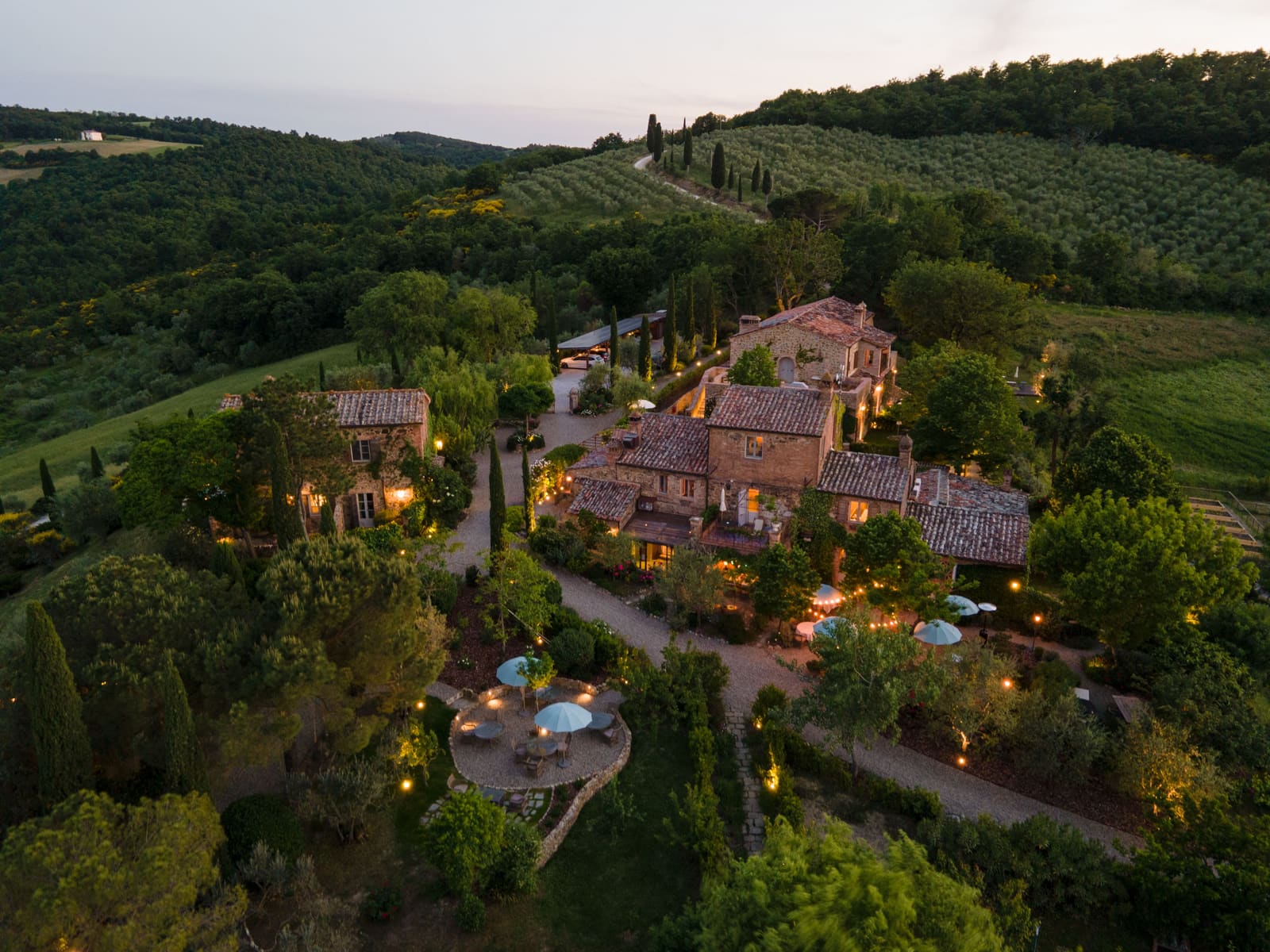
Between Panzano and Greve in Chianti, La Darbia occupies 15 hectares of olive groves, woodland, meadows, and lavender fields. Seventeen suites spread across the hillside in clusters of old stone farmhouses, each different in size and layout but all with views. Some overlook the cobbled courtyard and herb gardens, others the Panzano valley.
Walking from a hilltop suite to breakfast feels less like staying in a hotel and more like moving through a small village. Meals are served on the terrace, where executive chef Sebastiano Pagliaro runs a menu that draws on Chianti's farms and the Tuscan coast: regional cheeses, local meats, fish from Livorno.
The pace here suits those who prefer doing little. Paths wind through the lavender fields, which house 40 beehives and two million bees producing the estate's honey. Rooms start around £360 per night.
Como Castello Del Nero: A 12th-Century Castle Reimagined
In the Chianti hills, Castello del Nero began as a 12th-century castle. The Trotta family transformed it into a luxury agriturismo in 2006. Christina Ong, founder of COMO Hotels & Resorts, acquired it in 2018 and oversaw a restoration that added the Shambhala Retreat, a wellness center focused on holistic rituals and nature connection.
Interior designer Paola Navone blended rustic textures with soft pastels and contemporary tones. The castle's vaulted ceilings, terracotta tiles, and frescoed walls remain, now paired with COMO's minimalist aesthetic across 50 rooms and suites.
Three dining outlets include La Torre, which holds a Michelin star, though Pavilion is the pick for outdoor seating and landscape views. Activities include wine tastings, drives in a Fiat 500 or vintage Land Rover Defender, and visits to lesser-known wineries. Rooms start around £440 per night.
Il Falconiere: Five Generations of Wine, One Michelin Star
Below Cortona, Il Falconiere sits on 30 hectares of vineyards owned by the Baracchi family, who have made wine here for five generations since 1860. Silvia Baracchi is the owner, host, and Michelin-starred chef, and her presence shapes the property's character.
The retreat occupies the gentle foothills, surrounded by vines that thrive in the sun-drenched Valdichiana. Guests can tour the cellars, taste wines that span more than a century of family knowledge, and dine on dishes that earned the restaurant its star.
The setting is intimate, the kind of place where the person pouring your wine might also own the land it came from. It is wine country hospitality at its most personal.