A Painter's Landscape, Still Intact
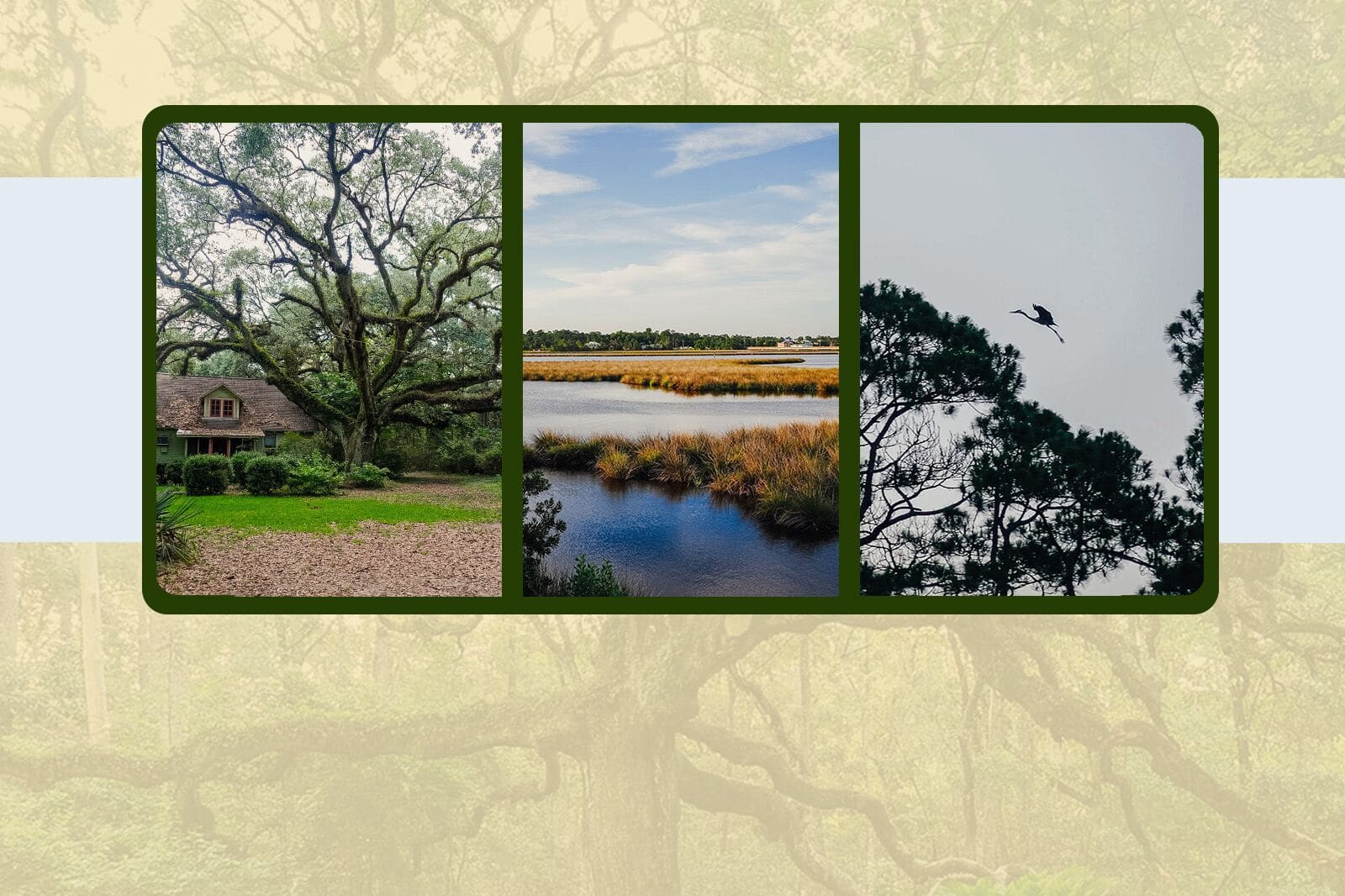
Ocean Springs sits where Spanish moss drapes over live oaks and the Gulf Coast's wetlands push inland. It was home to Walter Anderson, a 20th-century artist who rowed out to barrier islands to paint birds, alligators, and anything else that crossed his path. He was as much conservationist as painter, documenting a fragile ecosystem with watercolors and ink.
That landscape is still here. Forty-four miles of bayou, swamp, and coastal trail stretch along the Mississippi Gulf, hosting osprey, sandhill cranes, and herons in numbers that would have kept Anderson busy for years. The region remains undervisited, which means you can walk boardwalks and paddle backwaters without crowds.
A long weekend is enough to trace Anderson's footsteps and see what still draws people to this stretch of coast. Not luxury resorts or white-sand beaches, but wetlands, working waterfronts, and a sense that nature still has the upper hand.
Ocean Springs and the Pine Savannas
Ocean Springs is the logical base. The Walter Anderson Museum of Art anchors the downtown, along with a community center whose walls Anderson painted. The OS Hotel sits within walking distance of both. Nearby cafes and bookshops fill out the rest of the day when you are not on the water or in the woods.
A short drive east leads to the Grand Bay National Estuarine Research Reserve in Moss Point. It is both a working research facility and a public park. Trails wind through pine savannas, and a birding boardwalk overlooks marshland where blue herons, bald eagles, and migratory species gather. Another boardwalk cuts into a freshwater marsh. Kayaks and canoes can be launched from the reserve if you want to push deeper into the wetlands.
The Pascagoula River Audubon Center, also in Moss Point, offers another boardwalk surrounded by bayous. Standing on the dock feels like being inside a bird sanctuary, with wings and calls overhead. Kayaks are available here too, though the dock alone delivers the experience.
Bouillabaisse and Oyster Shells
Pascagoula, one town over, sits on the largest free-flowing river system in the contiguous United States. A boardwalk in Riverfront Park offers views of the Pascagoula River, and the restored train depot houses Chandeleur Depot Brewpub, named for a nearby barrier island. A public art walk runs along the main street, though it is the river itself that holds attention.
Dinner back in Ocean Springs at Maringouin, inside the boutique hotel The Roost, shifts the tone. Chef Lauren Joffrion blends Gulf seafood with Southern staples and international influences. A bouillabaisse arrives filled with local shrimp, clams, and redfish, cooked in a tomato gochujang broth. It is light but substantial, with the kind of freshness that only comes from proximity to the source. The cornbread is sweet, served warm with butter and chili salt.
The oyster shells lining the restaurant's entryway are not decoration. They are a reminder of the waste-not culture that defines this stretch of coast, where the Gulf's bounty is both livelihood and identity.
Herons in the Treetops
Harbor Road at dawn is where great blue herons roost in the pines above shrimp and oyster boats. The birds gather high in the treetops, moving like wind through branches. It is easy to imagine Anderson watching the same scene on his way to Horn Island, sketchbook in hand.
The herons are not alone. Seagulls with black heads and striped wings patrol the docks, and the light shifts quickly as the sun rises over the water. A few minutes on the dock is enough to understand why Anderson kept coming back.
After sunrise, the Mississippi Sandhill Crane National Wildlife Refuge offers a different kind of encounter. Mississippi's sandhill cranes do not migrate, and they are not easy to spot. The population once dropped to 30 birds before the refuge was established in 1975. Around 200 cranes live here now, and 90 percent of them were captive-reared before release.
The refuge's trail, just under a mile long, passes through habitat where carnivorous pale pitcher plants and native wildflowers grow. The visitor center provides context on the cranes and the decades of conservation work that brought them back from the edge.
Two Hours on the Singing River
The Pascagoula River, known as the Singing River by the Pascagoula people, cuts through swamp and bayou. Eco Tours of South Mississippi, a woman-owned operation, runs tritoon boats into these waterways for two-hour excursions. Captain Kendall Smith narrates the route, pointing out birds, trees, and the occasional alligator. The tritoon's three-tube design makes for a smooth ride, even in narrow channels.
The company also offers day trips to three nearby barrier islands, though the river itself holds enough to fill an afternoon. The pace is slow, the narration detailed, and the landscape unchanged for centuries.
Dinner at 701 Craft, overlooking a bayou, closes the day. A seat on the deck offers views of the water and whatever swims or flies past. The food is solid, but the setting does most of the work.
Live Oaks and National Treasures
Twelve Oaks Nature Preserve is easy to miss. The turnoff sits on a gravel road just off the main highway, and the preserve itself covers only three acres. But the live oak trees here are 400 years old, registered as national treasures. Two of them, named Charity and Faith, predate the Civil War.
The half-mile trail winds through ferns, saplings, and the kind of canopy that makes you walk slower. It is not hard to picture Anderson sitting under the same trees, sketching the bayou below. The preserve is small, but it holds the kind of stillness that justifies the detour.
Getting There and Around
Gulfport-Biloxi International Airport sits 30 minutes from Ocean Springs. Louis Armstrong New Orleans International Airport is a two-hour drive if you need a larger hub. A rental car is necessary. Ocean Springs, Moss Point, and Pascagoula are spread along the coast and not walkable between towns. The nature sites require driving, and some, like the Sandhill Crane refuge and Twelve Oaks, sit off the main highway entirely.
Harbor Road at dawn, the birding boardwalks, and the river excursions all require the flexibility of your own wheels. Public transit does not serve this stretch of coast, and ride services are limited.
What Remains
The Mississippi Gulf Coast is not a beach vacation. It is a place where wetlands and working waterfronts share space, where conservation efforts are ongoing, and where a painter's obsession with the natural world still makes sense decades later. Anderson's work documents what was here. A long weekend shows what remains.