From Slogan to Identity Crisis
Walk down South Congress Avenue on a Saturday afternoon and you'll still see the vintage stores, the taco trucks, the buskers with their amps cranked. But look closer and the story gets complicated. That old record shop? Now sandwiched between a Tesla showroom and a $12 juice bar. The dive bar that hosted punk bands in the '90s? Closed three years ago, replaced by condos with rooftop pools.
"Keep Austin Weird" turns 25 this year, and the slogan itself has become a mirror for the city's transformation. What started as a grassroots call to support local businesses has morphed into something stranger: a tourist-board tagline, a T-shirt empire, a promise that feels harder to keep with every tech headquarters that opens downtown.
The phrase emerged in 2000 during a pledge drive for community radio station KOOP. A librarian named Red Wassenich coined it on air, urging listeners to shop local and preserve the city's independent spirit. Within months, bumper stickers appeared. Within years, it was inescapable, shorthand for everything Austin wanted to believe about itself: scrappy, creative, allergic to conformity.
The Tech Tide
Then came the money. In the 2010s, Austin's reputation as a low-cost alternative to Silicon Valley drew Oracle, Apple, Tesla, and thousands of workers with Bay Area salaries. The metro area added more than 400,000 residents between 2010 and 2020. Median home prices tripled. Neighborhoods that once housed artists and musicians became playgrounds for equity-funded professionals.
The tension isn't unique to Austin. Every city that brands itself as "authentic" or "quirky" eventually faces the paradox: the qualities that attract newcomers are often the first casualties of growth. What makes Austin's case sharper is how explicitly the city marketed its weirdness, turning a cultural identity into an economic strategy.
Some of the old guard see betrayal. The East Side, historically a Black and Latino neighborhood, has gentrified at a pace that displaced longtime residents. Music venues that gave Austin its "Live Music Capital of the World" nickname have shuttered, priced out by rising property taxes and noise complaints from condo owners. South by Southwest, the festival that once showcased underground bands, now draws corporate sponsors and celebrity panels.
What Survives
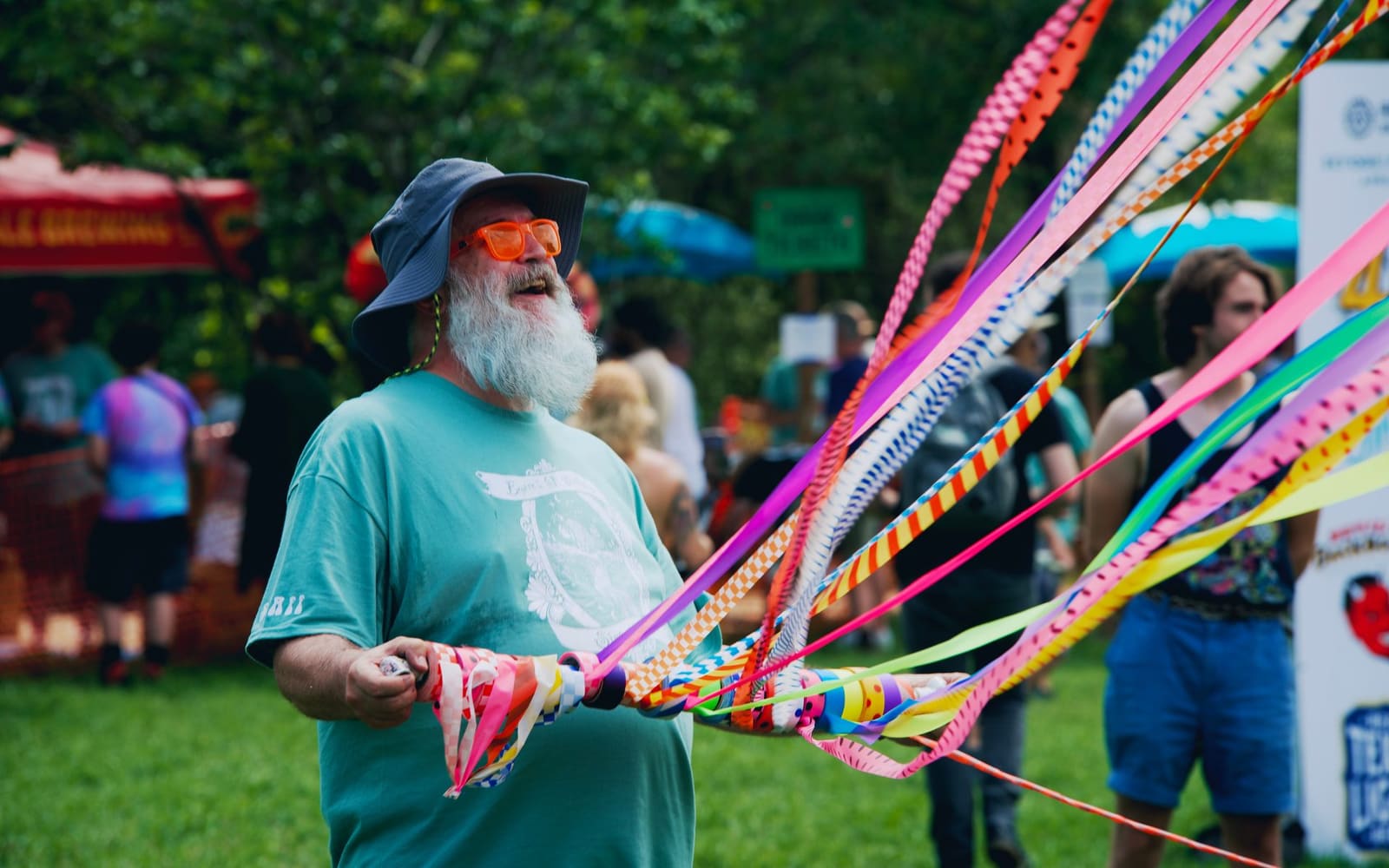
Yet pockets of resistance persist. Barton Springs Pool still draws swimmers year-round, a spring-fed oasis where you're as likely to see a tech CEO as a tattooed grad student. Food trailer parks remain, though the tacos cost more. The Cathedral of Junk, a folk-art installation in someone's backyard, soldiers on. Eeyore's Birthday Party, an annual gathering in Pease Park that dates to 1963, still happens every spring, complete with live drumming and flower crowns.
These threads matter because they suggest weirdness was never just about affordability or a specific aesthetic. It was about permission: to dress oddly, to start a band at 40, to build something useless and beautiful in your yard. That permission hasn't vanished, but it competes now with a different ethos, one that measures value in exits and square footage.
The Souvenir Problem
The slogan itself has become part of the problem. "Keep Austin Weird" merchandise is everywhere, sold in airport kiosks and chain hotel gift shops. The phrase that once meant "support the local" now adorns products made overseas, bought by visitors who spend a weekend at SXSW and leave convinced they've tasted the real Austin.
This isn't hypocrisy so much as inevitability. Any city that grows will change, and any slogan that succeeds will be commercialized. The question isn't whether Austin is still weird by some purist standard. It's whether the city can make room for weirdness that doesn't pay six figures, that can't afford the rent, that doesn't fit neatly into a brand.
A City in Conversation with Itself
What's striking about Austin in 2026 is how much the city still argues about this. At city council meetings, residents debate affordability measures and historic preservation. Local papers run op-eds about displacement and growth. The conversation itself, loud and ongoing, is a kind of weirdness: a refusal to accept change as fait accompli, an insistence that identity is worth fighting over.
Other Sun Belt cities have grown just as fast with far less soul-searching. Austin's self-consciousness, its endless questioning of whether it's sold out, might be the most Austin thing about it. The city that made "Keep Austin Weird" a mantra can't stop asking what that means, who it's for, and whether the answer changes when the question gets asked in a $3 million bungalow.
The tie-dye hasn't disappeared; it just shares closet space with Patagonia vests now. The music still plays, though the venues are fewer and the cover charges higher. Weirdness persists, but it's weirder now: a tech worker who spends weekends welding sculpture, a startup founder who plays accordion at the farmers market, a city that brands its rebellion and then wonders why it feels packaged.
Twenty-five years in, "Keep Austin Weird" endures less as a description than as a challenge. The slogan asks a question the city hasn't finished answering: What do you keep, what do you let go, and who gets to decide?