A Side Trip That Turns Into Something More
Sarawak, on the Malaysian side of Borneo, has a way of pulling travellers beyond their original itineraries. After wrapping up the June edition of the Rainforest World Music Festival in Damai, a group of four visitors added a few extra days to explore the countryside south of Kuching. A conversation with a car rental representative led them to Kampung Peraya, a Bidayuh village in the wilds southwest of Siburan, where bamboo rafting on the Sirin River has become a quiet draw for those willing to venture off the usual routes.
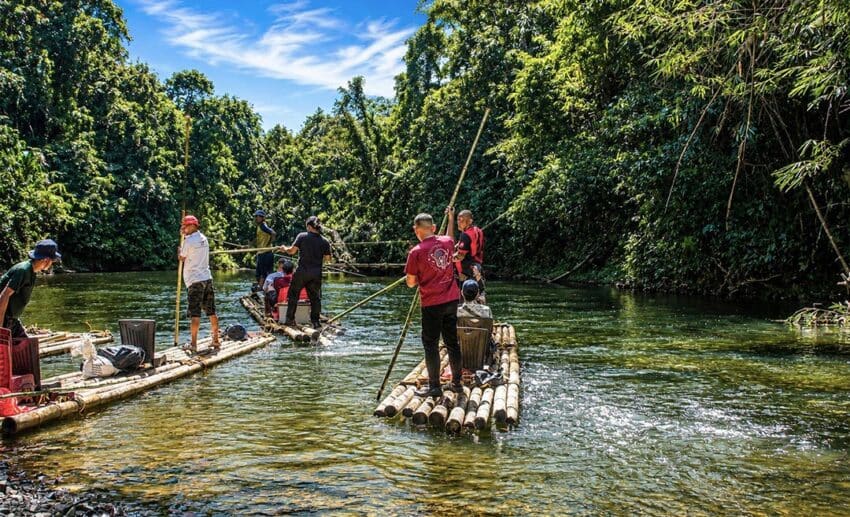
The experience is anchored by Valentine Ritong, who runs the village-based rafting operation with a team of local men. The rafts themselves, roughly eight metres long and lashed together with binding, are propelled by two rafters per vessel: one at the front, one at the rear. Passengers sit on low plastic stools and watch the forest slide by. The journey takes about two hours, interrupted only by a few small rapids and the occasional need to step off the raft and walk a short stretch along the riverbank.
The Bidayuh and Their Retreat to the Hills
The Bidayuh are known for their hospitality and skill with tuak, a rice wine that remains a point of pride. Historically, their reputation for being peace-loving made them vulnerable to pressure from other groups, which pushed them from the lowlands into the mountainous interior of Sarawak. There, they built fortified longhouses, a defensive architecture that led European observers to call them Land Dayaks, distinguishing them from the Iban, or Sea Dayaks, who dominated coastal areas.
Today, bamboo remains central to Bidayuh life. The long, straight poles that form the rafts are also used to build houses, fashion musical instruments, craft cooking utensils, and serve as containers. Young shoots are eaten, as visitors discover during the midpoint meal. At the end of each rafting trip, the binding is undone and the bamboo poles are trucked back upstream for the next group, a practical example of reuse that keeps the operation sustainable.
Navigating the River
The Sirin is gentle for most of its length, requiring little effort from the rafters except when small rocky outcrops appear. These require attention and a steady hand. On one trip, a rafter at the back lost his footing and launched himself into the shallow water, prompting laughter from the rest of the group. No one was hurt, and the raft continued downstream.
About an hour into the journey, the rafts pull into a makeshift bankside camp. While passengers cool off in the river or sip tuak, the team heads into the forest to forage. They return with young bamboo shoots, a wild mango variety, midin (an edible jungle fern), and other native plants. The centrepiece of the meal is pansoh manok, chicken and rice cooked inside bamboo over an open fire. Aromatic herbs and chicken pieces are stuffed into the hollow bamboo and left to cook for 30 minutes. Rice is steamed inside large forest leaves, and a spicy sambal made from wild mango and chilli adds heat. Lemongrass tea, served in bamboo cups, rounds out the meal.
What to Expect and What to Bring
This is not whitewater rafting. The Sirin is calm, with only a few rocky sections that require careful manoeuvring. However, river conditions can shift after heavy rain, so checking with the operator before departure is advisable. The tropical climate means warm, humid weather and the possibility of sudden showers. Quick-dry clothing, swimwear, a change of clothes, a lightweight raincoat, and sandals or flip-flops are practical choices. A sun hat and sunscreen help with the heat. A waterproof bag or zip-lock pouch protects phones and cameras from splashes.
Valentine says his guests range from young children accompanied by parents to active seniors. Those who want to can help propel the raft, though most are content to let the rafters handle the work. The village longhouse offers basic accommodation for up to six people, with mattresses, pillows, blankets, and adjacent toilets and showers, for visitors who want to extend their stay.
Adding Orangutans to the Day
The drive back to Kuching passes Semenggoh Wildlife Centre, a rehabilitation facility for orphaned or abandoned orangutans. The centre's 3pm feeding session offers a chance to see the apes up close in a semi-natural setting. Semenggoh prepares orangutans for eventual release back into the wild, and while sightings are not guaranteed, the likelihood is reasonably high. The set-up is well organised, and the experience provides a window into conservation efforts for one of Borneo's most endangered species.
Why This Matters
Sarawak's appeal extends beyond its rainforests and wildlife. Community-based tourism like the Sirin River rafting offers a way to engage with Indigenous culture without the polish of a resort package. The Bidayuh have historically been overshadowed by other groups in Borneo's narrative, and operations like Valentine's put their knowledge and traditions in front of visitors who might otherwise pass through Kuching without a second look.
The use of bamboo, a renewable resource that grows quickly and requires little processing, aligns with broader conversations about sustainable tourism. The foraged lunch, while modest, underscores the depth of knowledge required to identify and prepare wild plants, a skill set that urbanisation and agricultural consolidation are slowly eroding across Southeast Asia.
For travellers accustomed to more structured itineraries, a day on the Sirin River requires flexibility. The pace is slow, the amenities are basic, and the experience depends heavily on weather and river conditions. But for those willing to adjust expectations, it offers a glimpse of Borneo that feels less packaged and more rooted in the rhythms of the community that lives there.