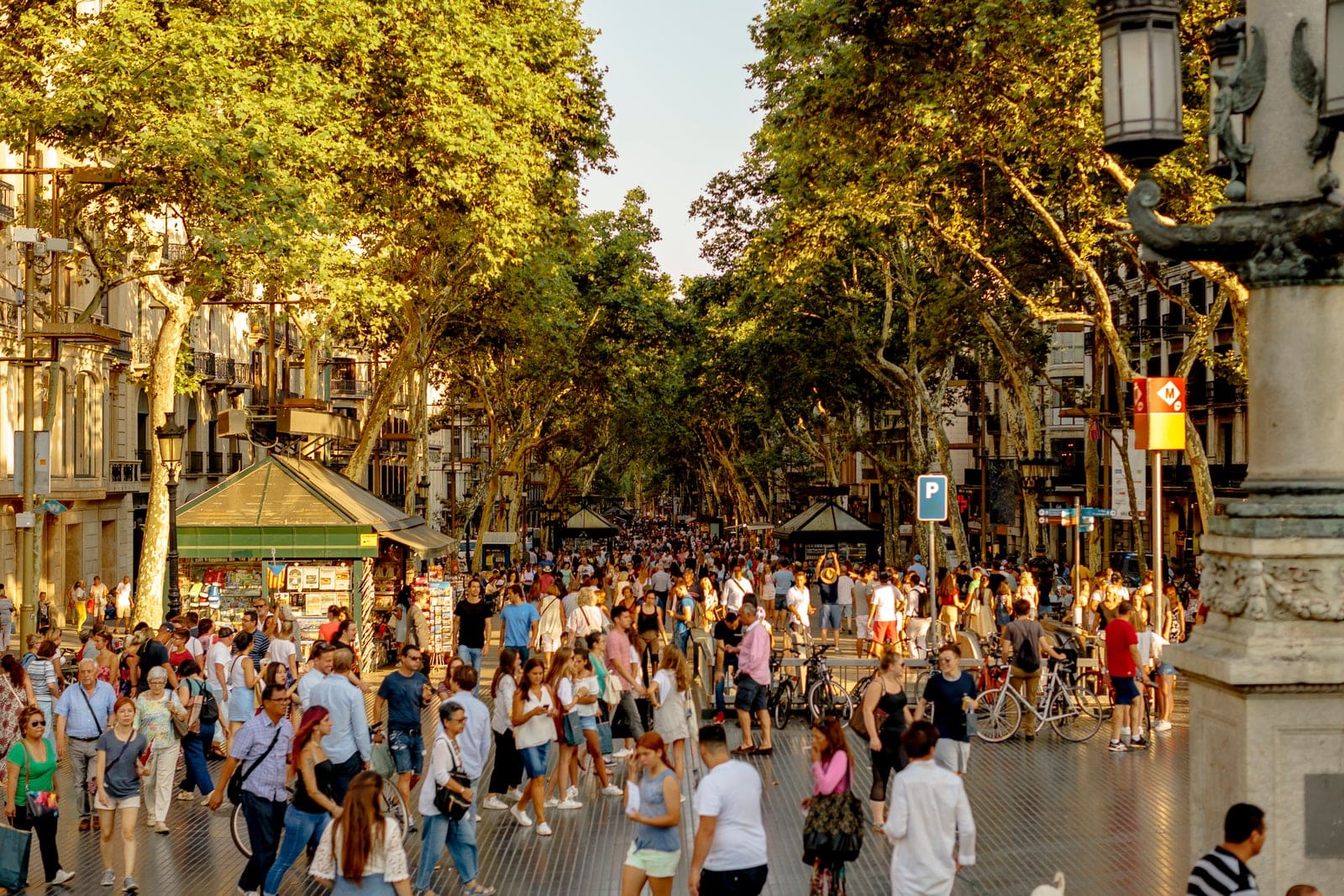
A Line in the Sand
Barcelona has drawn a line: 16 million visitors a year, and no more. The figure marks a sharp turn for a city that has spent decades welcoming ever-growing crowds, only to watch its own residents take to the streets with water guns and protest banners. José Antonio Donaire, the city's new commissioner for sustainable tourism, is now tasked with holding that line and rethinking who visits, how long they stay, and what they spend their time doing.
The plan is not a blanket rejection of tourism. Barcelona still depends on visitors for roughly 13 percent of its economic output. But after years of rising rents, overcrowded Metro trains, and neighborhoods that feel more like theme parks than homes, officials are making a calculated bet: quality over quantity, and residents over revenue growth.
Reshaping the Visitor Mix
Right now, two-thirds of Barcelona's tourists arrive for leisure. Donaire wants to shift that balance to an even split: one-third business travelers, one-third cultural visitors, one-third leisure. The idea is that business and cultural travelers tend to stay longer, spend more thoughtfully, and concentrate less in the same handful of hotspots.
How the city plans to engineer that shift remains somewhat vague. Donaire has mentioned targeted promotions and partnerships aimed at conferences, festivals, and arts programming. But the clearest mechanism is simpler: limiting the number of beds available. If demand keeps rising but supply stays flat, the thinking goes, only those willing to plan ahead and pay more will make the trip.
Already, visitors are running into that wall. Donaire noted that some prospective tourists this summer have been unable to find accommodation. The city is not planning to respond by building more hotels or opening new short-term rental permits. In fact, it is doing the opposite.
Cutting Off the Tap on Rentals
In 2024, Barcelona announced it would stop renewing licenses for holiday rental apartments. The goal is to return 10,000 units to the long-term housing market by 2028. It is one of the most aggressive moves any European city has made to reclaim housing stock from the short-term rental economy.
The policy has teeth. Without new permits and with existing ones set to expire, platforms that once flooded the city with options are seeing their inventory shrink. For visitors, that means fewer choices and higher prices. For residents, it means a chance, however slim, that rents might stabilize or even fall in neighborhoods that have been hollowed out by Airbnb.
The city has also raised its tourist tax to between €10 and €15 per person per night, depending on accommodation type, making it one of the steepest levies in Europe when combined with the regional tax. The hike took effect in April 2025, and officials say the revenue is meant to flow back into infrastructure: public transport, sanitation, security, and efforts to restore the city's cultural identity.
The Cruise Ship Question
Donaire has also set his sights on cruise passengers, particularly those who dock for just a few hours. He wants regional authorities to raise the cruise tax high enough to make single-day stops unattractive. The city has already moved to reduce the number of cruise terminals from seven to five, cutting maximum daily capacity from 37,000 passengers to 31,000.
The logic is straightforward: day-trippers from cruise ships spend little, crowd public spaces, and leave. Some local politicians have floated the idea of a €26-per-day tax for these visitors, though no formal regulation has been adopted yet.
The tension around cruise tourism is not unique to Barcelona. Cities from Venice to Dubrovnik have wrestled with the same calculus: short visits, high impact, minimal economic benefit. Barcelona is betting that fewer, longer stays will serve both its economy and its residents better.
Reclaiming La Rambla
One of the most visible symbols of overtourism in Barcelona is La Rambla, the broad boulevard that cuts through the city center. Once a place where locals strolled in the evening, it has become a gauntlet of souvenir shops, overpriced restaurants, and tourist crowds. Residents say they avoid it now.
Donaire has said he wants to see locals return to La Rambla. What that looks like in practice is still unclear, but the city is experimenting with changes at places like La Boqueria market, which sits just off the boulevard. New rules will require stalls to prioritize selling local produce to residents. Ready-made products aimed at tourists are allowed, but stalls cannot cater exclusively to visitors.
It is a small step, but it reflects a broader ambition: to make the city feel like it belongs to the people who live there, not just the people passing through.
The Bigger Context
Barcelona is not alone in grappling with overtourism. Amsterdam has limited cruise arrivals and banned new hotels in the city center. Venice has introduced a day-tripper fee. Dubrovnik caps the number of visitors allowed in the Old Town at any given time. Across Europe, cities that once competed fiercely for tourist dollars are now competing to manage, or reduce, the flow.
The difference in Barcelona is the intensity of local anger. The water gun protests in 2022 and the street demonstrations in 2023 were not isolated incidents. They reflected a deeper frustration: that the city had been reshaped by tourism without consulting the people who actually live there. Housing became unaffordable. Public spaces became inaccessible. Daily life became harder.
Donaire has framed his work as a response to that frustration. He has said the city is not anti-tourist, but that the right to live in Barcelona must come before the right to visit it. That is a significant shift in priorities for a city that has, for decades, built its economy around welcoming as many visitors as possible.
What It Means for Travelers
For now, the changes are mostly logistical. Accommodation is harder to find and more expensive. The tourist tax is among the highest in Europe. Cruise passengers may face higher fees or find fewer ships docking. But Barcelona is not closing its doors. It is simply asking visitors to plan more carefully, stay longer, and engage more thoughtfully.
The broader question is whether the strategy will work. Capping arrivals at 16 million assumes that demand can be shaped by limiting supply. But if demand continues to rise, the result may simply be higher prices and a shift toward wealthier travelers. That could solve some problems while creating others.
What is clear is that Barcelona is no longer interested in growth for its own sake. The city is trying to find a balance between economic benefit and livability, between welcoming the world and preserving a sense of place. Whether other cities follow its lead may depend on whether that balance can actually be struck.