From Clockmakers to Craft Schools
Bornholm sits between Sweden, Germany, and Poland, officially Danish but far enough from Copenhagen to feel like its own world. For most of its history, the island housed farmers, fishermen, and a few clockmakers who taught themselves the trade. Then came clay deposits, a ceramics boom in the 1800s, and painters chasing the granite coastline and the sharp northern light. By the mid-20th century, ferries brought Scandinavian families on summer breaks, but the artist population stayed small and steady.
That changed when the Royal Danish Academy opened a ceramics and glass school in Nexø. Suddenly, there was infrastructure. Galleries followed, then workshops, then students from outside Denmark. In 2017, the World Crafts Council, affiliated with UNESCO, named Bornholm Europe's first World Craft Region, a formal nod to what had been building quietly for decades.
Dorthea Funder Kaas, coordinator at the Bornholm Centre for Crafts, attributes the designation to a combination of academic presence, local institutions, and business support. The island now hosts makers from around the world, drawn by the academy and a growing network of artist-run spaces.
The Restaurant That Changed the Conversation
In 2007, two Bornholm natives, Nicolai Nørregaard and Rasmus Kofoed, opened Kadeau on the southern coast. The restaurant became a pillar of New Nordic cuisine, earning attention from Copenhagen's design and food circles and pulling a new type of visitor to the island: urban creatives, specialty coffee drinkers, people who cared about where their plates were made.
Local makers responded. Oh Oak and Baltic Sea Glass began producing minimalist tableware for restaurants. The food scene became a showcase for the craft scene, and the two fed each other. Bornholm stopped being just a summer getaway for families and started attracting design tourists.
What Visitors Actually Find
Workshops are open to the public. In Svaneke, Pernille Bülow shapes molten glass in full view, pulling it in and out of the furnace as people watch. SOL Nexø and Galleri Sonja offer artist-led spaces. Matter sells sustainable homewares. Container Juvelen stocks one-off pieces. Postgade 21 is a makers-run collective where local designers sell directly.
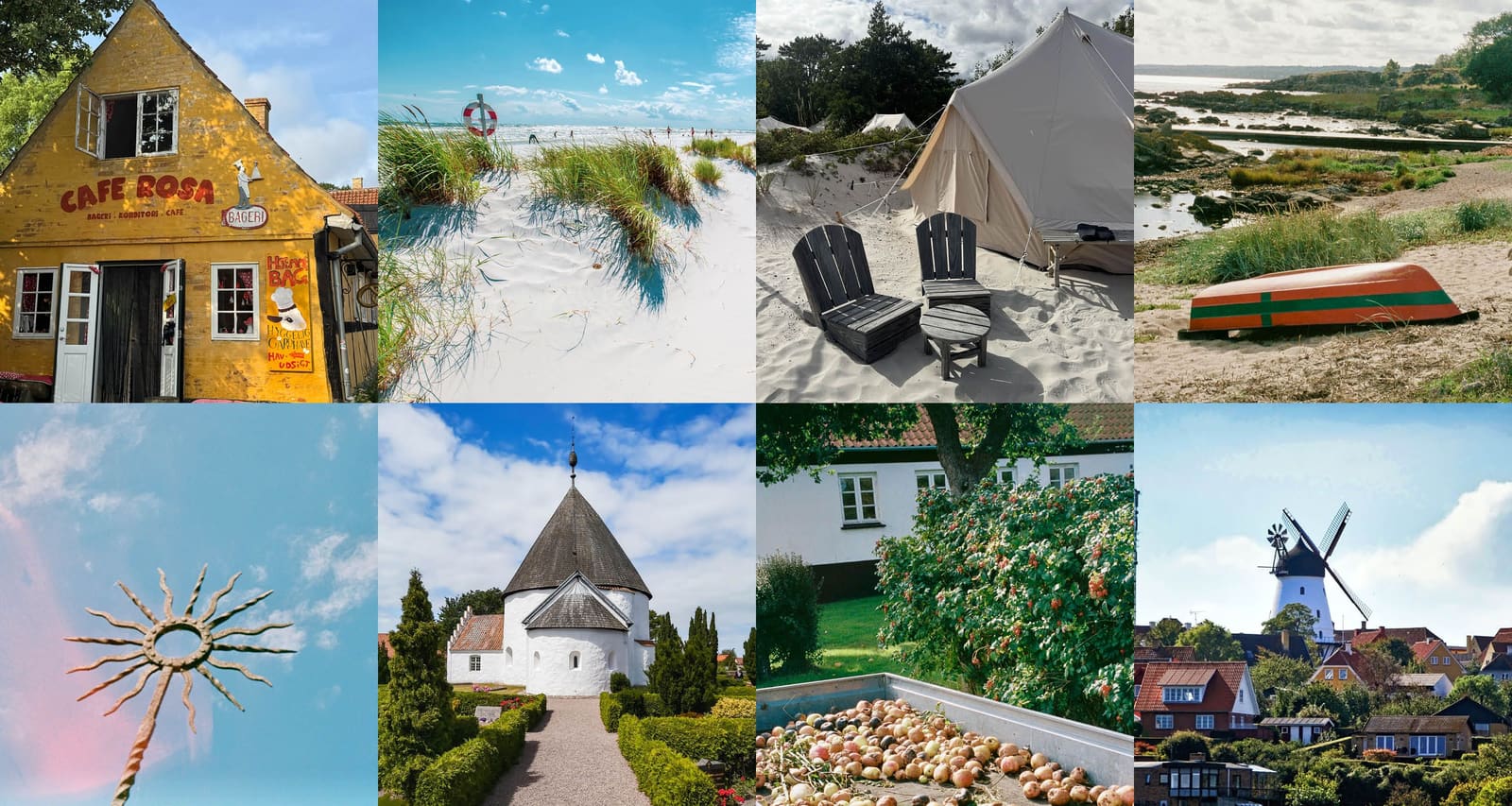
Recent additions include The Dunes, a beachside restaurant by the Kadeau team, and Hodda Bornholm, a community cultural space. Provianten wine bar and Cafe Rosa in Gudhjem remain local favorites, along with Maude, a coffee shop tucked into an old pumphouse.
The island's microclimate, warmer and sunnier than mainland Denmark, allows Kadeau's garden to grow figs, mulberries, and sea buckthorn, ingredients that show up on the 14-course tasting menu. The same weather draws visitors who expect something closer to Sweden's chill but find they can sit outside longer than planned.
The Student Economy
Emilie Fruergaard, a ceramics student at the Royal Danish Academy, describes the island as a constant workshop. She is surrounded by makers testing new techniques, often people at the front edge of their fields. The student community is tight, and the professional community is accessible. That proximity matters when you are learning.
But the economics are uneven. Many craftspeople work seasonally, and year-round income remains a challenge. Kaas points to the EU-funded Hephaestus project as one attempt to address this, aiming to build sustainable business models that combine traditional craft with circular production and new materials. The project uses Bornholm as a living laboratory, testing whether craft can support full-time livelihoods without sacrificing quality or ethos.
The Collaborative Advantage
The island's small size forces collaboration. Strengthening one gallery or workshop tends to lift the others. Kaas sees this as a defining feature of the scene: openness and mutual benefit rather than competition. It is part of what keeps students like Fruergaard on the island after graduation, and part of what attracts international makers in the first place.
Bornholm's white smokehouses, once numbering over a hundred, are down to ten. Hasle Røgeri is one of the survivors, still smoking herring and serving Sol over Gudhjem, the local dish of fish, chives, onion, and raw egg yolk over dark bread. The smokehouses are a reminder that the island's identity has always been tied to making things by hand, whether clocks, ceramics, or food.
The Bornholm Centre for Arts & Craft at Grønbechs Gård, housed in an 1875 merchant building in Hasle, runs 10 to 15 exhibitions each year and hosts the Royal Danish Academy's degree shows. Bornholms Kunstmuseum, designed in the 1990s by Johan Fogh and Per Følner, holds work from the Bornholm School painters and contemporary artists working on the island now.
What Comes Next
Tourism on Bornholm is shifting. Families still come for the beaches, but the island is also pulling a global design audience and Copenhagen's creative class. The question is whether the craft economy can grow without losing the collaborative culture that made it possible in the first place. The Hephaestus project and similar efforts suggest the island is trying to answer that question deliberately, rather than letting growth happen on its own terms.
For now, the balance holds. The island remains relatively uncrowded, the workshops stay open, and the students keep arriving. Whether that lasts depends on how well Bornholm manages the tension between recognition and scale.