A Mountain Town's Gamble on Year-Round Tourism
Castanheira de Pêra, a small municipality in central Portugal's Leiria district, has unveiled plans for a 45-hectare adventure park designed to pull visitors inland and keep them coming outside the peak summer months. The São João da Mata Theme Park, announced by mayor António Henriques in late June 2026, would sit beside Praia das Rocas, already home to one of Europe's largest wave pools.
The project carries a price tag of €12 million and hinges on a single bold feature: a one-kilometre cable car running from the town centre directly to the park entrance. That aerial link is meant to do more than move people. It offers a view over the surrounding mountains and signals that this is not another seasonal beach adjunct but a destination in its own right.
What the Park Offers
The planned attractions lean heavily toward adrenaline. A zipline, an alpine coaster, and a downhill mountain bike trail anchor the lineup. There will also be a treetop adventure course, climbing walls, free-fall and reverse-jump towers, and a go-kart circuit. None of it is groundbreaking on its own, but the concentration of activities in a single site, paired with the existing water sports at Praia das Rocas, creates a package that could appeal to families and groups looking for variety without changing locations.
Praia das Rocas already offers canoeing, paddleboarding, paddle surfing, and cable wakeboarding alongside its wave pool. The new park would expand the on-site menu and, in theory, extend the length of stay for visitors who might otherwise pass through for a single afternoon.
The Economics of Adventure
Henriques framed the project around three pillars: environmental, economic, and social. The economic case is straightforward. Adventure parks generate direct employment in operations, maintenance, and retail, and indirect demand for nearby hotels, restaurants, and shops. For a town of fewer than 3,000 residents, that multiplier effect matters.
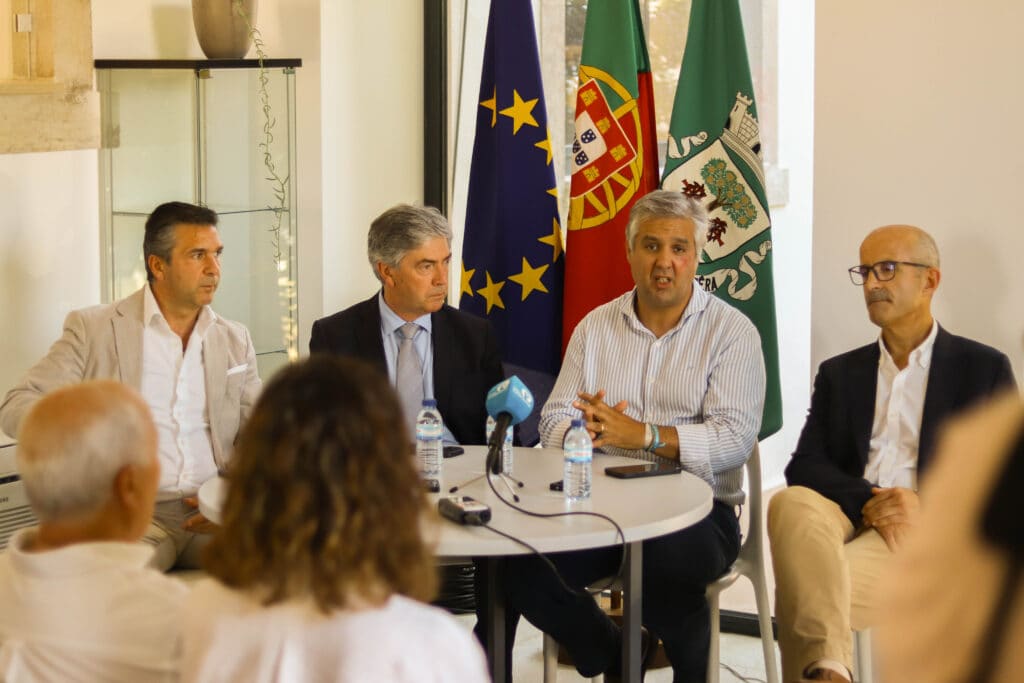
Pedro Machado, Portugal's Secretary of State for Tourism, Commerce and Services, attended the project presentation and praised the municipality's long-term planning. He noted that the park could help smooth out the seasonal peaks that plague much of Portugal's tourism infrastructure, spreading visitor numbers across more months and reducing pressure on coastal hotspots during July and August.
Rui Ventura, president of Turismo Centro de Portugal, went further. He called the São João da Mata project the first tourism proposal he had encountered that looked beyond local impact to regional and international markets. That may be optimistic, but the ambition is clear: Castanheira de Pêra wants to compete not just with neighbouring towns but with established adventure destinations elsewhere in Europe.
Risks and Realities
A €12 million investment in a town this size is not without risk. The project's success depends on drawing visitors from Lisbon, Porto, and beyond, as well as international tourists already in Portugal who are willing to detour inland. The cable car, while visually striking, adds complexity and ongoing maintenance costs. If visitor numbers fall short, the financial burden could weigh heavily on a small municipal budget.
Construction is expected to roll out in three phases, though no timeline, opening date, or ticket pricing has been disclosed. That lack of detail makes it difficult to assess feasibility or compare the project to similar ventures elsewhere. The wave pool at Praia das Rocas has proven popular, but translating that into sustained demand for a multi-attraction park is a different challenge.
The environmental pillar Henriques mentioned remains vague. Outdoor adventure parks can coexist with natural landscapes, but they can also fragment habitats and increase foot traffic in sensitive areas. How the municipality plans to balance conservation with development has not been spelled out.
A Bet on Portugal's Interior
Portugal has spent the past decade working to spread tourism beyond Lisbon, Porto, and the Algarve coast. Central Portugal, with its mountains, rivers, and villages, has potential but lacks the infrastructure and name recognition that draw crowds on their own. Projects like São João da Mata are part of a broader push to give visitors a reason to venture inland and stay longer when they do.
Whether a cable car and a zipline are enough to shift travel patterns remains to be seen. But for Castanheira de Pêra, the bet is already on the table.