A World Built From Scratch
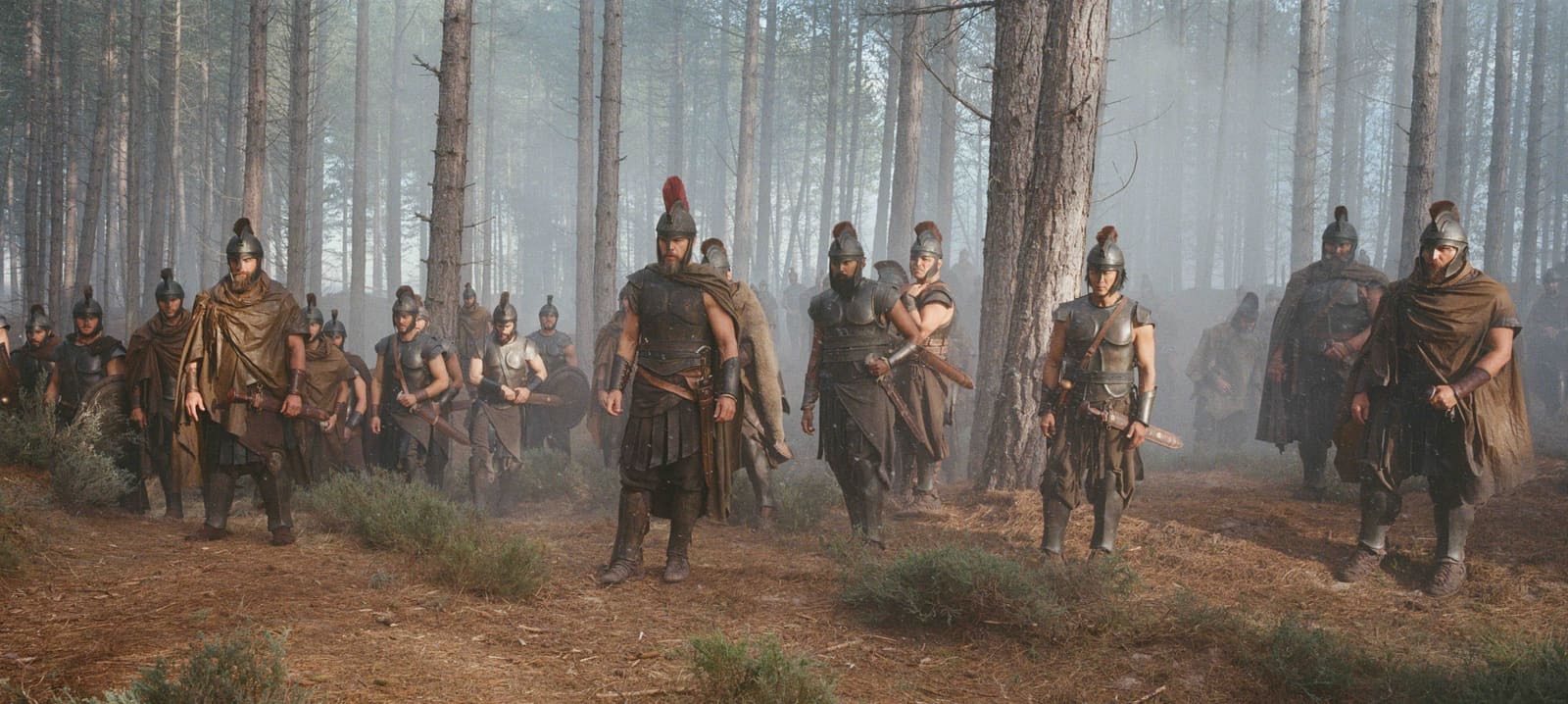
Christopher Nolan's version of Homer's epic travels through ancient Greece, but the cameras did something else entirely. Production designer Ruth De Jong and her team filmed across six countries, from Iceland's volcanic beaches to a hilltop castle off Sicily that the cast hiked to every morning for weeks.
The approach was deliberate. "We wanted to start in the Mediterranean, and we wanted to end in the Mediterranean," De Jong explained. "But Chris and I were not interested in an entire sun-bleached sort of vibe." That meant looking past the obvious choices, even as Greece and Italy still anchor the story.
The result is a film that uses landscape as character. Odysseus, played by Matt Damon, spends a decade trying to get home to Ithaca, where Anne Hathaway's Penelope and Tom Holland's Telemachus wait. The journey touches mythical islands, hostile shores, and the underworld itself. Each required a different kind of terrain, and De Jong scouted everywhere from Australian beaches to Japanese forests before settling on the final list.
Morocco Became Troy
Troy fell in Morocco. The production built two and a half acres of sets against the existing village of Ait Benhaddou in the Atlas Mountains, a place that tripled the scale of what they needed. The village gave permission to burn the constructed portions at the end of filming, which meant the scenes of men running through a collapsing, flaming city were practical effects shot on location.
The beaches of Essaouira, on the Atlantic coast, stood in for the departure point where Odysseus and his crew left Troy to start their disastrous voyage home. The same Moroccan trip also delivered the interior of King Menelaus's palace, filmed in Marrakech.
Greece, But Not Everywhere
Greece itself appeared for about a month of shooting, concentrated in the Peloponnese. Nestor's Cave near Pylos became the lair of the Cyclops Polyphemus, one of Odysseus's more memorable detours. An olive grove in Messinia hosted a hunting scene during Telemachus's visit to Sparta, where Lupita Nyong'o plays both Helen and her sister Clytemnestra.
Agamemnon's homecoming, played by Benny Safdie, was filmed at Methoni Castle in Messinia and outside Athens at Acrocorinth, a fortress on a limestone monolith. De Jong noted the wind was relentless. "Chris wanted to just make sure that it was so clear how windy our entire shoot was. So, so windy." Flags and banners whipped constantly in the shots.
A Sicilian Island Stood In For Ithaca
Ithaca, the destination Odysseus spends the entire story trying to reach, isn't actually Ithaca. The production shot on Favignana, a small island off the coast of Sicily that De Jong had visited a decade earlier. The main draw was the Castle of Santa Caterina, a 15th-century structure perched on a hill with views of the sea in every direction.
The island is already quiet, and filming happened in the off-season. That didn't make it easy. The cast and crew hiked 30 minutes uphill every day to reach the set. Nolan and his producer, Emma Thomas, made the trek daily. Construction materials arrived by helicopter, but most people walked. "Everyone got into it and loved that daily challenge," De Jong said.
The interior palace scenes were built on a soundstage in Los Angeles, but everything outside was Favignana. Ships used in the film could pull up to the shore, and the landscape felt remote enough to sell the idea of a kingdom at the edge of the known world.
Iceland Was Always Going To Be Hades
Nolan knew from the beginning that Iceland would represent the underworld. He wanted black sand beaches, shot in full daylight during the Icelandic summer when the sun barely sets. The production avoided the heavily visited stretches like Diamond Beach and instead filmed near Hjörleifshöfði mountain, about three hours east of Reykjavik.
Iceland also provided an unexpected location: Apollo's Beach, where Odysseus's men encounter sacred cattle. The white sand and lush fields are six hours in the opposite direction from the black beaches, and De Jong was determined to use Greek cattle breeds. She found a herd in Iceland descended from the original Greek stock and cast them in the scene.
Scotland Played A Witch's Island
Circe's cliffside home, where the witch turns Odysseus's men into pigs, was filmed near Cullen in the Scottish Highlands. The craggy rocks and serpentine path leading up to her house matched the isolated, eerie tone the story required. De Jong built Circe's dwelling to echo the jagged landscape around it, complete with sedated lions and tigers lounging outside.
"Odysseus would never have gone to Scotland," De Jong admitted. "But that was irrelevant. It wasn't supposed to be Scotland. It just happened to have the look that we liked."
Samantha Morton plays Circe, and the setting does a lot of the work. The location feels like the middle of nowhere, which is exactly the point.
What It Takes To Build A Myth
The logistical challenges were constant. Filming across six countries meant coordinating permits, weather, and terrain that ranged from scorching Moroccan heat to Icelandic cold. But the proximity of most locations - within a few hours' flight of each other - made it manageable.
Nolan has said he wanted to create a version of The Odyssey that felt like a modern blockbuster without losing the mythic scale of the original text. That meant IMAX cameras, practical sets, and real locations wherever possible. Ludwig Göransson composed the score, and the cast includes Robert Pattinson, Elliot Page, and Travis Scott alongside the leads.
The film is designed to feel vast and varied, which is true to Homer's poem. Odysseus's journey is supposed to be disorienting, full of strange islands and hostile encounters. Filming in places that don't look like each other reinforces that sense of dislocation.
Why Filmmakers Keep Returning To Homer
The Odyssey has been adapted before, but never quite like this. Nolan's version leans into the scale and strangeness of the source material, using real-world locations to ground a story that includes gods, monsters, and a decade-long voyage home.
There's already talk of a follow-up focused on the Iliad, which would bring audiences back to Troy and the war that sets the entire saga in motion. If that happens, expect another globe-trotting production that treats ancient myth as an opportunity to explore landscapes that don't usually share a screen.
For now, The Odyssey offers a version of travel that's equal parts adventure and ordeal - shot in places that most people will recognize, even if they've never been there.