Still Waiting
Travelers from the United States, United Kingdom, Canada, and dozens of other countries are still in the dark about when they'll need to obtain electronic authorization before visiting most of Europe. The European Travel Information and Authorisation System, known as ETIAS, remains offline with no firm launch date, despite earlier indications that it would start during the final months of 2026.
The European Union continues to say the system is expected in the last quarter of this year, but officials have not committed to a specific date. More importantly, they've told travelers they'll receive several months' notice before the requirement takes effect. For now, that means visitors can ignore the system entirely.
The vagueness has become a pattern. ETIAS has been delayed multiple times since its initial conception, and recent troubles with a related border system have raised fresh questions about whether even the current timeline is realistic.
What ETIAS Actually Does
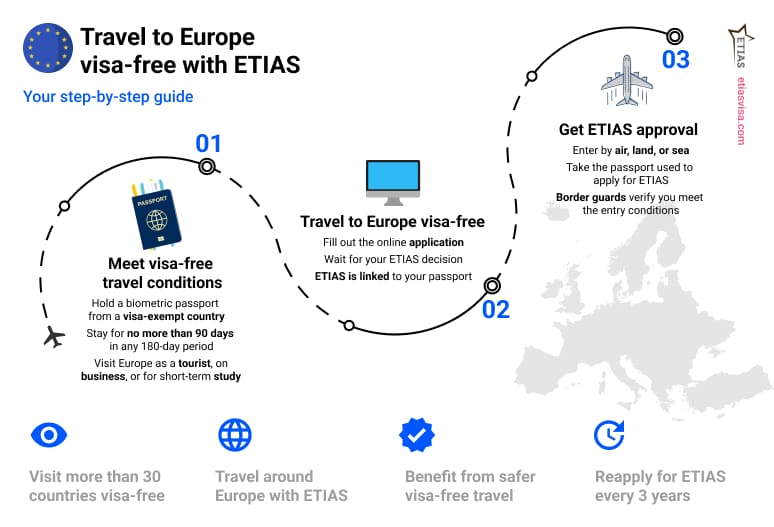
When it eventually goes live, ETIAS will require nationals from roughly 60 visa-exempt countries to apply for travel authorization before boarding a plane, ferry, or bus to participating European nations. The system covers 30 countries, including most EU member states plus Iceland, Norway, Switzerland, and Liechtenstein.
Applications will be submitted online or through a mobile app. The fee is now set at €20, up from an earlier plan to charge €7. Children under 18 and adults over 70 won't pay, and neither will certain family members of EU citizens.
An approved authorization will last three years or until the passport expires, whichever comes first. It allows multiple trips of up to 90 days within any 180-day window. Approval, however, doesn't guarantee entry, border officials will still make that call.
Most applications should be processed within minutes, according to EU projections. Some cases requiring additional review could take longer. Applicants will need to provide passport details, personal information, and answer questions about past travel to conflict zones or criminal history.
Not the Same as the Entry-Exit System
The confusion around ETIAS has been compounded by its overlap with another border initiative, the Entry/Exit System, or EES. The two are often mentioned together, but they serve different functions.
ETIAS is a pre-travel check. It determines whether someone from a visa-exempt country has permission to travel before they leave home. It doesn't collect biometric data and doesn't change anyone's visa-free status.
EES, on the other hand, operates at the border itself. It digitally records when non-EU travelers enter and exit, replacing the old passport stamp. It applies to all short-stay visitors, whether they need a visa or not, and it does collect fingerprints and facial images.
In practical terms, ETIAS happens before the trip, EES happens at the airport or land crossing.
Why the Delay Matters
The distinction is more than academic. EES went fully operational in April 2026 after a phased rollout, and the launch has been rocky. Airports and border crossings have reported long queues, especially during peak travel periods, as first-time visitors undergo biometric registration. Airlines and airport operators have complained about the strain on infrastructure, and some have called for more flexibility during busy times.
European Commission President Ursula von der Leyen acknowledged in July that technical issues remain unresolved. The problems have been severe enough that some EU officials, including those at eu-LISA, the agency responsible for managing both systems, have privately questioned whether ETIAS can launch on schedule.
The two systems are technically linked. The EU always planned for EES to go live first, with ETIAS following once the groundwork was in place. If EES continues to struggle, it's harder to justify adding another layer of complexity at Europe's borders.
What Travelers Should Do Now
For the moment, nothing. The EU has made clear that ETIAS is not accepting applications, and travelers should be wary of third-party websites claiming otherwise. Scam sites have proliferated in recent years, offering to process applications for systems that aren't yet active or charging inflated fees for services that should cost much less.
When ETIAS does launch, the EU has promised to announce the date well in advance. That gives travelers time to prepare without rushing or falling for fraudulent services in the meantime.
The aviation and tourism industries are watching closely. Another delay would add to the frustration already generated by EES, but a rushed launch that replicates those problems could be worse. For now, the waiting continues.