A Summer of Bottlenecks
The European Union may keep a safety valve open for its new border system well into the autumn, as airports and governments warn that full enforcement could turn summer travel chaos into a permanent fixture.
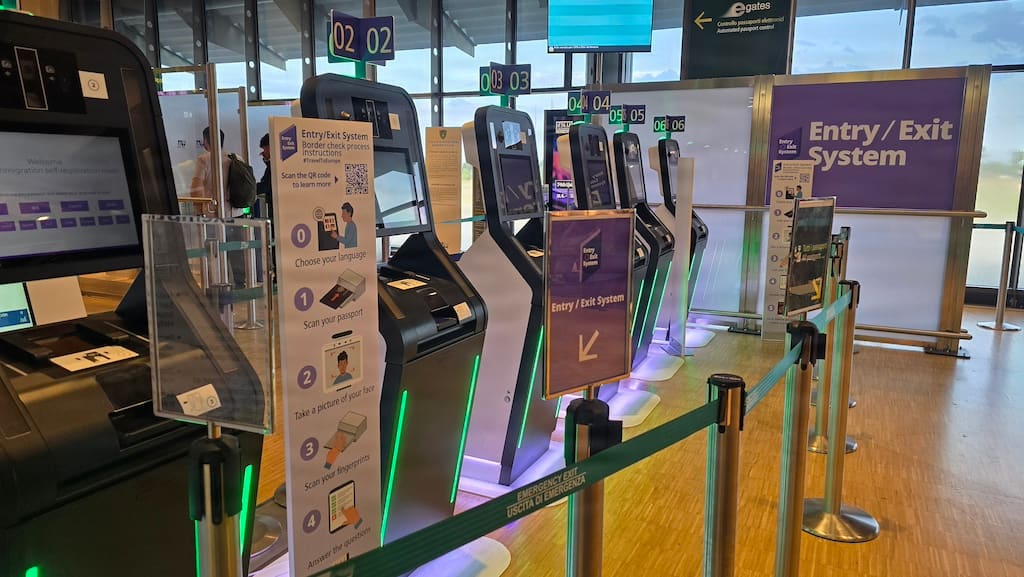
The Entry/Exit System, which tracks non-EU visitors through fingerprints and facial scans, went fully live across 29 countries in April 2026. Since then, passengers at some airports have faced waits of up to five hours. Now, industry sources say European Commissioner for Sustainable Transport and Tourism Apostolos Tzitzikostas has privately signaled that temporary flexibility around the checks could continue past the current 6 September deadline if needed.
The system replaces passport stamps with electronic registration for travelers entering or leaving the Schengen Area. It was designed to tighten security and track short stays, but the rollout has exposed gaps in infrastructure, staffing, and the sheer time it takes to process each person through biometric checks.
Nine Countries Push Back
In July, nine European governments sent a joint letter asking Brussels to extend the current waiver mechanism. Belgium, France, Germany, Greece, Italy, Malta, the Netherlands, Portugal, and Switzerland argued that border authorities need the option to temporarily skip biometric collection when passenger volumes surge, while still logging entries and exits.
The request reflects a practical reality: many airports simply cannot handle the new requirements during peak travel periods without grinding to a halt. Airports Council International Europe, Airlines for Europe, and the International Air Transport Association have all called for more leeway, citing delays that have left travelers stranded in queues through much of the summer.
Ryanair has publicly criticized what it calls "queue chaos," pointing to airports that lack enough kiosks or staff to handle the workload. Alicante-Elche Miguel Hernández Airport in Spain has been singled out as one facility still catching up, though it has announced plans for a major expansion to address EES infrastructure needs.
EasyJet's chief executive described the queues as "completely unacceptable," while Fraport Greece's head noted that the suspension option has been critical in preventing even worse backups at the 14 Greek airports the company operates.
British Travelers Bear the Brunt
The disruption hits British travelers especially hard. After Brexit, UK citizens lost their EU status and now fall under the same third-country rules as other non-EU nationals. That means every trip to the Schengen Area requires EES registration, with biometric data collected as needed.
The system tracks stays of up to 90 days within any 180-day window, a rule that has always applied to non-EU visitors but is now enforced through digital records rather than ink stamps. For British holidaymakers who once breezed through EU borders, the change has been a rude adjustment.
Some travelers are responding by shifting their plans. Destinations outside the Schengen Area, including EU members Cyprus and Ireland, as well as Albania, Montenegro, Serbia, and Turkey, have seen growing interest from those looking to avoid the bottlenecks.
What Flexibility Looks Like
The current waiver does not suspend the EES itself. It allows border authorities to skip the biometric step in exceptional circumstances while still logging the traveler's entry and exit. That keeps the security framework intact while easing pressure at choke points.
So far, the European Commission has said only that existing rules contain flexibility provisions and that it remains in contact with member states facing difficulties. It has not formally committed to extending the waiver beyond September.
However, Tzitzikostas has reportedly given private assurances to industry groups and to the UK government. After a meeting with British Transport Secretary Heidi Alexander in mid-July, Alexander said the commissioner understood the concerns and recognized the need for cooperation. She added that everyone was "pulling in the same direction" to ensure smooth summer travel.
The Pressure Is On
The debate is not about scrapping the Entry/Exit System. European governments still back the digital border framework and its security goals. But they are increasingly vocal about needing an escape hatch when infrastructure cannot keep pace with demand.
With the current suspension mechanism set to expire in early September, Brussels faces a decision. Extending the flexibility would acknowledge that the system is not yet ready to run at full throttle across all entry points. Letting it lapse risks turning isolated delays into a systemic problem, especially as autumn travel picks up and airports brace for the next wave of demand.
For now, the question is whether European officials will formalize what some have already hinted at in private: that the checks will be paused where necessary, and that the summer of queues does not have to become the new normal.