A Summer of Extremes
Italy's health ministry placed nearly all of its major cities on maximum heat alert this week, with forecasts showing temperatures climbing close to 40°C. Latina, in the Lazio region, hit the peak at 40°C on Friday, while Florence and Naples reached 39°C over the weekend. Rome and Milan weren't far behind at 38°C.
The heat isn't confined to Italy. Slovakia recorded 42.2°C on Thursday, shattering its previous all-time high. Austria followed suit a day earlier when the spa town of Bad Deutsch-Altenburg registered 41.2°C, the highest temperature ever measured in the country.
These aren't isolated spikes. They're part of a pattern that has turned much of Europe into a zone of extreme weather, where prolonged heat meets tinder-dry conditions and the results are often catastrophic.
When Rivers Run Dry
The Danube, which flows through ten countries, has dropped to record lows. In Slovakia, the nation's largest hydroelectric plant was forced to shut down. Hungary's only nuclear facility, which relies on the river to cool its reactors, has been affected as well.
Budapest responded by cutting non-essential lighting at state buildings. The parliament, most of Buda Castle, and the Chain Bridge now go dark at night. Cruise ships have been stranded north of the city, and river sightseeing trips have been suspended.
These infrastructure disruptions aren't abstract. They're altering the experience of traveling through central Europe in ways that go beyond weather apps and sunscreen.
Tourists Seek Shelter Underground
In Bosnia, tourists have started retreating to the Vjetrenica cave, a UNESCO-listed site that maintains a constant temperature of 11°C. The cave sits just 15 miles from Dubrovnik, making it a practical escape for visitors trying to avoid the worst of the midday heat.
Croatian authorities have advised beachgoers in Dubrovnik to stay out of the sun during peak hours. The country's meteorological agency issued dangerous weather warnings for the Dubrovnik, Split, and Rijeka regions over the weekend.
Italy Adapts
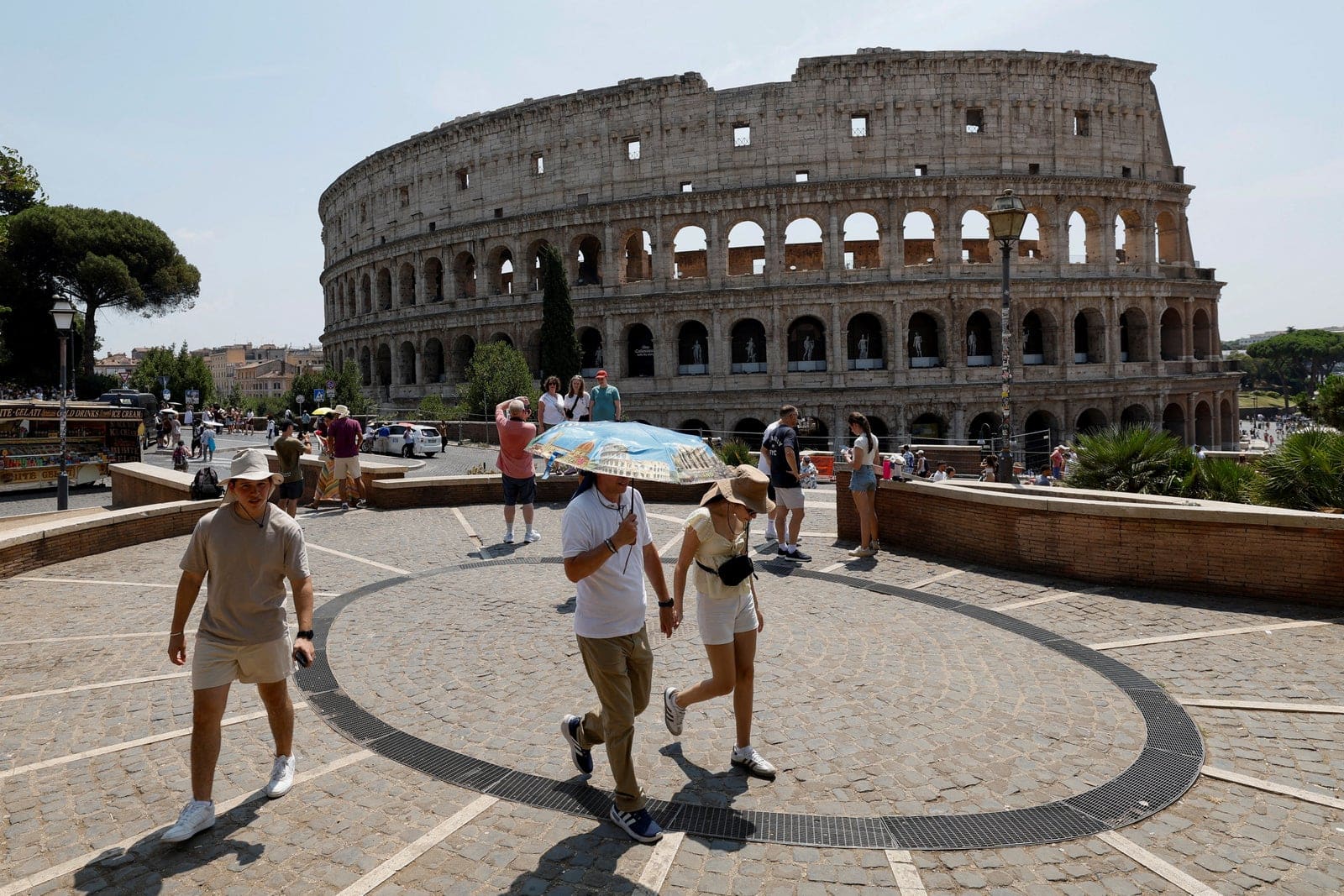
Italy's response has been practical. The ministries of culture and tourism extended opening hours at major museums by up to four hours throughout August. The Colosseum, the Pantheon, and Milan's Sforza Castle are all staying open longer.
Cooling mist fans and additional medical stations have been installed at the Colosseum's entrances. Along the Tiber River, a free urban beach was set up so people can cool off without leaving the city.
These are stopgap measures, but they reflect an understanding that extreme heat is now part of the equation for summer tourism.
Wildfires in the South
France, Spain, and Greece have faced the most severe wildfire conditions. Last week, residents and tourists were evacuated from Cretan towns including Kyra Vrysi and Agia Galini as high winds pushed flames toward popular areas.
France has cooled slightly compared to the previous week, but southeastern regions remain under orange alerts, with temperatures between 35°C and 39°C. Peaks of 40°C are possible in Gard and Var. Local reports suggest a fifth heatwave may arrive next week.
Greece has yellow weather warnings in place for every region except the Cyclades, with temperatures holding steady in the high 30s. Spain saw much of its central, southern, and eastern areas under yellow or orange warnings on Friday and Saturday, though conditions were expected to ease by Sunday.
What This Means for Travel
The infrastructure impacts are real. Power plants shut down, rivers become unnavigable, and cultural sites adjust their hours. Travelers are having to plan around heat rather than simply enduring it.
The pattern also raises questions about timing. August has long been Europe's peak travel month, but the combination of heat and fire risk is making that window less appealing. Shoulder seasons may become the new high season, not for cost savings but for basic comfort and safety.
For now, the advice is straightforward: check weather alerts, avoid outdoor activities during peak heat, and have contingency plans if conditions worsen. Europe's summer has changed, and travelers are adjusting accordingly.