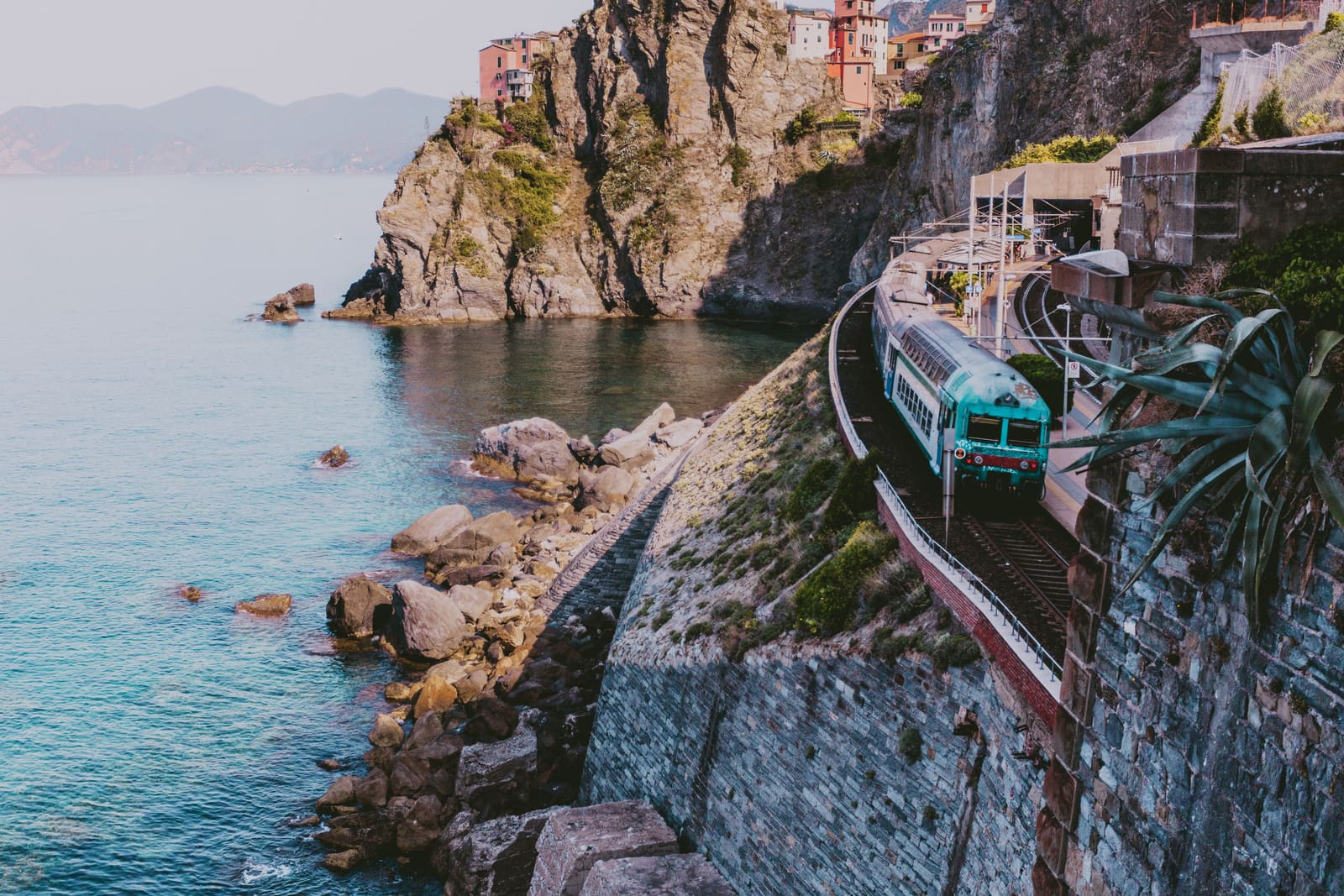
A Different Kind of Journey
The first trip sets the tone. Boarding a high-speed train from Milan to Venice, a traveler from New York expects efficiency and little else. What arrives instead is comfort that feels almost unfair: luggage racks at floor level, tables between seats, a ride smooth enough to forget you're moving at all. The landscape outside shifts from flatlands to mountains, and somewhere in between, Lake Garda appears for a moment before vanishing again.
For someone accustomed to Metro-North commuter lines and Amtrak's so-called high-speed service, the contrast is sharp. European rail operates in a different category entirely. The journey ends not just in Venice, but in a kind of quiet conversion.
The Geography of Convenience
Living in Rome changes the calculation. Milan sits less than three hours away by rail, a shorter trip than flying once you account for security lines, boarding gates, and the particular misery of short-haul air travel. Florence becomes a reasonable day trip. So does Naples. Venice is always close enough to justify.
A move to Milan the following year expands the map further. Trieste, Ravenna, Trento, Faenza, Turin, all reachable without much planning. Weekend escapes to Liguria, the Adriatic coast, the Dolomites, the northern lakes. Places that once felt remote now feel adjacent. The country shrinks, not in reality, but in the mind.
This accessibility matters for anyone trying to understand Italy beyond the usual triangle of Rome, Florence, and Venice. Smaller cities that rarely appear in guidebooks become viable destinations. A wine tasting in Piedmont, a ceramics workshop in Emilia-Romagna, a reporting assignment on the Austrian border. All possible because the trains run frequently and the fares remain reasonable compared to flying or renting a car.
The Friction Points
No system is frictionless. Delays happen often enough to stop feeling surprising. Venice, for reasons that remain unclear, seems especially prone to them. Standing beneath the departures board at Santa Lucia station, watching the delay counter climb higher, becomes a familiar ritual. The minutes add up, and so does the mental calculation of what else could have been done in the city.
Cancellations arrive less frequently but with more disruption. When a single train is canceled, the solution is straightforward: join the express ticket queue and board the next one. When a summer storm floods Milan and shuts down much of the rail network, the only response is patience. Even well-run systems have limits.
Summer brings its own challenges. Boarding a train on a hot day only to discover the air conditioning has failed in your carriage is the kind of experience that sours a mood quickly. But these problems are not unique to Italy. Rail networks across Europe face similar issues, particularly during peak travel months when demand strains capacity.
Strikes and Strategy
Strikes are the most predictable source of chaos. Italian rail strikes are announced well in advance, which sounds considerate until you realize that everyone else has the same information. Trains scheduled just before and after the strike sell out almost immediately. The advance notice becomes less of a gift and more of a race.
For travelers accustomed to transit systems where disruptions arrive without warning, the Italian approach at least allows for planning. But it also requires vigilance. Checking strike schedules becomes part of the routine, especially during peak travel seasons or around major holidays.
The Learning Curve
Experience teaches small lessons. Never leave a bag on the floor when the air conditioning is running; condensation pools beneath the seats with surprising regularity. Carry tissues, because the bathrooms are almost always out of toilet paper. Allow extra time at major stations for a stop at a bakery or market stall, because the food on board rarely justifies the price.
These are the adjustments that come with frequent use. They are not warnings so much as observations. The trains work well enough that their minor inconveniences become part of the experience rather than reasons to avoid them.
What Rail Access Changes
The real value of Italy's rail network is not comfort or speed, though both matter. It is the way frequent, affordable service reshapes how you move through a country. Cities that would require a rental car or a complicated bus journey become easy to reach. A day trip to a smaller town stops being an ambitious plan and becomes a casual decision.
This changes what travelers see and how they see it. Instead of clustering in a handful of major cities, it becomes possible to spread out, to visit places that do not appear in top-ten lists, to encounter Italy in a less crowded, less performed version of itself. The trains do not make the country smaller, but they do make it more navigable.
For someone who has spent over a decade relying on Italian rail, the relationship has outlasted most others. It is not without frustration, but frustration is not the same as failure. The trains continue to run, the network continues to expand, and the country continues to feel within reach. That seems worth the occasional delay.