A Coastline Larger Than Its Reputation
Goa has become the default answer when travelers think about Indian beaches. Palm trees, seafood shacks, Portuguese architecture, and late-night parties define its image. But that single state represents a sliver of what India's coast actually offers.
The country's shoreline runs nearly 7,000 miles along three bodies of water: the Arabian Sea, the Bay of Bengal, and the Indian Ocean. The landscapes shift dramatically from region to region, yet most international visitors never venture beyond the familiar stretch in Goa. Other parts of the coast deliver surfing, diving, and wildlife experiences that remain largely overlooked.
Surf Breaks That Started a Scene
India's surfing culture is recent. It took root in the early 2000s on the west coast in Karnataka, where a fishing village called Mulki became an unlikely center for the sport. An American surfer opened the country's first surf school there in 2004, introducing waves that locals had never thought to ride. The breaks themselves lie a short boat trip downriver at Sasihithlu, where the Shambhavi River meets the Arabian Sea in gentle swells that work well for learners.
Mantra Surf Club, the original school, still operates on the calmer side of the river. It offers courses ranging from three days to a month, with certified instructors and yoga included. Shared air-conditioned dorms start around £14 per night, while private cottages run from £45.
Further south, Puducherry offers more forgiving conditions at Serenity Beach. Two piers built after the 2004 tsunami helped shape the break, and the town never became crowded with surfers. Kallialay, a surf school founded in 2009, runs group and private lessons with all equipment provided. Le Dupleix, an 18th-century French colonial hotel in White Town, has doubles from around £69.
On the east coast, Tamil Nadu has developed its own surf culture. Kovalam, known locally as Covelong, sits an hour south of Chennai and combines mellow cove waves with stronger point breaks. The season runs from August to March. About 12 miles away, Mamallapuram brings surfing alongside one of India's most recognizable monuments: waves peel past the eighth-century Shore Temple, built by Pallava rulers who made the town a major center of art and architecture. Surf Turf operates in Kovalam, offering instruction, ocean-facing rooms from around £49, and additional options for kayaking and stand-up paddleboarding.
Diving in Two Archipelagos
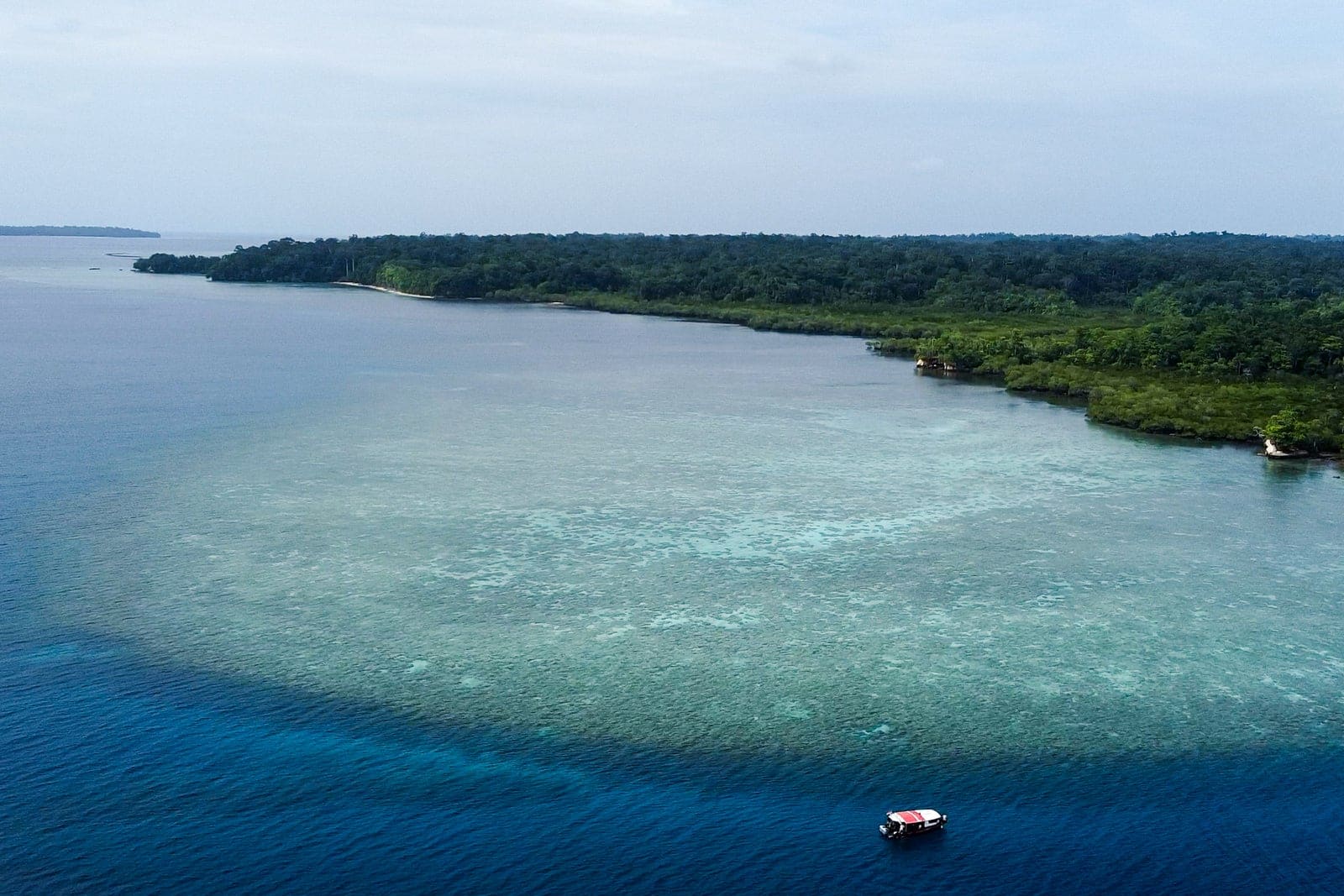
India's diving scene remains young compared to Southeast Asian neighbors like Thailand or Indonesia. Most of the activity concentrates in two archipelagos. The Andamans are easier to reach, with immaculate beaches and mangrove channels. Lakshadweep sits farther out and requires more effort to access.
In the Andamans, diving centers on Swaraj Dweep, formerly called Havelock Island, which has more than 25 dive sites. Minerva Ledge ranks among the most popular: flat coral gardens transition into deeper water filled with tuna and barracuda, with currents strong enough for drift diving. Dixon's Pinnacle offers a more challenging dive, dropping from 18 to 35 meters across three coral-covered ridges. Giant groupers and reef sharks patrol the area, with occasional manta rays or whale sharks passing through.
A direct ferry connects to the quieter Shaheed Dweep, formerly Neil Island. Fish Slate, a shallow reef at just four meters, hosts dugongs that graze the seagrass between February and May. DIVEIndia, an SSI-affiliated Diamond-rated Instructor Training Centre operating since the early 2000s, runs courses from introductory dives to full certification.
Lakshadweep rewards divers who make the extra journey. The coral atolls off Kerala offer visibility stretching to 50 meters, with turtles appearing on nearly every outing. Diving operates from Kavaratti, Kadmat, and Agatti islands. Wall of Wonder, on Kavaratti's northwest side, follows a sheer reef face dropping to 20-30 meters. The dive works best after dark, when bioluminescent plankton spark at every fin kick. Sea Shells operates on both Kavaratti and Agatti, with seaview cottages from around £70 and ocean-view cottages from around £93. All visitors need a permit, applied for through the ePermit portal.
Where Turtles Come Ashore
Odisha, on India's eastern coast, hosts a natural event that draws wildlife watchers: hundreds of thousands of female olive ridley turtles come ashore together over a handful of nights each year, typically between late January and March. The mass nesting, called an arribada, occurs at several sites along the coast.
Gahirmatha, near the mouth of the Brahmani-Baitarani river in the state's north, was the first rookery recorded in 1974 and became a marine sanctuary in 1997. Access to the core nesting beach is now heavily restricted. Rushikulya, farther south near Chilika Lake, offers more accessible viewing. Numbers fluctuate widely: nearly 900,000 turtles nested there across two phases in 2025, while just 205,000 arrived over four days in 2026, according to local wildlife authorities.
Swosti Chilika Resort sits on Asia's largest brackish-water lagoon, less than an hour from Rushikulya. The resort arranges trips to see the nesting, with rooms from around £44 per night.
Light in the Water
After dark, parts of India's coast produce bioluminescence: plankton that emit light when disturbed. In the Andamans, mangrove channels on Havelock Island hold dense concentrations of these organisms. Every paddle stroke through the water creates an electric blue glow. Kayak tours run through local operators, though regulations on night paddling in the mangroves are tightening. Some trips now depart before sunrise instead. The effect works best on moonless nights, since even faint moonlight diminishes the glow.
Barefoot at Havelock, the island's original eco-resort, sits off Radhanagar Beach. Cottages built from mud, wood, and thatch start around £124 per night for two, with breakfast included.
Mattu Beach, near Udupi in Karnataka, offers a quieter version of the phenomenon. Nutrient-rich coastal waters support blooms of bioluminescent plankton that light up the surf when waves break on shore. The display appears most reliably on dark, moonless nights in the weeks following the monsoon. Samanvay Boutique Hotel, a short drive inland, has rooms from around £37 per night.
Rethinking the Coastline
India's beaches vary more than most travelers realize. Goa remains popular for good reasons, but limiting coastal travel to one state means missing surf breaks that helped launch a national sport, dive sites with whale sharks and bioluminescent caves, and wildlife events that happen nowhere else. The infrastructure exists along much of the coast now, from surf schools with certified instructors to eco-resorts and diving centers. What's missing is simply the attention.