A Coast Named for a Hero
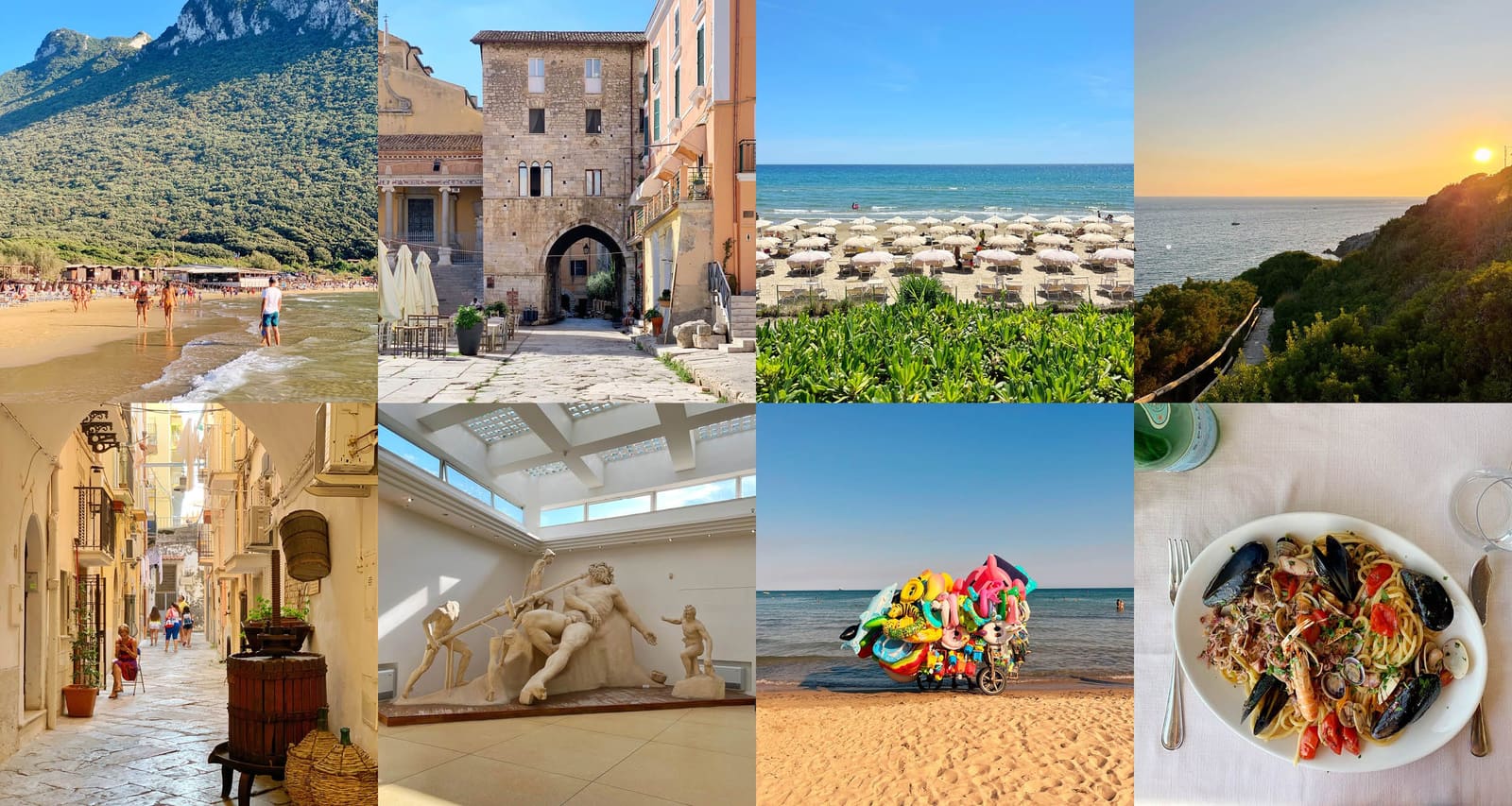
The Villa of Tiberius sits near Sperlonga, ruins that once hosted the Roman emperor's lavish parties from 14 to 37 CE. Inside the attached archaeological museum, a towering statue of Polyphemus - the one-eyed cyclops from Homer's Odyssey - hints at the mythology woven into this coastline. Workers discovered the villa in 1957 while building the Via Flacca, the road connecting towns along this stretch. The site also yielded statues of Scylla, Charybdis, and other figures from the epic, evidence that these shores have been tied to legend for millennia.
The Ulysses Riviera runs roughly 75 kilometres from Monte Circeo to Gaeta, named for the wandering hero himself. Local lore places Circe's island, Aeaea, either on nearby Ponza or at Monte Circeo, the imposing mountain that looms over Sabaudia and San Felice Circeo. In ancient times, surrounding wetlands may have made the peak look like an island from a distance.
Romans Keep Coming Back
Italians from the capital have been spending summers here since antiquity, and the tradition continues. Romans speak about the Riviera with a particular loyalty, recounting weekends in Sperlonga or family homes in Circeo the way others recall beloved rituals. Between the 1950s and 1970s, the area drew Italian celebrities - actor Alberto Sordi, singer Pino Daniele, and American artist Cy Twombly among them - who bought houses along the coast.
Today, the beaches still fill with multi-generational Roman families and Neapolitans from the south, all chasing pale sand and clear water that remains rare along the central Tyrrhenian coast. At Saporetti, a wood-paneled beach shack in Sabaudia, businessmen who wear suits year-round wander the sand in swim trunks, setting aside work talk for leisurely meals of fried seafood and spaghetti with clams. The restaurant looks unchanged since the 1960s, and that seems to be the point.
What Draws People to Each Town
Gaeta offers a medieval quarter where laundry hangs from weathered balconies and small shrines to the Virgin Mary dot the narrow lanes. The town is known for its olives and tiella, a savory pie filled with stewed octopus and tomato or escarole and olives. Beach clubs like Papardò line the coast, accessible by steep descents from the Via Flacca, where golden sand meets strikingly aquamarine water.
Terracina holds a section of the Appia Antica, the ancient road that once ran from Rome to Brindisi. On a promontory above town, the ruins of the Temple of Jupiter Anxur offer views along the entire coast. The main square has gelaterias serving sorbetto made with local strawberries, and retro seafood restaurants overlook the sea.
Sperlonga's whitewashed hilltop town frames views of golden-sand beaches below. Recent additions include murals depicting scenes from The Odyssey, painted on arches that look down toward the water. At the base of the hill, a shallow cove sits just outside the Villa of Tiberius site, where local teenagers play football on compact sand.
San Felice Circeo has stretches of spiaggia libera - free beach - where visitors set up their own umbrellas, alongside old-school spots like Hotel Punta Rossa, which maintains whitewashed walls and tile floors. The town's boutiques sell linen clothes and beachy essentials, and bars offer aperitivo before dinner.
Ponza, the island just offshore, features rocky outcrops where people sunbathe and dive into turquoise water. Pastel buildings overlook the port, and family-run restaurants serve simple seafood dishes. The island retains a 1950s and '60s feel, though locals have noted rising prices in recent years.
Why It Hasn't Changed as Fast as Other Coasts
The Ulysses Riviera has avoided the dramatic transformation seen in Positano, Capri, Puglia, and Taormina. One likely reason: the absence of luxury resorts that typically attract international travelers. The coast remains primarily a destination for domestic visitors, particularly Romans who have been coming for generations.
Change is happening - radio hosts recently discussed how expensive Ponza has become, and some longtime establishments have expanded and, in the eyes of regulars, declined in quality. A fisherman's cooperative in Terracina that once served exceptional meals grew larger and lost some of its original character. But compared to other Italian resort areas, the pace remains slow.
The infrastructure reflects this. Beach clubs offer rows of umbrellas and simple lunches rather than high-end amenities. Pensiones provide basic, affordable lodging. Markets sell local olives and baked goods near marinas where small fishing boats still bob in the waves.
A Feeling That Persists
What Romans describe when they talk about the Ulysses Riviera is less about specific attractions and more about a particular state of mind. It's the rhythm of a long lunch at a beach shack, the routine of returning to the same stretch of sand each summer, the comfort of a place that feels familiar even as the world speeds up elsewhere.
Standing at the Villa of Tiberius, watching teenagers kick a football near the same grotto where an emperor once entertained guests two thousand years ago, that continuity becomes tangible. The coast has hosted summer holidays for millennia, and the essential experience - time spent by the sea, away from the pressures of city life - remains largely intact.
For now, at least, the Ulysses Riviera offers something increasingly rare along the Mediterranean: a summer destination that still resembles the one previous generations knew.