A New Layer Above Hudson Yards
Standing at the highest indoor-outdoor observation deck in the Western Hemisphere, visitors to Edge NYC now encounter something beyond the skyline. Seven art installations have been added to the space since June 2026, each one built around the building's sharp angles, glass surfaces, and commanding views. The additions aim to turn a visit into a sensory journey that shifts with the time of day and weather.
The installations were created by Softlab and Moment Factory, two design studios known for immersive environments. They worked with experience agency Journey to develop a visual language rooted in triangles and prismatic effects, drawing from the architecture of 30 Hudson Yards itself.
The Largest Kaleidoscope in the City
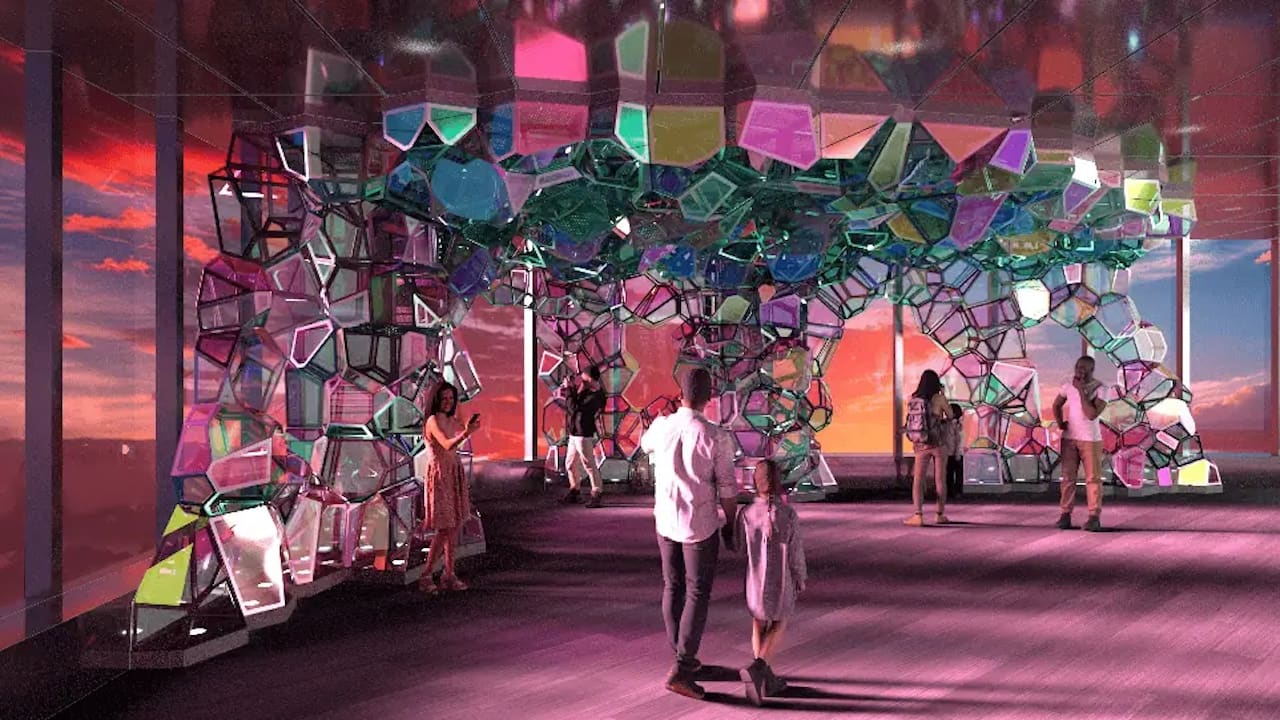
The standout piece is Kaleidoscope, an installation that Moment Factory describes as New York's largest. Inside, visitors are surrounded by continuously shifting patterns of light, color, and sound, all amplified by highly reflective surfaces. The effect is meant to feel like stepping into a prism that refracts the city's energy back at you.
Patrick Bisson, creative director at Moment Factory, explained that the installation treats the interior as a multifaceted space where digital media and reflective architecture work together. The goal is to create a distinct sensory experience before visitors even step outside onto the deck.
Beyond the main kaleidoscope, Edge now hosts a series of smaller versions. One is designed to echo street photography, weaving together urban textures, architectural geometry, and recognizable landmarks into a shifting visual collage.
Installations That Respond to the City
Another installation, called Pulse, uses more than 350 glowing spheres to create a different experience for each visitor. Skyrise transforms the elevator ride into a fully immersive moment, setting the tone before arrival. The installations are designed to adapt across seasons and weather, ensuring the experience remains engaging whether the sky is clear or clouded.
Olivia Reid, who led strategy and creative development at Journey, noted that the team examined what already made Edge distinctive: its angular design, its use of glass and light, and its ability to offer new perspectives on New York. The installations build on that foundation, amplifying the deck's existing strengths rather than competing with them.
Beyond the View
Edge, located on the 100th and 101st floors of 30 Hudson Yards, opened as an observation deck known for its glass floor, angled walls, and outdoor skyline steps. The new installations mark a shift toward treating the space as more than a viewpoint. They position it as a destination where art and architecture intersect.
The deck also now includes the Skyline Bar & Cafe by Tao, offering food and drinks inspired by New York's culinary staples, and two lounges managed by Tao Group Hospitality on the level above Edge.
Tickets start at 34 dollars when purchased at least two weeks in advance, not including booking fees. The pricing positions Edge as accessible to a range of visitors, though the advance purchase requirement may favor planners over spontaneous tourists.
What It Means for Observation Decks
The addition of immersive art to Edge reflects a broader trend among observation decks and cultural attractions. As more cities build high-altitude viewpoints, the challenge becomes differentiation. A view alone may not be enough when multiple decks compete for attention.
By integrating art that responds to the architecture and the city itself, Edge is attempting to offer something beyond elevation. The installations don't replace the skyline; they frame it differently, adding a layer of interpretation that can change how visitors perceive both the space and the city below.
Whether this approach becomes a model for other observation decks remains to be seen. For now, it's a test of whether travelers want more than a photo opportunity at height, and whether art can deepen the experience of looking out over a city they may already know well.