A Shifting Spectacle
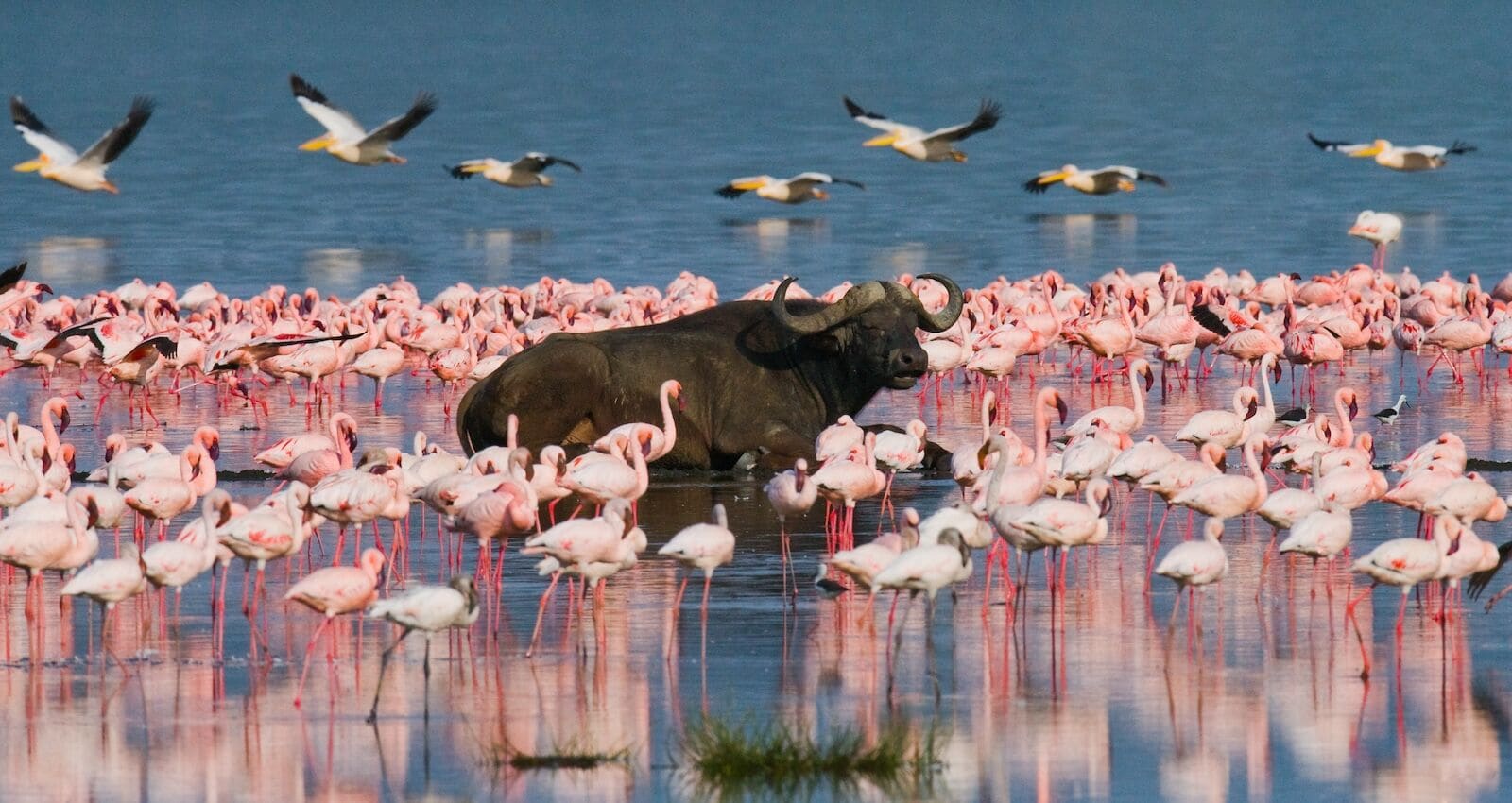
The image used to be unshakeable: a Kenyan lake rimmed with so many flamingos that the water itself vanished beneath a carpet of pink. That was Lake Nakuru for decades, the kind of scene that ended up on postcards and in the opening frames of wildlife films. The birds still come, sometimes in numbers that reach tens of thousands. But the reliable, wall-to-wall pink that built the lake's reputation has become harder to count on.
The change is rooted in the water itself. Between 2009 and 2022, Lake Nakuru grew by 91 percent in surface area, according to satellite data analyzed in a 2024 study published in Current Biology. As the lake expanded, the water became less alkaline. That shift in pH has been enough to disrupt the specialized algae flamingos depend on, which researchers estimate may have declined by roughly half during the same period.
When the algae thins, the birds move elsewhere. They have scattered to other Rift Valley lakes, including Bogoria and Elementaita, and across the border to Lake Natron in Tanzania, their primary breeding ground. But those sites face similar pressures, and the shifts are unpredictable enough that no one can say with certainty where the flocks will be from one season to the next.
Why the Water Keeps Rising
The explanations point in two directions. The first is atmospheric. A warmer climate holds more water vapor, which translates to heavier rainfall when storms arrive. The second is local: deforestation and development in the highlands surrounding the lake, particularly around the Mau forest complex, have stripped away the vegetation that once absorbed and slowly released rainwater. Now it runs straight into the lake.
Edward Karanja, a senior warden at the park, described the effect plainly at a 2022 conference: rising water has altered the flamingo habitat, which has led to reduced numbers at the lake. The combination of climate and land use has reshaped the ecosystem faster than the birds can adapt to it.
What the Numbers Show
Historical records from Lake Nakuru show flamingo counts that once reached hundreds of thousands. In recent years, during periods of high water, those numbers have dropped to the low thousands. But the picture remains incomplete. Aidan Byrne, lead author of the 2024 study on Rift Valley lakes, noted that more regular and widespread counts are needed to understand the full scope of the decline. There is no live tracker, no weekly update on where the flocks are gathering. The data comes in fragments, and the birds move faster than the monitoring can keep up.
Lesser flamingos, the smaller of the two species that frequent the lake, have been particularly affected. They feed almost exclusively on the spirulina algae that thrives in highly alkaline conditions. As the chemistry shifts, so does their presence.
Still Worth the Drive
Lake Nakuru National Park remains one of Kenya's most accessible wildlife reserves, sitting about 100 miles northwest of Nairobi. It was designated the country's first rhino sanctuary in the 1980s and now shelters both black and white rhinos, along with Rothschild's giraffes, lions, leopards, and over three hundred bird species across 73 square miles of protected land.
The viewpoints at Baboon Cliff and Lion Hill offer sweeping looks over the lake, and they hold up whether or not the shoreline is fringed with pink. If flamingos are the main draw, the odds improve between January and March, when larger flocks tend to gather. July through October brings drier conditions and better light, though flamingo numbers are typically lower. Fall and spring are wetter, which can raise water levels and make flamingo sightings less likely.
Because the birds move as a group rather than individually, building a loop through the Rift Valley that includes Bogoria and Elementaita can hedge the bet. When one lake is quiet, another is often busy.
Getting There
The drive from Nairobi takes two to three hours via the Nairobi-Nakuru highway, making it one of the few national parks reachable in a day without flying. Staying inside or near the park adds more time and flexibility. Lodging options range from Sarova Lion Hill, positioned on the lake's edge, to mid-range spots like Lake Nakuru Lodge and Sopa Lodge, and the tented Flamingo Hill Camp. Nightly rates with meals and game drives run from the low hundreds to over $300. Budget travelers can find guesthouses in the town of Nakuru, just outside the park gate.
Entry fees are $90 per adult non-resident, valid for 24 hours, and roughly $50 for children. Payment must be made online through the Kenya Wildlife Service eCitizen portal before arrival. Set up an account, select the non-resident category, and download the e-ticket to present at the gate.
Self-driving is straightforward. The roads are well maintained and the routes around the lake are clearly marked. Hiring a guide, however, can improve the chances of spotting rhinos, big cats, and any flamingo flocks that happen to be present. Guides are available at the gate and can ride along in your vehicle for a modest fee. Advance booking is also an option.
What Happens Next
The research continues, and the flamingo story at Nakuru is far from settled. The birds may return in larger numbers if conditions shift again, or they may continue to favor other lakes. The alkaline lakes of the Rift Valley have always been dynamic systems, shaped by rainfall, evaporation, and the flow of rivers. What has changed is the speed and scale of those shifts, driven by forces that reach well beyond the lakeshore.
For now, the park offers a snapshot of a landscape in transition. The rhinos are there. The giraffes are there. The flamingos come and go. The pink shoreline that once defined the place is no longer guaranteed, but the reasons to visit remain.