New Routes, More Gateways
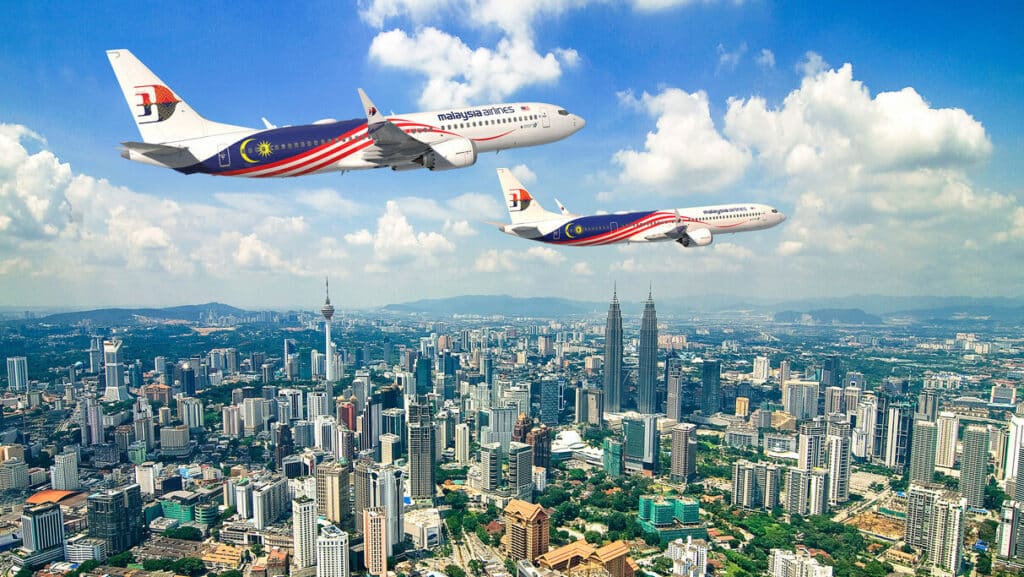
Malaysia Airlines started flying direct from Kuala Lumpur to Shenzhen on 1 July, followed by Changsha a week later. Both routes run up to seven times a week on Boeing 737-8 aircraft, according to Malaysia Aviation Group. The additions bring the carrier's China footprint to nine cities, including Beijing, Shanghai, Guangzhou, Xiamen, Hong Kong, Taipei, and Chengdu.
The timing reflects a broader uptick in Malaysia-China travel. Mutual visa-free arrangements, in place since late 2023, have removed a significant barrier for short-stay visitors. Business links remain robust, particularly in technology and manufacturing sectors where Shenzhen is a global hub. Changsha, meanwhile, has grown as a regional centre for media production and consumer goods.
China is the airline's second-largest international market by destination count. That ranking underscores both the scale of existing demand and the carrier's ambition to capture more of it before competitors do.
Why These Two Cities
Shenzhen's draw is obvious. The southern boomtown sits across the border from Hong Kong and serves as a gateway to the Pearl River Delta, one of the world's most productive manufacturing regions. Tech giants, electronics suppliers, and venture capital firms cluster there, generating steady corporate travel.
Changsha is less prominent on the global stage but carries its own appeal. The capital of Hunan province has a population nearing 10 million and serves as a rail and logistics node in central China. It is also a cultural draw, known for historic sites tied to Chairman Mao and as a centre for television and digital media production. Leisure travellers heading to Zhangjiajie National Forest Park, a UNESCO site about 300 kilometres northwest, often transit through Changsha.
Malaysia Aviation Group CEO Bryan Foong described the routes as supporting "stronger business, tourism and people-to-people ties." That phrasing is diplomatic, but the commercial logic is straightforward: more frequencies mean more connecting options through Kuala Lumpur, which the carrier is positioning as a Southeast Asian hub.
Kuala Lumpur as a Connector
Kuala Lumpur International Airport already handles significant transit traffic between Asia-Pacific and Europe, the Middle East, and Australia. Adding depth in China helps feed those long-haul routes. A passenger flying from Changsha to London, for instance, can now make the connection on a single carrier instead of stitching together separate tickets.
The airport's geographic position gives it a natural advantage. It sits roughly equidistant from major cities in India, China, Indonesia, and Australia, making it a logical stopover point. Malaysia Airlines, along with sister carrier Firefly, has been steadily building frequencies to capitalize on that geography.
The new China routes also align with the Visit Malaysia 2026 campaign, a government-led effort to boost inbound tourism. The campaign targets 35.6 million arrivals this year, up from 26.1 million in 2024. Chinese visitors are a key part of that goal. In 2019, before the pandemic, China was Malaysia's third-largest source market, delivering 3.1 million arrivals.
Pricing and Competition
To mark the launch, Malaysia Airlines is offering return economy fares from London Heathrow to Shenzhen or Changsha starting at 1,009 British pounds per person, bookable through 20 July. That pricing is competitive but not extraordinary. Carriers such as China Southern, Cathay Pacific, and various Gulf airlines also serve the China-Malaysia corridor, many with one-stop routings through their own hubs.
The real test will be load factors and yield over the next six to twelve months. Airlines routinely launch routes with promotional fares, but sustained profitability depends on a mix of business travellers willing to pay higher fares and leisure passengers filling the remaining seats.
Shenzhen, in particular, faces competition from nearby Guangzhou and Hong Kong. All three airports serve overlapping catchment areas, and passengers often choose based on fare and schedule rather than destination airport. Malaysia Airlines already flies to both Guangzhou and Hong Kong, so the Shenzhen service must justify itself on frequency and timing rather than exclusive access.
Fleet and Schedule
The Boeing 737-8 is a sensible choice for these routes. The aircraft seats around 160 to 180 passengers depending on configuration, matching typical demand on regional routes. It is also fuel-efficient, which matters on sectors where margins are thin.
Flight times from Kuala Lumpur to Shenzhen run about four hours, while Changsha is slightly longer at around four and a half hours. Overnight departure and early-morning return schedules allow business travellers to maximize time on the ground, though they are less convenient for leisure passengers with families.
The airline has not disclosed load factor targets or break-even thresholds, but industry norms suggest routes of this distance need load factors above 75 percent to turn a profit, especially when operating daily or near-daily frequencies.
What Comes Next
Malaysia Airlines has been rebuilding its network since the pandemic, but it still faces financial headwinds. The carrier reported a net loss of 766 million ringgit for the fiscal year ending March 2024, though operating performance improved compared to the prior year. Adding capacity in a competitive market is a bet that revenue growth will outpace costs.
The airline has signalled further expansion plans but has not specified additional Chinese cities. Tier-two and tier-three cities in China remain underserved by direct international flights, creating opportunities for carriers willing to test new markets. Cities like Wuhan, Nanjing, and Kunming could be candidates if the current routes prove viable.
For now, the focus is on filling seats to Shenzhen and Changsha. If demand holds, the routes will strengthen Malaysia Airlines' position in a market where Chinese carriers and Gulf hubs have been gaining share. If not, frequencies may be trimmed or aircraft redeployed. That is the calculus every airline faces when launching new services, and Malaysia Airlines is no exception.