A Range Apart
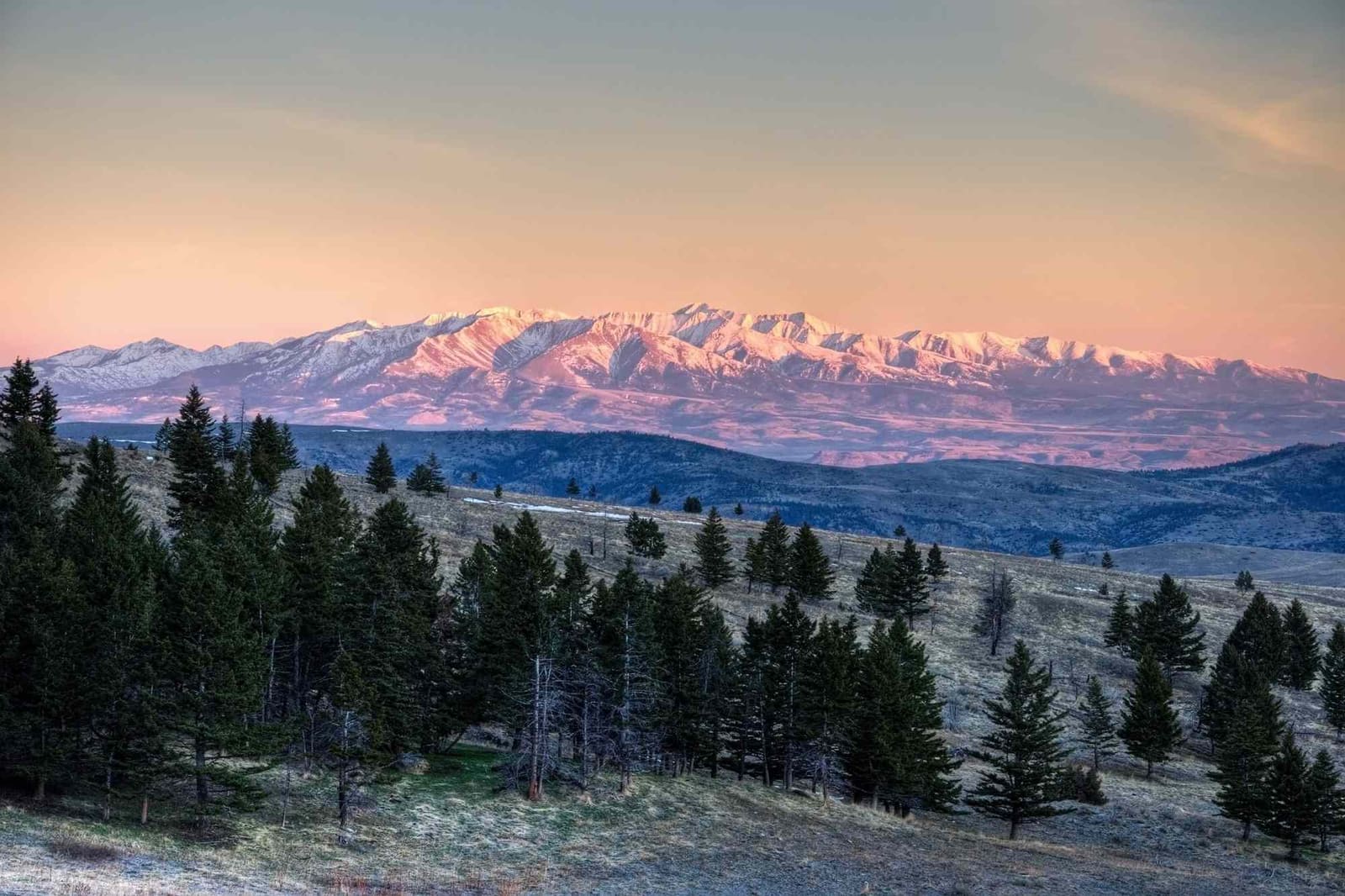
Most visitors to Montana make a beeline for Glacier National Park or the Beartooth Highway, but a compact mountain range in the south-central part of the state sees a fraction of the traffic. The Crazy Mountains rise abruptly from the plains between Livingston and Big Timber, a cluster of jagged peaks that top out above 11,000 feet. The range spans roughly 40 miles north to south and 15 miles east to west, small enough that you can drive around it in an afternoon but wild enough that cell service disappears the moment you leave the highway.
The Crazies, as locals call them, sit on a mix of public and private land. The Custer Gallatin National Forest manages much of the high country, but checkerboard ownership means some trailheads require crossing private property or navigating easements. That patchwork keeps visitation low and preserves a backcountry feel that has largely vanished from more accessible ranges in the Rockies.
What Draws People In
The terrain here is dramatic in a way that feels compressed. Glacial cirques, alpine lakes, and granite spires pack into a relatively small area. Trails climb steeply from sagebrush foothills into subalpine forest, then break into open basins ringed by ridgelines. Snow lingers in the high bowls well into July, and afternoon thunderstorms are common from June through August.
Hikers favor routes like the trail to Crazy Peak, the range's highest point at 11,214 feet, and the path into Blue Lake, a turquoise tarn tucked beneath a headwall. Both require stamina and navigation skills; trails are less maintained than those in national parks, and weather can turn quickly. Grizzly bears and mountain lions inhabit the area, so bear spray and awareness are standard practice.
Hunting season in the fall brings another wave of visitors, mostly Montanans who have scouted the country for years. Elk, mule deer, and mountain goats populate the high country, and the relative lack of pressure compared to units near Yellowstone or the Bob Marshall Wilderness makes the Crazies a draw for those willing to hike farther.
Access and Logistics
Getting into the Crazies requires planning. Several Forest Service roads lead to trailheads, but not all are passable for standard passenger vehicles. High-clearance trucks handle the rougher approaches better, and a few routes demand four-wheel drive, especially early in the season when mud and snowmelt churn the roads.
Camping is allowed on national forest land, and dispersed sites near trailheads fill up on summer weekends, though "crowded" here means a handful of trucks spread across a meadow rather than the bumper-to-bumper scenes at trailheads closer to Bozeman. No developed campgrounds sit within the range itself, so visitors bring their own water, pack out waste, and follow leave-no-trace principles.
The nearest towns, Livingston and Big Timber, offer basic services, gas, and a few places to eat. Both sit along Interstate 90, about an hour apart, and serve as staging points for trips into the range. Neither town markets itself as a gateway to the Crazies the way West Yellowstone or Whitefish promote their proximity to national parks, which reinforces the low-key character of the area.
Why It Stays Quiet
Several factors keep the Crazy Mountains from becoming a hotspot. The access issue is one; without a major highway cutting through the range or a national park designation, casual visitors often drive past without noticing. The land ownership complexity discourages some, and the lack of amenities or guided services filters out those accustomed to more structured experiences.
Weather plays a role too. The range sits at a latitude and elevation where conditions can be harsh even in summer. Snow closes high passes until late June or early July most years, and early autumn storms can dump snow by mid-September. The window for comfortable hiking is narrower than in ranges farther south or at lower elevations.
There is also the question of infrastructure. No lodges, no shuttle services, no groomed trails or interpretive signs. The Forest Service maintains a light footprint, and local outfitters focus more on hunting than recreational guiding. That suits people who prefer solitude and self-reliance, but it is not a formula for mass tourism.
The Broader Context
Montana has seen a surge in visitation over the past decade, driven in part by remote work, pandemic-era relocations, and social media showcasing the state's landscapes. Towns like Bozeman, Missoula, and Whitefish have absorbed much of that growth, and nearby public lands have felt the pressure. Trailheads that once had a few cars now require early arrivals to find parking, and some popular hikes see more foot traffic than the trails were designed to handle.
The Crazy Mountains have largely avoided that trajectory, not because they are less scenic but because they require more effort and offer fewer conveniences. That dynamic could shift if access improves or if the area gains visibility through media coverage or influencer promotion, but for now the range remains a place where you can hike all day and encounter only a few other people, if any.
Who Should Go
The Crazies suit travelers who value quiet over comfort and who are prepared to navigate without much hand-holding. If you need reliable cell service, clear trail markers, or nearby amenities, this is not the place. If you are comfortable reading topographic maps, carrying extra layers, and adjusting plans based on weather, the range offers a chance to experience Montana backcountry without competing for space.
It is also a destination that rewards patience. The best campsites, the clearest views, and the most memorable wildlife encounters tend to happen away from the trailheads, farther up the drainages where fewer people venture. That requires time, fitness, and a willingness to carry a heavier pack, but the trade-off is solitude in a landscape that still feels unmanaged and unscripted.
The Crazy Mountains will not appeal to everyone, and that is part of what keeps them distinctive. In a state where certain landscapes have become synonymous with crowding and where access debates dominate local conversations, a range that remains quiet by virtue of its remoteness and complexity offers something increasingly rare: the chance to disappear into the mountains without a reservation, a permit, or a queue.