A Place Built on Leisure
Montenegro has a saying about work: if you feel the urge, sit down and wait for it to pass. The attitude is half joke, half cultural export, and it shows up in everything from café hours to the way locals navigate their days. Kotor, the walled city on the Adriatic coast, recently appeared on a list of Europe's ten happiest destinations. The ranking is subjective, but anyone who has spent time in the bay understands why the town made the cut.
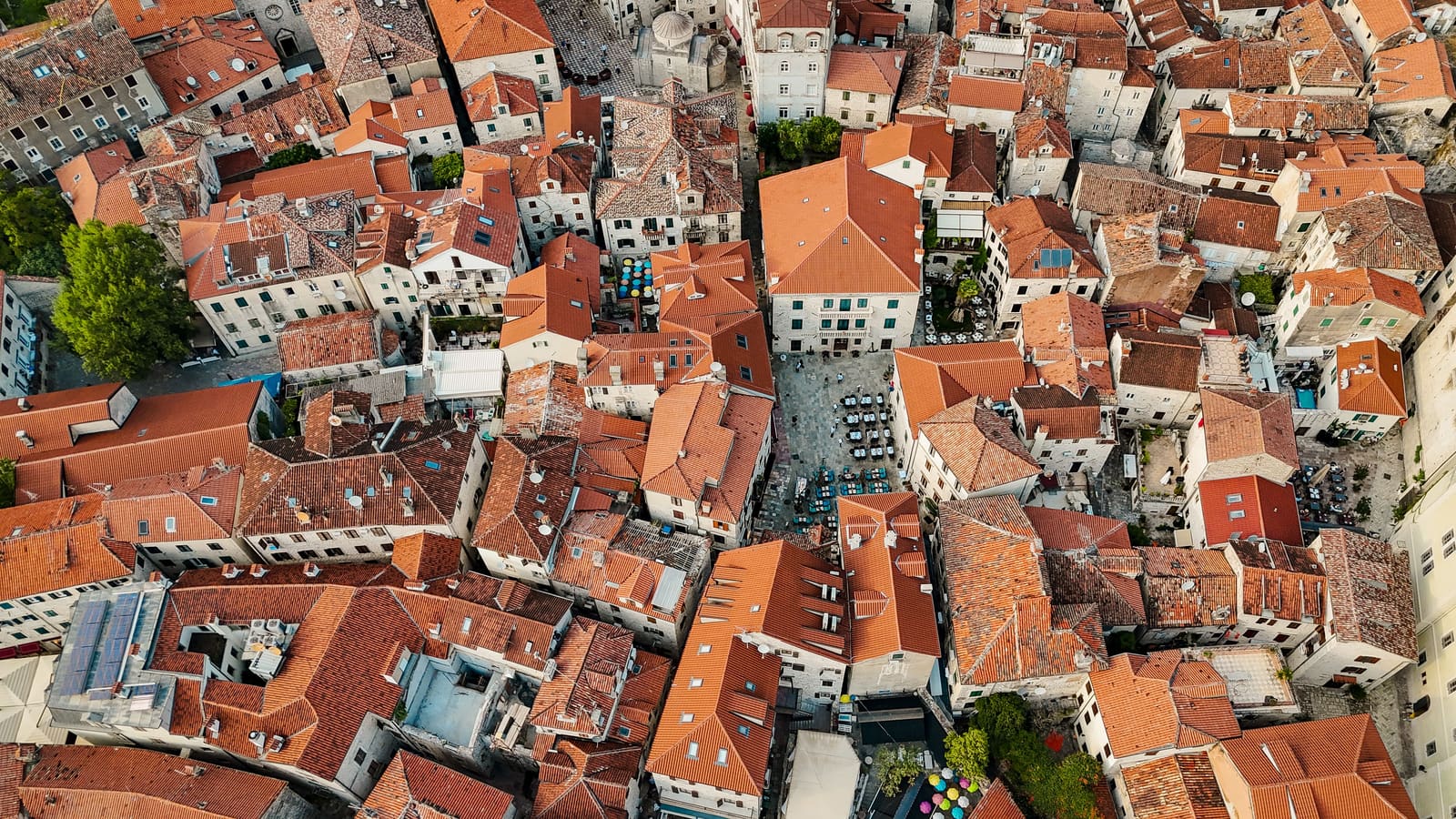
The city sits at the end of a narrow inlet, surrounded by limestone peaks. Its walls date back centuries, layered by Romans, Byzantines, and nearly four hundred years of Venetian rule. The defenses snake up the mountainside behind the old town, ending at a fortress that overlooks the water. Cruise ships dock regularly, but the town remains functional. Residents hang laundry across alleyways, chat on doorsteps, and run businesses that serve both tourists and neighbors.
Arriving by Water
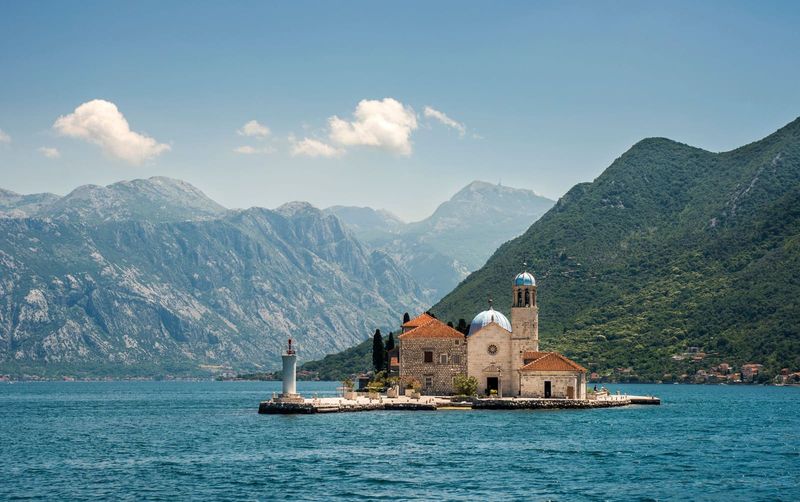
The best way to see Kotor is from the bay. Boats pass stone cottages along the shoreline, their terracotta roofs bright against the dark green slopes of Vrmac ridge. Across the water, the Baroque facades of Perast reflect in the morning light. The black mountain, Lovćen, rises behind Kotor itself, its peak often hidden in mist.
The marina sits just outside the old town walls. Next to it, a farmers' market runs most mornings: olives, watermelons, honey from the mountains, cured meats, homemade rakija. Figs pile up next to tomatoes. The produce is local, the prices negotiable, and the scene a reminder that Kotor is not a theme park.
Inside the Walls
The Sea Gate, marked by a Venetian lion, opens into the Square of Arms. A clock tower from the early 1600s leans slightly to one side. Below it stands a small obelisk once used as a public pillory. Cafés line the square, but deeper into the old town, the crowds thin out.
Cinema Square holds a black poplar tree planted in 1667, its branches shading a café that serves krempita, a local dessert of puff pastry and custard. Across the square, the Kotor Cat Museum funds care for the town's feline population, said to descend from ship cats brought by Venetian sailors. For visitors less interested in cats, the Church of St Michael nearby houses a lapidarium of stone artifacts spanning the Illyrian period to the eighteenth century.
The Cathedral of St Tryphon, consecrated in 1166, is the most significant building in Kotor. Its Romanesque design includes a fifteenth-century gilded altarpiece and a fourteenth-century ciborium above the main altar, supported by red marble columns. The upper terrace offers a view over the rooftops and the bay beyond. The Maritime Museum, in an eighteenth-century palace, documents the town's seafaring history, though it requires a separate visit if time is short.
The Climb and the Cable Car
The ramparts are accessible from Wood Square, and the path to St John's Fortress involves roughly 1,350 steps. The ascent is steep, passing the Church of Our Lady of Remedy halfway up. The view from the top covers the entire bay and the Adriatic coastline. On hot days, many visitors skip the climb in favor of lunch at one of the fish restaurants near the square.
A newer option is the cable car to Lovćen, a ten-minute taxi ride from the old town. The gondola rises more than 1,300 meters in eleven minutes, crossing scrub and forest before reaching bare limestone. At the top, the bay spreads out below, and the Montenegrin coast extends to the horizon. A bar at the summit serves cocktails as the light shifts across the water.
Eating on the Water
Kotor's dining scene favors simplicity over spectacle. Bastion, near the northern gate, grills local fish and serves it on a terrace by the city walls. Il Pescatore, a family-run shellfish farm near Perast, pulls oysters and mussels from the water and plates them within minutes. The kitchen closes at five, so lunch is the main service.
Galion, just outside the old town, offers a more polished experience with Mediterranean cooking and a substantial wine list. Senso Bakery, inside the walls, handles breakfast and pastries, including krempita. The town also has a handful of bars that lean into jazz and improvisation, though schedules vary.
Staying Nearby
The old town itself is loud at night, so most travelers stay on the bay. Hyatt Regency Kotor Bay Resort, a few minutes away, has pools, a spa, and a private beach. Palazzo Sbutega, a boutique hotel in a restored stone palazzo, combines contemporary design with a garden and pool. Casa del Mare Amforaora, in the village of Orahovac north of Kotor, offers waterfront rooms and easy access to both Kotor and Perast.
Getting There
Tivat Airport is about fifteen minutes from Kotor without traffic. During summer, direct flights run from London, Bristol, Manchester, and Birmingham on carriers including British Airways, easyJet, and Jet2. Most routes operate between spring and late September. Year-round options include flights to Podgorica, Montenegro's capital, or Dubrovnik in Croatia, both within driving distance.
A Town That Works
Kotor's appeal is not in its polish but in the way it balances tourism with daily life. The walls are imposing, the history layered, and the setting dramatic. But the town also functions as a place where people live, work, and take their time. The local approach to leisure is not just a marketing angle. It is visible in the pace of the day, the length of meals, and the way the bay looks at sunset from the top of the cable car.